 0
0
 0
0
April 13, 2026
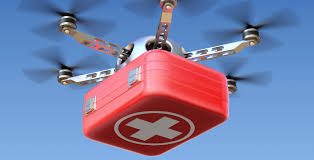
ALLURI SITARAMA RAJU DISTRICT, AP — In the rugged, mist-shrouded peaks of the Eastern Ghats, a quiet revolution is taking flight. The Andhra Pradesh government, in a strategic leap toward health equity, has officially integrated autonomous drone technology to provide life-saving medical logistics to the Alluri Sitarama Raju (ASR) district. This initiative, launched in collaboration with Redwing Labs and supported by the UPS Foundation, aims to dismantle the geographical barriers that have historically isolated tribal communities from essential healthcare.
Since its full-scale operational rollout in early 2026, the program has achieved a significant milestone: completing 1,000 successful flights and covering over 40,000 kilometers of aerial terrain—a distance equivalent to circling the Earth’s circumference. For the Konda Dora and other indigenous groups living in hamlets like Anantagiri, this technology has effectively shrunk a grueling eight-hour mountain trek into a 20-minute flight.
From “Last Mile” to “Last Minute”
The ASR district presents a unique logistical nightmare for healthcare providers. Steep gradients and a lack of paved roads often mean that emergency medicines or diagnostic samples must be carried by hand or on two-wheelers through treacherous paths.
“This marks a breakthrough in healthcare access for isolated communities,” stated District Collector A.S. Dinesh Kumar. “We are no longer at the mercy of the terrain when a life is on the line.”
The drones, which boast a payload capacity of 2 to 10 kilograms, act as a high-speed bridge between primary health centers (PHCs) and larger hubs like the Paderu Medical College and Government General Hospital (GGH). The cargo is diverse and critical:
-
Emergency Medications: Anti-snake venom and antibiotics.
-
Cold-Chain Logistics: Vaccines maintained at precise temperatures.
-
Diagnostic Samples: Blood, stool, and urine samples for rapid lab testing.
-
Life-Sustaining Supplies: Units of blood for maternal emergencies.
The Cost of Delay: A Statistical Reality
The necessity of this “Highway in the Sky” is backed by sobering data. In rural India, it is estimated that 20% to 25% of temperature-sensitive vaccines are wasted due to transport delays and broken cold chains. By utilizing drones equipped with specialized cooling systems, the ASR project ensures that vaccines reach their destination with 100% potency.
According to figures from the World Economic Forum, similar “Medicine from the Sky” initiatives have demonstrated that aerial shortcuts can reduce ground-equivalent travel distances by over 50%. In ASR, the drones cover distances of 60 to 80 kilometers in a fraction of the time it takes a 4×4 vehicle to navigate the same coordinates.
Expert Perspectives on Public Health
While the technology is impressive, public health experts emphasize its role as a supplement to, rather than a replacement for, existing infrastructure.
Dr. Sanjay Zodpey, a public health expert and former official at the Indian Council of Medical Research (ICMR), who is not involved in the ASR project, notes the strategic importance of this deployment. “Drones are the ideal solution for time-sensitive supplies in difficult terrains. Our research consistently shows that for items like blood units or cardiac medications, every minute saved translates directly into improved clinical outcomes. This project could serve as a national blueprint for rural health equity.”
Dr. G. Veerapandian, Commissioner of Medical and Health for Andhra Pradesh, highlighted that the initiative aligns with a broader vision of modernizing state governance through the Real Time Governance System (RTGS). “The goal is faster emergency response and a drastic reduction in diagnostic delays,” he said during the signing of the agreement with Redwing Labs.
Navigating the Headwinds: Limitations and Challenges
Despite the optimism, the “Drone Revolution” faces significant atmospheric and regulatory hurdles.
-
Payload Constraints: With a 10kg limit, drones cannot yet transport bulk medical equipment or large quantities of intravenous fluids.
-
Weather Sensitivity: High winds and heavy monsoon rains can ground the fleet, requiring traditional backup transport to remain on standby.
-
Regulatory Landscape: Beyond-Visual-Line-of-Sight (BVLOS) operations require rigorous approvals and specialized infrastructure, such as dedicated charging hubs.
A study published in Frontiers in Public Health suggests that while drones are superior in emergencies, sustainable long-term use requires a “hybrid model” where drones handle urgent, small-scale deliveries while road infrastructure is simultaneously improved for bulk logistics.
The Road Ahead: Scaling for Impact
The ASR project is currently in a 6-to-9-month proof-of-concept phase, with technology provided free of charge by Redwing Labs. Following this, the state plans to expand operations through the Andhra Pradesh Drones Corporation.
The implications for the general public are profound. For a resident in a remote tribal village, this initiative means that a routine blood test no longer requires a two-day journey, and a snakebite is no longer a guaranteed tragedy. It represents a shift in medical philosophy: moving from a system where the patient must find the medicine, to one where the medicine finds the patient.
As India continues to bridge its urban-rural health divide, the buzzing of drones over the Eastern Ghats serves as a persistent reminder that in the 21st century, your zip code should not determine your life expectancy.
References
-
The Print (2026, April 11). Andhra govt deploys drones to deliver medicines, diagnostic samples in remote tribal areas. [theprint.in]
Medical Disclaimer: This article is for informational purposes only and should not be considered medical advice. Always consult with qualified healthcare professionals before making any health-related decisions or changes to your treatment plan. The information presented here is based on current research and expert opinions, which may evolve as new evidence emerges.