 0
0
 0
0
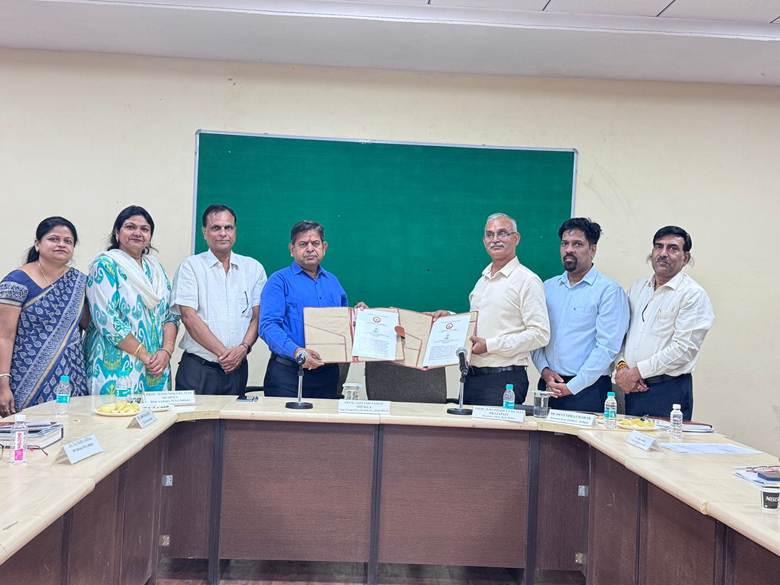
JODHPUR, Rajasthan — In a move set to redefine the landscape of traditional Indian medicine, the All India Institute of Ayurveda’s Incubation Centre (AIIA–iCAINE) and Dr. Sarvepalli Radhakrishnan Rajasthan Ayurved University (DSRRAU) officially entered into a strategic partnership on April 27, 2026. The signing of a Memorandum of Understanding (MoU) marks a pivotal shift toward an “innovation-first” approach in Ayurveda, aiming to transform ancient healing wisdom into evidence-based, commercially viable healthcare solutions for a global audience.
The agreement, signed by Prof. (Vaidya) Pradeep Kumar Prajapati, Director of AIIA, and Prof. (Vaidya) Govind Sahay Shukla, Vice-Chancellor of DSRRAU, establishes a three-year framework to foster entrepreneurship and technological advancement within the Ayurvedic academic community.
From Ancient Text to Modern Market: The Core of the Partnership
For decades, the challenge for traditional medicine has been the “translation gap”—the space between historical knowledge found in Vedic texts and the rigorous, standardized requirements of modern global healthcare markets. This MoU aims to bridge that gap by providing students and faculty with the tools of the modern startup ecosystem.
The collaboration focuses on several key pillars:
-
Structured Mentorship: Connecting scholars with industry veterans to refine product ideas.
-
Capacity Building: Training in intellectual property (IP) rights, clinical trial design, and standardized manufacturing.
-
Incubation Support: Providing physical and technical infrastructure for “Ayur-preneurs” to test and scale their innovations.
-
Joint Ideation Camps: Creating competitive platforms for students to pitch solutions for modern health crises, such as metabolic disorders and mental health.
“This is a significant step towards taking Ayurveda to new dimensions globally,” stated Prof. Prajapati during the ceremony. “We are catalysing the translation of traditional knowledge into evidence-based, market-ready innovations.”
Why Now? The Global Shift Toward Integrative Medicine
The timing of this partnership coincides with a surging global interest in integrative health. According to data from the World Health Organization (WHO), approximately 80% of the world’s population uses some form of traditional medicine. However, the lack of standardized “innovation pipelines” has often relegated these practices to the periphery of mainstream medical discourse.
By integrating the academic rigor of DSRRAU with the entrepreneurial expertise of iCAINE, the partnership seeks to elevate Ayurveda from a “complementary” practice to a primary driver of wellness technology. This includes the development of standardized herbal formulations, wearable tech for Prakriti (constitution) analysis, and AI-driven diagnostic tools rooted in Ayurvedic principles.
Expert Perspectives: The Need for Rigor
Independent experts suggest that while the initiative is promising, its success will depend on its commitment to scientific validation.
“The modern consumer and the medical community both demand transparency,” says Dr. Ananya Sharma, a Senior Research Scientist in Integrative Medicine (not involved in the MoU). “The strength of this partnership lies in its potential to subject traditional claims to modern clinical scrutiny. If these incubators focus on rigorous safety profiles and reproducible results, they could revolutionize how the world views Indian medicine.”
Shri Sujith Eranezhath, CEO of AIIA–iCAINE, echoed this sentiment, emphasizing that the incubation programs will provide “technical guidance” to ensure that ventures emerging from academic settings are not just culturally relevant, but scientifically sound.
Implications for Public Health and the Consumer
For the general public, this partnership signals a move toward safer, more reliable Ayurvedic products. As the innovation ecosystem matures, consumers can expect:
-
Standardized Quality: Products that have undergone modern quality control and “seed-to-shelf” tracking.
-
Evidence-Based Use: Clearer guidelines on how traditional remedies interact with conventional pharmaceuticals.
-
Accessible Wellness: Innovative delivery systems (such as bio-available extracts) that make traditional treatments easier to integrate into modern lifestyles.
However, health authorities remind consumers that “innovation” does not bypass the need for professional consultation. The rise of Ayurvedic startups must be met with increased consumer literacy regarding dosages and the importance of consulting certified practitioners.
Challenges and Counterarguments
Despite the optimism, some critics in the medical community express concerns over the “commercialization” of traditional knowledge. There is a delicate balance between making a product “market-ready” and maintaining the holistic integrity of Ayurvedic philosophy, which often resists the “one-pill-fits-all” model of modern pharmacology.
Furthermore, the three-year duration of the MoU is relatively short for the typical lifecycle of medical research and drug development, which often takes a decade or more. The institutions will need to demonstrate rapid, tangible results to ensure the partnership is renewed and sustained.
Looking Ahead
The collaboration between AIIA–iCAINE and DSRRAU represents a bold experiment in “Blending Tradition with Innovation,” as Prof. Shukla described it. By fostering a culture of entrepreneurship in the classroom, India is positioning itself to lead the global $100 billion+ traditional medicine market.
As these two institutions begin their joint ideation camps later this year, the eyes of both the traditional and modern medical worlds will be on Jodhpur to see if the next great healthcare breakthrough might just be a few thousand years old.
Reference Section
-
Institutional Sources: * Press Information Bureau (PIB), Government of India. “AIIA–iCAINE signs MoU with DSRRAU.” Posted 28 April 2026.
Medical Disclaimer: This article is for informational purposes only and should not be considered medical advice. Always consult with qualified healthcare professionals before making any health-related decisions or changes to your treatment plan. The information presented here is based on current research and expert opinions, which may evolve as new evidence emerges.