 0
0
 0
0
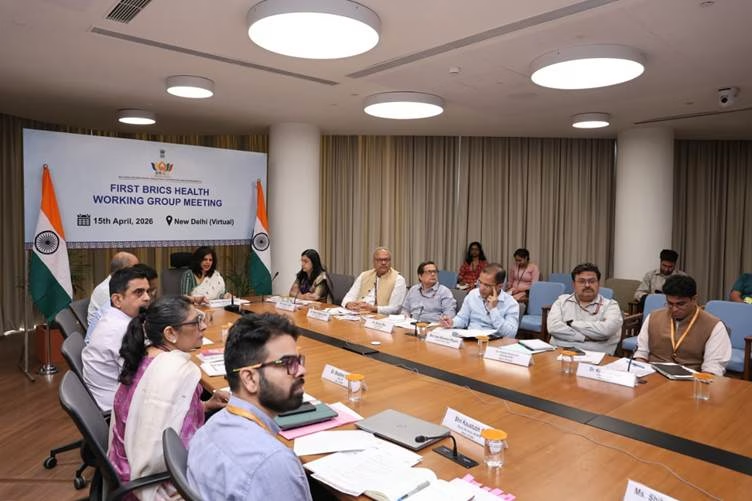
NEW DELHI – In a significant move toward reshaping global health priorities, the Union Ministry of Health and Family Welfare convened the first BRICS Health Working Group (HWG) Meeting of 2026 this week. Representing a coalition that now encompasses nearly half of the world’s population, delegates gathered in India’s capital to launch a new roadmap for medical cooperation under the theme: “Building for Resilience, Innovation, Cooperation and Sustainability.”
The meeting marks a pivotal shift in the BRICS (Brazil, Russia, India, China, South Africa, Egypt, Ethiopia, UAE, and Indonesia) health agenda. While previous years focused heavily on emergency pandemic response, India’s 2026 Chairship is pivoting toward preventive care, introducing Mental Wellness and Healthy Lifestyles as formal pillars of the alliance’s medical strategy.
A “People-Centric” Vision for Global Health
Opening the summit, Union Health Secretary Smt. Punya Salila Srivastava emphasized that the 2026 framework is guided by a “humanity-first” approach. This philosophy, rooted in the discussions from the 2025 Rio Summit, seeks to move beyond reactive medicine toward proactive, sustainable health systems.
“The Health Working Group aims to foster inclusive, sustainable, and evidence-driven health cooperation,” Srivastava stated. She noted that while the socio-economic contexts of member nations vary—from the burgeoning tech hubs of the UAE to the rural landscapes of Ethiopia—the challenges of aging populations, rising non-communicable diseases (NCDs), and mental health crises are universal.
The Two New Frontiers: Lifestyle and Mind
The most notable development of the summit was India’s proposal of two new priority areas, which received unanimous support from member states:
-
BRICS Mission for Healthy Lifestyles: A multilateral effort to combat NCDs by addressing risk factors like tobacco use, physical inactivity, and poor nutrition.
-
Promotion of Mental Health and Wellness: A strategic initiative to destigmatize mental health conditions and integrate psychological care into primary healthcare systems.
“Integrating mental health into the broader public health framework is no longer optional; it is a clinical necessity,” says Dr. Aristha Sen, a global health policy analyst (not involved in the summit). “By making this a BRICS priority, these nations are acknowledging that economic productivity and national resilience are inextricably linked to the psychological well-being of their citizens.”
Strengthening the “Social Safety Net”
Beyond the new initiatives, the HWG reaffirmed its commitment to long-standing technical collaborations. The 2026 agenda identifies nine core areas of focus:
-
The BRICS TB Research Network: Continuing the fight against tuberculosis, a disease that disproportionately affects BRICS nations.
-
Digital Health Architecture: Leveraging AI and tele-health to provide specialized care to remote and vulnerable populations.
-
Early Warning Systems: Refining an integrated network for the rapid detection of infectious diseases to prevent future pandemics.
-
Regulatory Harmonization: Streamlining cooperation between medical product regulatory authorities to ensure faster, equitable access to vaccines and essential medicines.
The Role of Traditional Medicine
India also used the platform to advocate for Evidence-Based Traditional Medicine. By bridging ancient indigenous knowledge with modern clinical validation, the ministry aims to contribute to Universal Health Coverage (UHC). This “holistic” approach seeks to utilize biodiversity-rooted treatments as affordable supplements to conventional Western medicine, provided they meet rigorous scientific standards.
Statistical Context: Why BRICS Matters
The health decisions made in New Delhi carry immense weight. According to data from the World Health Organization (WHO) and the World Bank:
-
BRICS nations account for over 40% of the global burden of tuberculosis.
-
NCDs, such as diabetes and hypertension, are responsible for nearly 70% of deaths in middle-income countries, a category into which most BRICS members fall.
-
The “Treatment Gap” for mental health in developing economies remains high, with some regions having fewer than one psychiatrist per 100,000 people.
By pooling resources, these nations aim to lower the cost of medical innovation. Joint research and development (R&D) and local production of vaccines are seen as essential steps to ending the “medical apartheid” often seen during global health crises.
Challenges and Counter-Perspectives
While the mood in New Delhi was one of cooperation, experts warn that “policy on paper” must be met with “funding on the ground.”
Some public health critics argue that the inclusion of traditional medicine requires extremely stringent oversight to prevent the promotion of unverified treatments. Furthermore, the diversity of the expanded BRICS+ group—which now includes nations with vastly different regulatory environments—could lead to bureaucratic bottlenecks in drug approval processes.
“The ambition is laudable,” notes Dr. Julian Vance, a researcher in international infectious diseases. “However, the challenge lies in harmonizing the data standards. A ‘Healthy Lifestyle’ mission in Brazil looks very different from one in Indonesia. Success will depend on whether these nations can create scalable interventions that respect local cultures while adhering to global clinical protocols.”
Moving Forward: The Roadmap to 2027
The meeting concluded with a consensus on a roadmap for the remainder of the year. This includes upcoming technical exchanges and a ministerial-level summit where the “New Delhi Declaration on Health” is expected to be signed.
As the BRICS nations move toward a more “future-ready” stance, the focus remains on ensuring that innovation doesn’t just happen in a lab, but reaches the person in the furthest corner of the map.
Medical Disclaimer
Medical Disclaimer: This article is for informational purposes only and should not be considered medical advice. Always consult with qualified healthcare professionals before making any health-related decisions or changes to your treatment plan. The information presented here is based on current research and expert opinions, which may evolve as new evidence emerges.
Reference Section
Official Sources:
-
Press Information Bureau (PIB) Delhi: “Union Ministry of Health and Family Welfare Hosts First BRICS Health Working Group Meeting 2026.” (April 15, 2026).