 0
0
 0
0
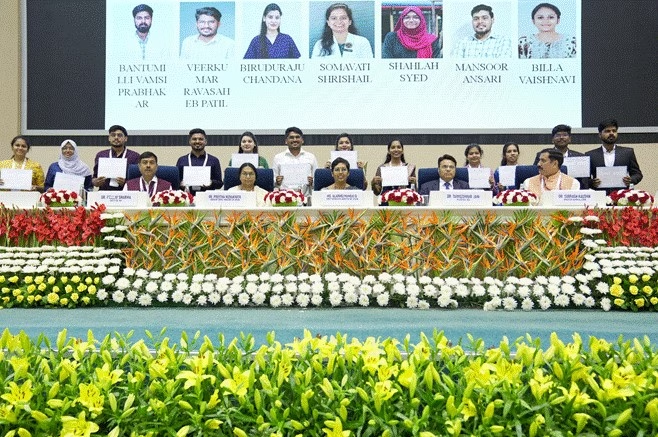
NEW DELHI – The two-day National Convention for World Homoeopathy Day 2026 concluded this week at Vigyan Bhawan, marking a significant pivot in how traditional medicine is being positioned within the global healthcare landscape. Under the dual themes of “Homoeopathy for Sustainable Health” and “Infinite Possibilities,” the event served as a high-level strategic summit for the Ministry of Ayush to chart a roadmap that emphasizes clinical evidence, ethical standards, and the integration of homoeopathy into mainstream public health systems.
As healthcare costs soar and antimicrobial resistance (AMR) becomes a looming global crisis, the deliberations in New Delhi underscored a growing interest in “sustainable healthcare”—systems that are cost-effective, patient-centric, and environmentally conscious.
A Call for Evidence-Based Integration
The convention, which ran from April 10 to 11, was not merely a celebration of the birth of Dr. Samuel Hahnemann, the founder of homoeopathy; it was a rigorous examination of the discipline’s modern application. Senior officials, including Ms. Alarmelmangai D., Joint Secretary for the Ministry of Ayush, emphasized that for homoeopathy to thrive in the 21st century, it must be supported by a robust framework of research and transparency.
“The government is committed to integrating homoeopathy into the broader healthcare framework,” stated Ms. Alarmelmangai during the valedictory ceremony. “Its role is evolving toward providing accessible and patient-centric care that complements conventional medicine.”
Highlights of Clinical Advancements
One of the most discussed segments of the convention involved the National Institute of Homoeopathy (NIH) presenting evidence-based case studies. These reports focused on the management of complex conditions such as:
-
Autoimmune disorders
-
Endometriotic cysts
-
Adjunctive support in oncology (specifically brain tumors)
While homoeopathy is often viewed through the lens of minor ailments, the 2026 convention sought to showcase its potential in multidisciplinary care. A dedicated track brought together pulmonologists, oncologists, and neurologists to discuss how homoeopathic interventions might work alongside conventional treatments to improve quality of life and manage side effects.
Ethics and Modernization: The 2026 Roadmap
A recurring theme throughout the sessions was the “professionalization” of the field. Dr. Tarkeshwar Jain, Chairperson of the National Commission for Homoeopathy (NCH), highlighted the NCH Regulations of 2022 as the bedrock for this new era. These regulations aim to enforce strict ethics and conduct among practitioners, ensuring that the “Infinite Possibilities” of the field are grounded in safety and accountability.
The Push for Standardization
To address long-standing criticisms regarding the consistency of homoeopathic preparations, Day 2 focused heavily on:
-
Drug Standardization: Ensuring that remedies are manufactured with high-level precision.
-
Pharmacovigilance: Strengthening systems to monitor the safety of medicines and report adverse effects.
-
Digital Transparency: Expanding the National Register of Homoeopathy to allow patients to verify the credentials of their practitioners.
“The focus on pharmacovigilance is a critical step forward,” says Dr. Aris Latham, a public health researcher not affiliated with the CCRH. “By implementing the same rigorous monitoring systems used in conventional pharmacology, the homoeopathic community can better address safety concerns and build public trust.”
Sustainability and Global Strategy
The concept of “Sustainable Health” extended beyond human clinics. In a forward-looking move, the convention explored Agro-Homoeopathy—using homoeopathic principles to treat soil and crops—and Veterinary Homoeopathy. These applications are seen as potential tools to reduce the chemical footprint in agriculture and decrease the reliance on antibiotics in livestock, which is a major driver of drug-resistant “superbugs.”
This aligns with the WHO Traditional Medicine Strategy, which encourages member states to harness the potential of traditional and complementary medicine for universal health coverage.
Navigating the Controversy: A Balanced View
Despite the enthusiasm at the New Delhi convention, homoeopathy remains a subject of intense debate within the global scientific community. The central challenge lies in the “dilution paradox”—the process where substances are diluted to the point where no molecules of the original matter remain.
-
The Skeptic’s View: Many researchers argue that any perceived benefits of homoeopathy are due to the placebo effect or the natural resolution of the illness. Meta-analyses, such as the 2005 study published in The Lancet, have historically concluded that the clinical effects of homoeopathy are not significantly different from placebos.
-
The Proponent’s View: Advocates at the convention point to “Nano-pharmacology” and recent studies suggesting that high dilutions may retain physical properties through nanostructures—a field that the Central Council for Research in Homoeopathy (CCRH) is actively investigating.
Dr. Subhash Kaushik, Director General of CCRH, noted that the future direction involves more high-quality, randomized controlled trials (RCTs) to bridge this gap in understanding.
What This Means for Patients
For the average health-conscious consumer, the takeaway from World Homoeopathy Day 2026 is one of informed integration.
-
Consultation is Key: Patients should never replace life-saving conventional treatments (like chemotherapy or insulin) with homoeopathy alone.
-
Check Credentials: Use the National Register of Homoeopathy to ensure a practitioner is licensed and follows the NCH 2022 ethics guidelines.
-
Holistic Approach: Homoeopathy may be most effective as part of a “Whole Person” health plan that includes nutrition, exercise, and conventional diagnostics.
As the convention concluded, the Ministry of Ayush sent a clear message: the future of healthcare is likely not “either/or” but “both/and”—an integrative model where different systems of medicine cooperate to achieve the best possible outcome for the patient.
Reference Section
Citations & Sources:
- https://www.pib.gov.in/PressReleasePage.aspx?PRID=2251206®=3&lang=1
Medical Disclaimer: This article is for informational purposes only and should not be considered medical advice. Always consult with qualified healthcare professionals before making any health-related decisions or changes to your treatment plan. The information presented here is based on current research and expert opinions, which may evolve as new evidence emerges.