 0
0
 0
0
BENGALURU, June 2026 — In a landmark decision poised to reshape medical education in India, the Karnataka government announced this week that it will issue comprehensive, formal guidelines mandating the respectful handling of donated human cadavers by medical students. Driven by a nationwide controversy over a viral video, Karnataka becomes the first state in the country to establish a dedicated regulatory framework focused strictly on preserving the dignity of human remains in anatomy labs. The initiative aims to fortify professional boundaries and protect public trust in voluntary body donation programs across the state’s 72 medical colleges, affecting roughly 13,000 enrolled medical students.
The Controversy That Sparked a Policy Shift
The regulatory push follows severe public and professional backlash against Sejal Pawar, a first-year MBBS student at Mumbai’s King Edward Memorial (KEM) Hospital. During a filmed stand-up comedy show by performer Pranit More, a two-minute clip of which went viral across social media platforms, Pawar made graphic jokes regarding students comparing the anatomy of male cadavers during dissection classes.
The remarks drew swift condemnation from the medical fraternity and the public, who argued that the comments trivialized the selfless sacrifice of body donors and their grieving families. In response, KEM Hospital administration placed Pawar on a 15-day forced leave, restricted her campus access, and initiated an internal disciplinary inquiry. Maharashtra Cyber also registered a First Information Report (FIR) against Pawar, More, and others involved in broadcasting the clip. Pawar has since issued a public apology, acknowledging her comments were “naïve” and deeply inappropriate.
A Proactive Government Framework for Ethical Conduct
While the controversy originated in Maharashtra, Karnataka has chosen to take a proactive legislative stance to prevent similar ethical lapses. Karnataka Medical Education Minister Dr. Sharan Prakash Patil confirmed that a specialized ethics committee will convene next week to formulate the structural updates.
Karnataka Medical Education Landscape (2026)
├── Total Medical Colleges: 72
├── Enrolled Students Impacted: ~13,000
└── Primary Framework: Karnataka Anatomy Act, 1957 (Updated)
“We want to build stronger ethical standards from day one,” Dr. Patil stated, emphasizing that although the state has not witnessed such incidents, clear boundaries are necessary to guide students navigating the transition into medical professionalism.
While long-standing protocols governing the acquisition and dissection of human remains exist under the Karnataka Anatomy Act, 1957, they primarily address the legalities of legal possession and sanitation. The upcoming guidelines will establish India’s first formal curriculum and enforcement framework specifically targeting the emotional, ethical, and behavioral expectations of students inside the dissection hall.
The Silent Teacher: The Critical Role of Cadavers
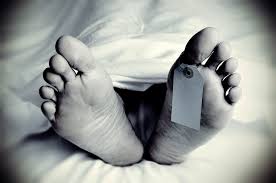
For generations, the human cadaver has been revered within medicine as a student’s “first silent teacher.” First-year medical students rely heavily on human dissection to master complex spatial anatomy, a foundational competency for future surgical interventions and clinical diagnoses.
Medical education literature consistently shows that the manner in which students interact with human remains predicts their future clinical empathy toward living patients. A benchmark study published in the Journal of International Journal of Current Advanced Research (IJCAR) highlights that proper sensitization in the dissection hall helps students develop the critical emotional boundaries and compassion necessary for high-quality patient care.
“Treating a cadaver with respect isn’t just about showing reverence to the dead; it is the exact crucible where a student transforms into a professional. The empathy learned at the dissection table directly translates to the empathy shown at a patient’s bedside.”
— Dr. Ramesh N., an independent medical educator based in New Delhi (not involved in the Karnataka policy design).
The Reality of Body Shortages and Public Trust
Maintaining rigorous ethical standards is not merely a philosophical issue; it carries severe public health implications. Body donation programs depend entirely on altruistic public participation. Any perception that donated bodies are treated as objects of ridicule threatens to choke the supply of voluntary donations.
Data reveals a stark disparity in how human remains are distributed across Karnataka’s 22 government medical colleges:
| Metric / Institution | 2022 | 2023 | 2024 (Full Year) | Total (3-Year Period) |
| Total State-Wide Donations | 202 | 236 | 212 | 650 |
| KIMS Hubballi (Highest) | — | — | — | 105 |
| VIMS Ballari (Lowest) | — | — | — | 5 |
Despite a total of 650 donations between 2022 and 2024, the state faces an acute shortage. Government colleges collectively required roughly 900 cadavers over those three years to maintain optimal student-to-cadaver ratios, leaving a deficit of over 200 bodies. Ten regional institutes, including the Kodagu Institute of Medical Sciences, report critical operational shortages. When local voluntary donations fall short, institutions are frequently forced to source and purchase human remains from neighboring states at costs hovering around ₹20,000 per body, highlighting the logistical and financial strain caused by a lack of local donors.
Current Legal Underpinnings and Implementation Barriers
Under the current provisions of the Karnataka Anatomy Act, 1957, an individual can legally donate their body by providing written intent supported by two witnesses. If a Registered Medical Practitioner certifies that the death arose from natural causes, no burdensome police or coroner clearances are required, streamlining the process for grieving families.
Once inside the institution, universal precautions and privacy measures are expected to be enforced:
-
Zonal Restrictions: Dissection halls are strictly restricted zones, accessible only to authorized faculty, technical staff, and designated medical students.
-
Dignity Coverings: Human remains must remain fully draped at all times, exposing only the specific anatomical region under active study (such as the thorax or upper limb).
-
Hygiene Standards: Strict personal protective equipment (PPE) dress codes—including aprons, surgical masks, heavy-duty gloves, and shoe covers—are mandatory to preserve sanitation.
Despite these baseline rules, standard implementation remains highly fragmented. While the “Cadaveric Oath”—a formal pledge taken by incoming students promising to honor the integrity of their assigned body—was widely introduced across Indian medical colleges in 2016, its enforcement has largely been symbolic, often lacking robust curriculum integration or practical oversight.
Balancing Accountability with Educational Support
Public health analysts and medical ethics boards emphasize that Karnataka’s new policy must navigate a delicate line. To be successful, the ethics committee must balance strict compliance with educational frameworks that genuinely sensitize young students, rather than relying solely on heavy-handed punitive actions.
Furthermore, observers note the unique challenges presented by modern digital culture. The KEM Hospital incident underscored how casual, off-camera remarks can be rapidly broadcast out of context. Hospital investigators who reviewed the entire one-hour unedited footage of the comedy event noted that the brief, highly offensive segment comprised only two minutes of the show, illustrating the power of social media to amplify separate moments into widespread public controversies.
Karnataka’s formal framework marks a crucial pivot toward national standardization. By codifying respect for human remains into the operational mandate of medical education, the state sets a powerful precedent: ensuring that the preservation of human dignity remains central to the practice of medicine, from a student’s very first day in the lab.
Medical Disclaimer
This article is for informational purposes only and should not be considered medical advice. Always consult with qualified healthcare professionals before making any health-related decisions or changes to your treatment plan. The information presented here is based on current research and expert opinions, which may evolve as new evidence emerges.
References
- https://medicaldialogues.in/state-news/karnataka/amid-cadaver-remarks-row-karnataka-to-issue-guidelines-for-students-on-respectful-handling-of-donated-bodies-173217