 0
0
 0
0
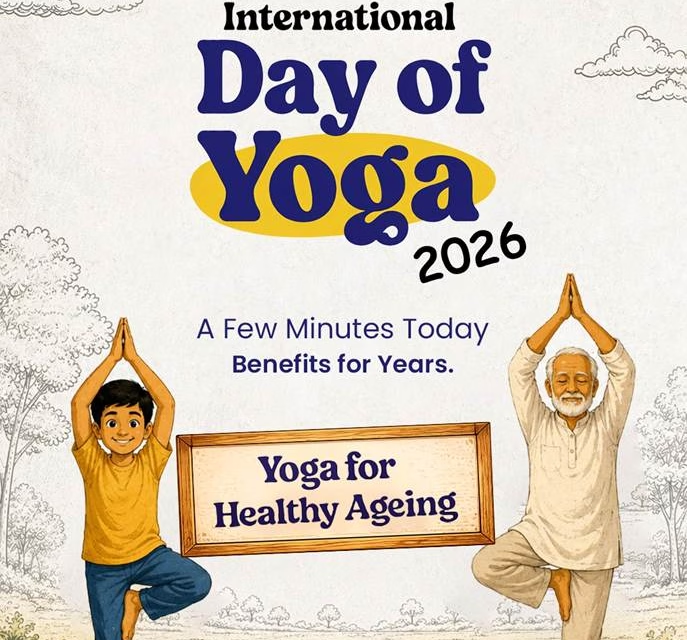
NEW DELHI — The United Nations’ upcoming 12th International Day of Yoga (IDY) on June 21, 2026, will officially center on the theme “Yoga for Healthy Ageing.” Announced by India’s Ministry of Ayush, the theme highlights a critical shift in global medicine: moving past the simple extension of chronological lifespan to actively maximizing “healthspan”—the number of years a person lives free from chronic disease and debilitating disability.
As global populations age at unprecedented rates, this year’s focus highlights a growing body of clinical evidence positioning yoga not merely as a fitness trend, but as a validated, low-cost preventive health intervention.
Speaking on the announcement, Union Minister of State for Ayush and Health and Family Welfare, Shri Prataprao Jadhav, emphasized that longevity without vitality is an incomplete victory.
“As life expectancy continues to rise, it is vital that we learn the art of aging gracefully and healthily,” Jadhav stated. “This is a concept beautifully exemplified in India’s ancient civilization, where our sages and yogis sustained longevity and vibrant health through the power of yoga and spiritual discipline.”
The Exponential Rise of Clinical Yoga Research
For decades, conventional Western medicine viewed yoga with polite skepticism. However, data from the National Institutes of Health’s PubMed Central database reveals a massive surge in peer-reviewed research tracking the clinical efficacy of yoga for older adults.
In 2014, when the International Day of Yoga was first established, a meager 183 research papers were published globally on yoga and aging. By 2020, that number crossed 500, and by the close of 2025, annual scientific publications reached an all-time high of 1,207 studies.
[Scientific Publications: "Yoga for Healthy Aging" (2014-2025)]
2014: 183 papers
2020: 500+ papers
2025: 1,207 papers
This academic shift is driven by a need to manage age-related conditions without over-relying on polypharmacy (the simultaneous use of multiple medications by a single patient).
“The modern medical community is looking closely at yoga because it targets multiple systems simultaneously,” says Dr. Anita Bhardwaj, a geriatric medicine specialist based in Mumbai, who was not involved in drafting the ministry’s protocols. “Aging is systemic. Cellular inflammation, joint degradation, muscular atrophy, and cognitive decline don’t happen in isolation. Yoga addresses the neuromuscular, cardiovascular, and endocrine systems at the same time.”
What the Data Says: Cellular and Physical Biomarkers
Recent clinical trials offer concrete data on how a regular yoga practice counters the physiological hallmarks of aging:
-
Cellular Aging and Stress: A landmark study published in Oxidative Medicine and Cellular Longevity demonstrated that 12 weeks of yoga and meditation significantly reduced biomarkers of cellular aging. The practice lowered cortisol (the primary stress hormone) and reactive oxygen species (ROS), while simultaneously increasing levels of telomerase—an enzyme responsible for maintaining the structural integrity of DNA during cell division.
-
Balance and Fall Prevention: Falls remain the leading cause of injury-related death among individuals aged 65 and older, according to the World Health Organization (WHO). A systematic review in the Journal of Clinical Medicine found that older adults participating in consistent yoga interventions showed a 30% to 40% improvement in postural stability, dynamic balance, and lower-limb mobility.
-
Cognitive Decline: Neuroimaging studies published in the Frontiers in Aging Neuroscience reveal that mind-body practices like Pranayama (breath control) and meditation stimulate brain-derived neurotrophic factor (BDNF), a protein that promotes neuroplasticity. This helps preserve gray matter volume in the hippocampus, the brain region highly vulnerable to Alzheimer’s disease and age-related dementia.
Public Health Implementation: From Mats to Medicine
To transition these scientific findings into public policy, India’s Ministry of Ayush has introduced targeted health initiatives. Chief among these is the deployment of 10 Yoga Protocols for Non-Communicable Diseases (NCDs) and Target Groups, featuring an evidence-based framework designed specifically for geriatric care.
Because traditional, advanced yoga postures can pose injury risks to older adults with osteopenia or severe osteoarthritis, these protocols utilize low-impact modifications. Through the “Yoga Samavesh” and “Yoga 365” programs, public health channels are integrating:
-
Chair Yoga: Modified routines allowing seniors with compromised balance or severe joint degradation to build upper-body strength and core stability from a secure, seated position.
-
Prop-Assisted Restorative Yoga: Utilizing blocks, straps, and bolsters to facilitate gentle stretching without straining muscles or overloading fragile joints.
-
Mindfulness and Breath Modification: Low-resistance breathing techniques optimized for individuals with chronic obstructive pulmonary disease (COPD) or age-related declines in vital lung capacity.
Ayush Geriatric Protocols: Chair Yoga -> Prop-Assisted Asanas -> Pranayama
Economic Realities of the “Silver Economy”
The focus on healthy aging arrives alongside a massive surge in the global “silver economy”—the market catering directly to senior citizens. In India alone, the senior-focused economy, spanning healthcare, assisted living, wellness services, and digital elder care, is currently valued at nearly ₹73,000 crore ($8.8 billion USD) and is projected to expand rapidly.
As public healthcare infrastructure strains under the financial weight of managing age-related chronic illnesses, cost-effective interventions are crucial. Yoga requires zero specialized equipment, can be performed in small living spaces, and can be taught via community-led public programs or digital health platforms. This makes it an ideal tool for reducing the economic burden of elder care globally.
Limitations, Criticisms, and Clinical Boundaries
While the benefits of yoga are substantial, medical experts emphasize that it must not be viewed as a standalone cure-all. A balanced, objective look at the data highlights several critical limitations and guardrails:
-
Varying Study Methodologies: Many existing studies on yoga suffer from small sample sizes, a lack of active control groups, and self-reported data, which can introduce bias. More rigorous, long-term randomized controlled trials (RCTs) are needed to establish definitive clinical parameters.
-
Risk of Orthopedic Injury: Older adults attempting complex yoga poses without certified supervision face heightened risks of muscle strains, ligament tears, or even spinal compression fractures, particularly if they have underlying, undiagnosed osteoporosis.
-
Complementary, Not Alternative: Regulatory bodies and clinical physicians emphasize that yoga must serve as a complementary therapy alongside conventional medical treatments, never as a replacement for essential pharmaceutical therapies or surgical interventions.
“Yoga is an excellent tool for enhancing quality of life and maintaining physical autonomy,” notes Dr. Bhardwaj. “However, it cannot reverse severe structural joint destruction, nor should it ever replace standard medical therapies for hypertension, diabetes, or heart disease. It is a partner to modern medicine, not a substitute.”
Practical Takeaways for Your Daily Health Routine
For adults looking to utilize yoga for healthy aging, medical professionals recommend an incremental, safety-first approach:
-
Consult a Physician First: Before starting any new physical regimen, secure a clinical evaluation, especially if managing existing cardiovascular disease, vertigo, or joint replacements.
-
Seek Certified Geriatric Instruction: Look for instructors specifically certified in therapeutic or senior yoga, who understand the biomechanics of the aging body and can safely modify postures.
-
Prioritize Consistency Over Intensity: Ten to fifteen minutes of daily, gentle stretching and structured breathing yields far better neuroendocrine and metabolic results than an intense, grueling 90-minute session once a week.
As June 21 approaches, the theme “Yoga for Healthy Ageing” serves as a global reminder that growing older does not have to mean standard physical decline. By anchoring ancient traditions within modern, evidence-based science, individuals can take proactive, accessible steps to ensure their healthspan finally matches their lifespan.
Medical Disclaimer
This article is for informational purposes only and should not be considered medical advice. Always consult with qualified healthcare professionals before making any health-related decisions or changes to your treatment plan. The information presented here is based on current research and expert opinions, which may evolve as new evidence emerges.
References & Sources
-
Government Announcement: Press Information Bureau (PIB) Delhi, Ministry of Ayush, Government of India. Published 01 June 2026.