 0
0
 0
0
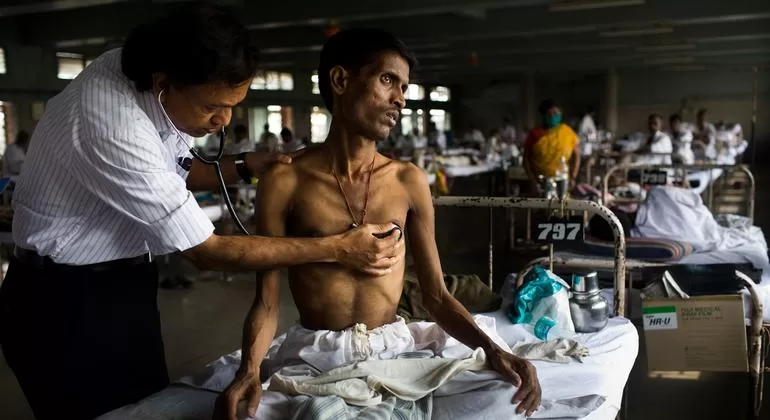
CHENNAI, INDIA — In the global fight against tuberculosis (TB), the first few weeks after diagnosis are a critical race against time. A groundbreaking study out of India offers health workers a powerful new weapon: a simple, bedside risk calculator that can identify which patients are at the highest risk of dying, right at the moment they are diagnosed.
Published in BMJ Open, the statewide cohort study tracked 55,971 adults notified through public health facilities in Tamil Nadu. The results were stark. Researchers found that 7.4% of these patients died within 12 months of their TB notification. Crucially, 67.9% of those deaths occurred within the first two months. This concentrated window of mortality underscores a tragic reality: many vulnerable patients succumb to the illness before standard treatments have time to take effect.
By utilizing basic clinical signs that can be gathered in minutes without waiting for complex lab results, this new tool aims to give frontline clinicians the foresight needed to save lives.
The Power of Simple Bedside Indicators
Developed by researchers at the ICMR-National Institute of Epidemiology in collaboration with the Tamil Nadu State TB Cell, the study sought to create a practical tool for resource-constrained settings.
The researchers discovered that a model based entirely on basic, non-invasive bedside signs performed nearly as well as far more complex models. Doctors and community health workers can assess these five vital markers during a patient’s first visit:
-
Body Mass Index (BMI): Assessing severe undernutrition.
-
Pedal Oedema: Fluid retention and swelling in the feet or lower legs, often signaling severe metabolic distress or organ strain.
-
Respiratory Rate: How fast the patient is breathing.
-
Oxygen Saturation: Measured instantly with a simple pulse oximeter.
-
Inability to Stand Unaided: A direct indicator of profound physical frailty.
When researchers combined these simple physical signs with basic demographic data—such as age, sex, whether the TB was pulmonary or extra-pulmonary, prior treatment history, and microbiological confirmation—the predictive accuracy sharpened significantly. The combined model achieved an Area Under the Curve (AUC) of 0.754, a statistical measure indicating strong predictive reliability.
Why Early Risk Triaging Matters Globally
Tuberculosis remains one of humanity’s most devastating infectious threats. According to the World Health Organization (WHO), TB reclaimed its position as the world’s leading infectious disease killer, placing an immense burden on high-incidence nations.
India carries the highest share of the global TB burden. In busy, overburdened public clinics where beds are limited and diagnostic delays can occur, a one-size-fits-all approach to care can be fatal.
The primary appeal of this new calculator is its clinical immediacy. Because it bypasses the need for advanced laboratory bloodwork or lengthy electronic database inputs, it can be deployed in rural clinics and understaffed urban centers alike. Differentiating high-risk individuals from stable patients allows health systems to efficiently allocate scarce resources, such as immediate hospital admission, supplemental oxygen, intensive nutritional support, and closer follow-up care.
Expert Perspectives: A Shift Toward Differentiated Care
Independent medical experts praise the study’s pragmatic design while noting that it codifies what experienced physicians have long known intuitively.
“Clinicians have always known that a patient who presents with swollen feet, low oxygen levels, or an inability to walk is in severe danger,” explains Dr. Anjali Sen, an infectious disease specialist based in New Delhi, who was not involved in the research. “What this study beautifully achieves is converting those clinical red flags into a structured, validated mathematical model. It takes the guesswork out of triage.”
However, the study’s authors and outside experts offer a note of caution. The model was built entirely on data from public facilities within Tamil Nadu. Because patient demographics, regional health infrastructure, and co-infection rates (like HIV or diabetes) vary wildly across different states and countries, the tool requires broader external validation before it can be rolled out globally. Currently, the tool has not yet been adopted for nationwide implementation by India’s Central TB Division.
“A prediction tool is only as good as the health system’s capacity to respond,” points out Dr. Sen. “The calculator can flag a patient at extreme risk of dying, but it cannot administer oxygen, provide therapeutic food, or ensure medication adherence. The tool must be paired with rapid clinical protocols to truly shift mortality numbers.”
Practical Takeaways for Patients and Families
For the general public, the implications of this study are clear and actionable. Tuberculosis is not just a chronic cough; it is a systemic disease that can rapidly devastate the body if diagnosed late.
If you or a loved one is diagnosed with TB, the presence of certain symptoms should be treated as an immediate medical emergency rather than a typical progression of the disease. Families should look out for these critical warning signs:
-
Extreme breathlessness or rapid breathing.
-
New or worsening swelling in the feet, ankles, or legs.
-
Severe weakness that prevents the person from standing up without help.
-
A visibly frail appearance or rapid, severe weight loss.
For public health systems, this research marks a vital step toward “differentiated care”—acknowledging that every tuberculosis patient requires a tailored level of medical attention from day one. By equipping frontline workers with a simple calculator, health systems can intervene during the deadliest first 60 days of the disease, turning preventable tragedies into stories of survival.
References
- https://health.economictimes.indiatimes.com/news/diagnostics/new-tool-can-predict-tb-death-risk-at-diagnosis-says-study/132005666?utm_source=top_story&utm_medium=homepage
Medical Disclaimer: This article is for informational purposes only and should not be considered medical advice. Always consult with qualified healthcare professionals before making any health-related decisions or changes to your treatment plan. The information presented here is based on current research and expert opinions, which may evolve as new evidence emerges.