 0
0
 0
0
Read Time:6 Minute, 32 Second
DHAKA, Bangladesh — Bangladesh reported six additional deaths among children exhibiting measles-like symptoms in the 24 hours ending 8:00 a.m. on August 9, 2026, pushing the country’s combined measles-related death toll to 873 since March, according to the latest figures from the Directorate General of Health Services (DGHS).
The recent update recorded 988 new suspected cases and 75 laboratory-confirmed infections within a single day. This brings the cumulative national total to 136,320 suspected cases and 17,115 confirmed cases in what public health officials are describing as one of the region’s most severe viral surges in recent years. The crisis highlights severe strains on pediatric care units, critical gaps in routine childhood vaccination schedules, and the relentless speed of a pathogen known as one of the most infectious viruses on Earth.
Unpacking the Data: Confirmed vs. Suspected Metrics
Understanding the scale of the Bangladesh outbreak requires a close examination of epidemiological definitions. Of the 873 reported deaths, public health laboratories have confirmed measles in 98 cases. The remaining 775 deaths are classified as suspected measles-related fatalities—meaning the individuals presented with classic clinical symptoms such as high fever and a characteristic maculopapular rash, but clinical or laboratory confirmation remains pending.
“Epidemiologists rely on suspected case counts during widespread outbreaks because diagnostic laboratory capacity often becomes overwhelmed,” explains Dr. Aris Thorne, an independent global health strategist and infectious disease epidemiologist not involved in the national response. “While some suspected cases may ultimately be reclassified, the high volume of clinically aligned deaths accurately reflects a health system experiencing severe, acute stress.”
The outbreak began accelerating rapidly in mid-March 2026. According to an outbreak assessment by the World Health Organization (WHO), geographic transmission was confirmed across 58 of Bangladesh’s 64 districts within weeks, affecting all eight administrative divisions. Early surveillance data indicated that between March 15 and April 14 alone, the country logged 19,161 suspected cases and 166 suspected deaths.
       [ Early Outbreak Demographics (WHO Data) ]

  Infants < 9 months          [33%]  <-- Too young for Dose 1
  Children < 2 years          [66%]  <-- High vulnerability
  Children < 5 years          [79%]  <-- Primary disease burden
Children under five years old bear the vast majority of the disease burden, accounting for 79% of early reported cases. Crucially, infants under nine months old made up 33% of early infections—a demographic particularly vulnerable because they are too young to receive their first scheduled dose of the measles-containing vaccine (MCV1), relying entirely on community herd immunity for protection.
Anatomy of Transmission: Why Measles Spreads So Fast
Measles is an airborne viral pathogen transmitted when an infected person breathes, coughs, or sneezes. The virus is exceptionally hardy; infectious respiratory droplets can linger in the air or remain viable on physical surfaces for up to two hours after an infected individual has left the room.
Public health professionals measure a pathogen’s contagiousness using the basic reproduction number ($R_0$). While seasonal influenza typically carries an $R_0$ of 1.2 to 1.5, measles boasts an $R_0$ ranging between 12 and 18. This means a single infected person in a fully susceptible population can infect up to 18 other individuals.
| Characteristic | Measles Viral Profile | Public Health Relevance |
| Transmission Mode | Airborne droplets / Aerosols | Spreads easily in crowded indoor environments |
| Air/Surface Survival | Up to 2 hours | High potential for indirect transmission |
| Incubation Period | 7 to 14 days | Individuals can spread virus before major rash appears |
| Basic Reproduction ($R_0$) | 12 – 18 | Requires ~95% population immunity to prevent outbreaks |
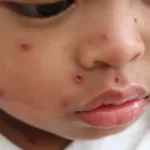
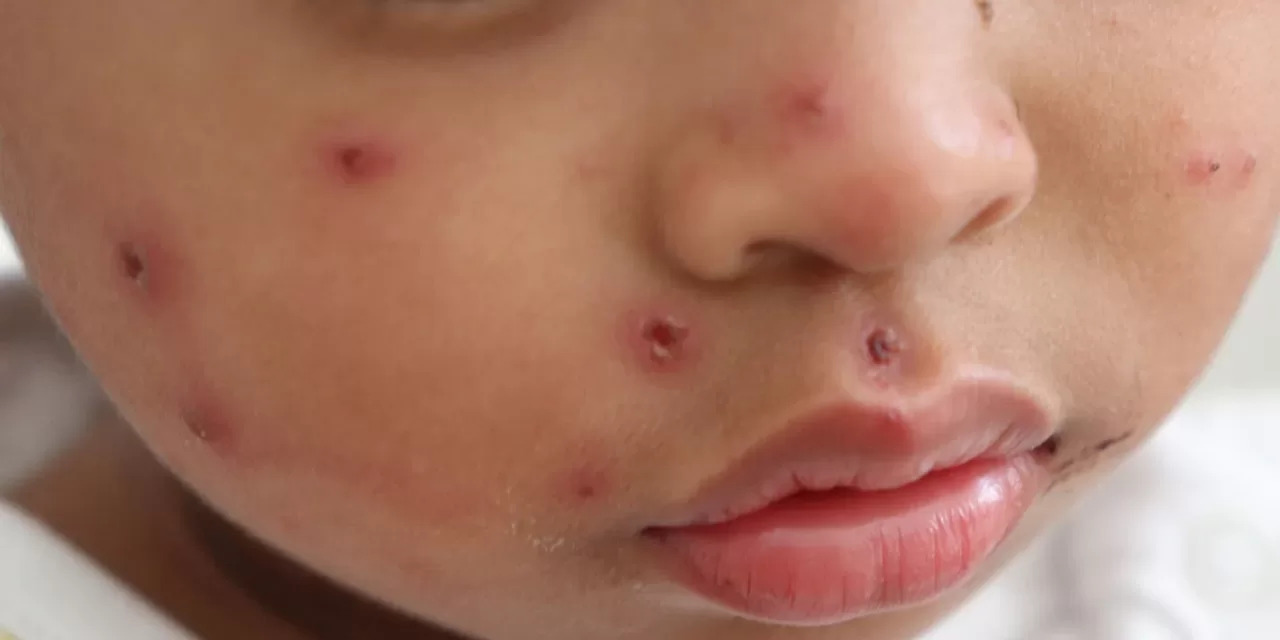
Initial symptoms—fever, persistent cough, runny nose (coryza), and inflamed eyes (conjunctivitis)—typically manifest 7 to 14 days after exposure. Small, white lesions known as Koplik’s spots may appear inside the mouth before a red, blotchy rash spreads from the hairline down the neck, trunk, and extremities.
While often mischaracterized as a benign childhood illness, measles can lead to severe complications. Severe diarrhea, middle ear infections, acute laryngotracheobronchitis (croup), and viral pneumonia represent common acute risks. Severe neurological complications like encephalitis (brain inflammation) can cause permanent disability, while subacute sclerosing panencephalitis (SSPE)—a fatal central nervous system degenerative disease—can emerge years after recovery.
Systemic Vulnerabilities: The Roots of the Surge
Public health specialists refer to measles as a “sentinel disease” or a “canary in the coal mine.” Because of its high transmissibility, the virus rapidly identifies and exploits tiny coverage gaps in health systems long before other preventable diseases surface.
To achieve herd immunity—where enough of the population is immune to prevent sustained disease transmission—communities must reach and maintain at least 95% coverage with two doses of the measles-containing vaccine.
[ Vaccine Supply Disruptions ] ──┐
                                 ├──> [ Lower Population Immunity ] ──> [ Rapid Outbreak ]
[ Missed Campaign Doses (2020) ] ──┘
According to WHO reports, the resurgence in Bangladesh traces back to an accumulation of susceptible cohorts created by:
-
Disrupted Routine Immunization: Structural gaps in routine pediatric vaccination services over consecutive years.
-
Supply Chain Bottlenecks: Localized vaccine stock-outs reported throughout 2024 and 2025.
-
Suspended Catch-Up Campaigns: The absence of regular, nationwide supplementary immunization activities (SIAs) since 2020.
“When population-level two-dose coverage drops from 95% down to 70% or 60%, an outbreak is no longer a possibility—it becomes a mathematical certainty,” notes Dr. Yonatan Grad, Professor of Immunology and Infectious Diseases at the Harvard T.H. Chan School of Public Health, who has published extensively on under-vaccination trends. “Outbreaks of this magnitude illustrate how quickly immunity gaps compound when routine health services experience sustained pressure.”
Emergency Response and Treatment Protocols
In response to the escalating crisis, Bangladesh launched an emergency, phased measles-rubella (MR) vaccination campaign on April 5, initially targeting children aged six to 59 months in highest-incidence districts before expanding operations nationally.
Alongside emergency vaccination, public health authorities are distributing therapeutic doses of Vitamin A to pediatric patients. Vitamin A does not directly prevent viral acquisition, but acute measles infection rapidly depletes severe systemic Vitamin A reserves, significantly increasing the risk of corneal damage, blindness, and fatal complications. WHO clinical guidelines recommend two doses of Vitamin A given 24 hours apart for all children diagnosed with measles.
Strategic Priorities for Public Health Responders
-
Surveillance Scaling: Expanding rapid-diagnostic kit distribution to rural clinics to clear testing backlogs.
-
Hospital Infection Control: Establishing dedicated isolation wards to prevent nosocomial (hospital-acquired) spread to non-infected, immunocompromised pediatric patients.
-
Targeted Outreach: Mobilizing mobile medical units to reach mobile, displaced, or geographically isolated populations in remote rural regions and informal urban settlements.
Actionable Guidance for Families
Public health authorities urge parents, caregivers, and community members to take immediate protective measures:
-
Verify Vaccination Status: Check pediatric health records to ensure children have received both scheduled doses of the measles vaccine. If a dose was missed, consult a health provider immediately to catch up.
-
Recognize Early Signs: Monitor for high fever accompanied by cough, runny nose, red eyes, or rash.
-
Isolate and Call Ahead: If you suspect measles, isolate the patient from others—especially infants under nine months and pregnant women. Call medical centers prior to arrival so staff can implement respiratory precautions and avoid exposing waiting room patients.
-
Understand Clinical Care: There is no specific prescription antiviral cure for measles. Medical care centers on supportive therapies: adequate oral hydration, nutritional support, fever management, and treatment of secondary bacterial infections (such as bacterial pneumonia) with clinician-prescribed antibiotics when indicated.
References
-
Directorate General of Health Services, Bangladesh. Daily measles outbreak update, reported August 9, 2026, as syndicated by NDTV and United News of Bangladesh. ndtv
Medical Disclaimer: This article is for informational purposes only and should not be considered medical advice. Always consult with qualified healthcare professionals before making any health-related decisions or changes to your treatment plan. The information presented here is based on current research and expert opinions, which may evolve as new evidence emerges.


Happy
0 %

Sad
0 %

Excited
0 %

Sleepy
0 %

Angry
0 %

Surprise
0 %