 0
0
 0
0
JAIPUR — In June 2025, the Biwal family of Jamwa Ramgarh, near Jaipur, was celebrated across India as a symbol of academic perseverance. Five siblings and cousins from a modest household had simultaneously cracked the National Eligibility cum Entrance Test (NEET-UG), securing highly coveted seats in government medical colleges against a daunting pool of over 20.8 lakh candidates.
Today, that “miracle” is the epicenter of a widening criminal investigation.
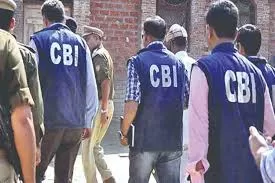
On May 12, 2026, the Central Bureau of Investigation (CBI) raided the Biwal residence, arresting three family members. The agency is probing an alleged cross-state paper-leak syndicate that compromised the May 3, 2026, NEET-UG exam, and is retroactively auditing the family’s anomalous 2025 academic breakthrough.
The scandal has forced the National Testing Agency (NTA) to cancel the 2026 results for an estimated 22.8 lakh aspirants, scheduling a nationwide re-examination for June 21, 2026. Beyond the immediate legal fallout, the crisis has ignited an intense debate among medical educators and public health experts over the integrity of the pipeline supplying India’s future healthcare workforce.
The 2026 Paper Leak: A Network Exposed
According to CBI submissions presented in court, the NEET-UG 2026 question paper was compromised days before the examination. Investigators allege that a highly organized network circulated a WhatsApp-based “guess paper” containing 500 to 600 actual exam questions.
The logistical chain of the illicit operation reportedly spanned multiple states:
-
The Source: A Maharashtra-based supply network involving P.V. Kulkarni, a professor who served on the NTA-constituted committee responsible for designing the 2026 question paper. He, alongside a Pune-based associate, allegedly compromised the document for a substantial financial payout.
-
The Intermediaries: Investigators state that Shubham Khairnar of Nashik approached Yash Yadav of Pune in April 2026 to procure the paper. Yadav then allegedly passed the leaked material to the Biwal family in Rajasthan after Mangilal Biwal negotiated access for his son, Vikas.
-
The Crackdown: Following a tip-off from a whistleblowing chemistry teacher in Sikar—who flagged a matching 100-question document circulating on social media—the CBI arrested Mangilal Biwal, his brother Dinesh, and Vikas. They remain in seven-day remand custody, while a fourth relative, Rishi, remains at large.
The Statistical Red Flags of 2025
While the current arrests stem from the 2026 cycle, the CBI has officially reopened the file on the family’s historic 2025 success. At the time, the NTA maintained that NEET-UG 2025 had been conducted seamlessly without systemic breaches. However, data analysts and investigators are now evaluating the siblings’ performance trajectories, which present profound statistical anomalies.
Medical entrance exams typically reflect a strong correlation between consistent mock test performance and final outcomes. The historical academic records of the Biwal siblings, however, tell a different story:
Biwal Family Performance Analysis: 2024 vs. 2025
| Candidate | NEET-2024 Score (Out of 720) | Coaching Centre Mock Average | NEET-2025 Performance |
| Vikas | 270 | 384 | 85.11 Percentile |
| Pragati | 332 | 302 | 89.08 Percentile |
| Gunjan | 355 | 320–342 | Secured Government Seat (Varanasi) |
| Sania | Modest baseline | Lower-tier mock bracket | 94.07 Percentile |
| Palak | Modest baseline | Lower-tier mock bracket | 98.61 Percentile |
Against a nationwide qualifying rate of approximately 56% in 2025, such concentrated, massive percentile leaps within a single household have been flagged by forensic investigators as mathematically improbable without external intervention. Intelligence inputs suggest the syndicate may have charged upwards of ₹65 lakh per family packet, making it one of the most lucrative medical examination rackets exposed in recent years.
Systemic Risks to Public Health and Trust
For the broader medical community, the implications of exam manipulation extend far beyond academic dishonesty; they pose a long-term risk to institutional public health.
When competitive ranks can be purchased, the foundational principle of medical meritocracy is eroded. Public health policy observers warn that while compromised entry standards do not automatically guarantee clinical incompetence, they distort the demographic and cognitive profile of entering medical cohorts.
“When a handful of students can buy a competitive edge at the cost of lakhs, the entire idea of merit becomes theatrical rather than real,” noted a senior education policy analyst in an interview with The Print. “The current probe is as much about restoring credibility to our healthcare system as it is about punishing individuals.”
Furthermore, the psychological toll on honest aspirants is severe. The cancellation of the 2026 exam forces 2.2 million students to endure prolonged anxiety, sleep deprivation, and disrupted academic timelines, which mental health professionals warn contributes to widespread burnout before these students even enter medical school.
Institutional Response and Advanced Countermeasures
The NTA has defended its evolving security protocols, noting that both the 2025 and 2026 exams deployed high-tech deterrents, including GPS-tracked transport logistics for question papers, mandatory biometric verification at centers, and AI-driven CCTV surveillance.
[NTA Security Evolution]
2025: GPS Tracking + Biometric Verification + AI Surveillance
   ↓
2026: 5G Signal Jammers + Digitally Watermarked Paper Packets
Despite the integration of 5G signal jammers and digitally watermarked paper packets in 2026, the agency conceded that internal human elements—such as the alleged compromise of paper-setters—remain a critical vulnerability. The NTA has stated it is cooperating fully with the CBI but will withhold final administrative or punitive actions until the judicial inquiry formally concludes.
Limitations of the Current Investigation
As a matter of journalistic objectivity, it must be emphasized that the evidence made public thus far relies primarily on CBI arraignment notes, preliminary interrogations, and initial forensic disclosures. The underlying technical and digital forensics from the seized WhatsApp servers have not yet been subjected to independent judicial scrutiny.
Under Indian law, the Biwal family members and all accused individuals maintain the presumption of innocence until proven guilty in a court of law. Additionally, the precise scale of the leak—and whether other families or coaching institutes across northern India utilized the same syndicate—remains an open question.
Guidance for Families and Aspirants
For health-conscious families navigating the highly competitive medical admissions landscape, this crisis serves as a stark reminder of the dangers of commercialized shortcuts. Educational authorities advise the public to observe strict precautions:
-
Verify Information Channels: Rely exclusively on official NTA updates and verified institutional circulars. Disregard “guaranteed success” claims from unaccredited coaching centers.
-
Avoid Sub-rosa Forums: Do not join unauthorized Telegram or WhatsApp groups offering “guess papers” or “leaked sets.” Security data indicates these groups are almost universally operations designed to extort money or distribute fraudulent content.
-
Report Anomalies: Suspicious academic offers or requests for premium fees tied to “seat security” should be reported immediately to cyber-crime authorities.
As the June 21 re-examination approaches, the focus returns to reinforcing the systemic checks required to ensure that the stethoscope remains a symbol of uncompromised merit and public trust.
References
Media & Investigative Reports
-
NDTV: “5 Of Jaipur Family Cleared NEET In 2025, Now At Centre Of Paper Leak Row – Biwal Family,” Published May 14, 2026.
Medical Disclaimer: This article is for informational purposes only and should not be considered medical advice. Always consult with qualified healthcare professionals before making any health-related decisions or changes to your treatment plan. The information presented here is based on current research and expert opinions, which may evolve as new evidence emerges.