 0
0
 0
0
NEW DELHI – In a significant move toward personalizing chronic disease management, the All India Institute of Medical Sciences (AIIMS), New Delhi, officially launched an in-house, advanced blood-testing service on May 11, 2026. This new initiative provides Therapeutic Drug Monitoring (TDM) for levetiracetam and lamotrigine—two of the most modern and widely prescribed anti-epilepsy medications—effectively eliminating the steep out-of-pocket costs that have long hindered effective treatment for thousands of patients.
The service, operating out of the AIIMS Neurosciences Centre, aims to solve a critical challenge in neurology: the “one-size-fits-all” dosing dilemma. By measuring the exact concentration of medication in a patient’s bloodstream, clinicians can now tailor dosages to the individual’s unique metabolism, ensuring the drug is potent enough to prevent seizures while remaining below the threshold of toxicity.
The Science of Precision: Staying Within the “Therapeutic Window”
Epilepsy is a neurological disorder characterized by recurrent seizures, affecting approximately 10 million people in India. While medication is the primary line of defense, finding the right dose is often a balancing act. Factors such as age, genetics, liver function, and even other concurrent medications can cause the same dose of a drug to produce vastly different concentrations in different people.
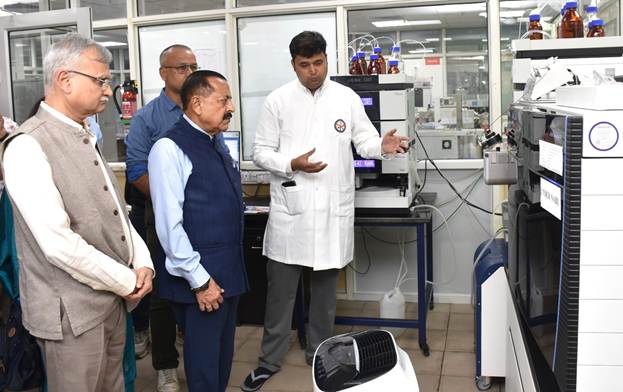
“Therapeutic Drug Monitoring is essentially a GPS for epilepsy treatment,” explains Prof. Ashok Sharma, Professor In-charge of the Neurobiochemistry Laboratory at AIIMS. “It tells us exactly where the patient stands within the ‘therapeutic window’—that narrow range where the medicine is effective but not harmful.”
Before this launch, patients requiring TDM for newer drugs like levetiracetam were forced to seek services at private diagnostic centers. These tests typically cost between ₹6,000 and ₹10,000 per sample. For a patient requiring multiple tests a year, this created a massive financial barrier. The new AIIMS facility offers these tests for free initially, with plans to transition to a highly subsidized model that remains a fraction of private sector costs.
Advanced Technology Meets Digital Accessibility
The Neurobiochemistry Laboratory utilizes chemiluminescence-based immunoassay (CLIA) technology. This sophisticated diagnostic tool allows for high sensitivity and specificity, meaning it can detect even minute amounts of the drug in a small blood sample.
The integration of this service into the AIIMS digital ecosystem is a cornerstone of the project. Results are uploaded directly to the e-Hospital and Online Registration System (ORS) portals.
“Only a small blood sample is needed for the test, and reports will be available online… this allows for rapid clinical action without requiring the patient to make multiple trips to the hospital,” noted Prof. Sharma.
This digital-first approach is particularly beneficial for patients at the National Cancer Institute (NCI) in AIIMS Jhajjar, where the service has also been extended to support those experiencing seizures due to brain tumors or neuro-critical care needs.
Implications for Public Health and Patient Safety
The public health implications of affordable TDM are profound. When drug levels fall too low, patients risk breakthrough seizures, which can lead to physical injury or “status epilepticus”—a life-threatening state of persistent seizure. Conversely, if levels are too high, patients may suffer from debilitating side effects, including:
-
Severe dizziness and loss of coordination (ataxia)
-
Chronic drowsiness
-
Skin rashes or allergic reactions
-
Potential liver or kidney stress
By providing a low-cost monitoring solution, AIIMS expects to see improved treatment adherence. When patients feel the side effects are managed and they are not burdened by the cost of testing, they are more likely to remain on their prescribed regimens. This, in turn, reduces the frequency of emergency room visits and hospitalizations linked to poorly managed epilepsy.
Expert Perspectives: A Move Toward Precision Neurology
Prof. S.B. Gaikwad, Chief of the Neurosciences Centre at AIIMS New Delhi, views this as a milestone for “Precision Neurology.” He emphasizes that moving away from generic protocols toward individualized physiology is the future of the field.
External experts agree. While not involved in the AIIMS program, neurologists noting international guidelines from the International League Against Epilepsy (ILAE) highlight that TDM is an essential tool in specific clinical scenarios, such as:
-
Polypharmacy: When a patient is on multiple drugs that might interact.
-
Pregnancy: When physiological changes rapidly alter drug metabolism.
-
Comorbidities: When liver or kidney disease changes how the body clears medication.
Balancing the Narrative: Limitations of TDM
While the new blood test is a powerful tool, experts caution that it is not a “magic bullet.”
“Blood levels provide supporting data, but they do not replace clinical judgment,” says one senior neurologist. “A patient might have ‘normal’ drug levels but still experience seizures, or they might be slightly above the range but feel perfectly fine. The patient’s history and seizure frequency remain our primary guides.”
Furthermore, the service is currently localized to AIIMS attendees. For this initiative to have a truly national impact, similar subsidized models would need to be adopted across other state-run medical colleges and public hospitals. Additionally, TDM is not a substitute for diagnostic tools like Electroencephalograms (EEG) or MRI scans, which help identify the underlying cause of the epilepsy.
What This Means for Patients
For the millions living with epilepsy in India, the AIIMS initiative signals a shift toward more compassionate, data-driven care. Patients currently being treated at AIIMS New Delhi or NCI-AIIMS Jhajjar who are on levetiracetam or lamotrigine should consult their neurologist to see if they are candidates for the test.
It is particularly recommended for those who:
-
Have not achieved complete seizure control despite regular medication.
-
Are experiencing new or worsening side effects.
-
Are taking other medications for conditions like hypertension or diabetes that might interfere with their epilepsy treatment.
As AIIMS New Delhi continues to expand its neurodiagnostic suite, the focus remains clear: making the highest standard of medical science accessible to the common citizen, one blood test at a time.
References
-
Study/Report Source: AIIMS, New Delhi. “AIIMS launches low‑cost advanced test to make epilepsy treatment safer.” The Economic Times – Health, May 10, 2026.
Medical Disclaimer: This article is for informational purposes only and should not be considered medical advice. Always consult with qualified healthcare professionals before making any health-related decisions or changes to your treatment plan. The information presented here is based on current research and expert opinions, which may evolve as new evidence emerges.