 0
0
 0
0
Read Time:6 Minute, 0 Second
GANDHINAGAR, India — Public health officials in western India are intensifying surveillance efforts following an escalation in pediatric brain inflammation cases linked to a rare, vector-borne pathogen. According to the latest data released by the Gujarat Health Department on August 11, 2026, the state has logged 225 suspected cases of Chandipura virus (CHPV) disease since late June. The state has recorded 39 laboratory-confirmed infections, with the confirmed death toll reaching 25.
The surge has elevated concerns among medical professionals across South Asia due to the pathogen’s propensity to strike young children and progress rapidly into acute encephalitis syndrome (AES)—a severe inflammation of the brain tissue.
Epidemiologists emphasize that the raw metrics require precise contextualization. The 225 “suspected cases” describe a broad clinical category of patients presenting with acute fever and neurological symptoms who have undergone initial screening. In contrast, “confirmed cases” denote instances where diagnostic testing positively isolated CHPV genetic material or antibodies. Health authorities caution that pending laboratory results may adjust these tallies, as several other viral, bacterial, or parasitic agents can trigger identical clinical manifestations.
Anatomy of an Outbreak: Understanding the Vector and the Virus
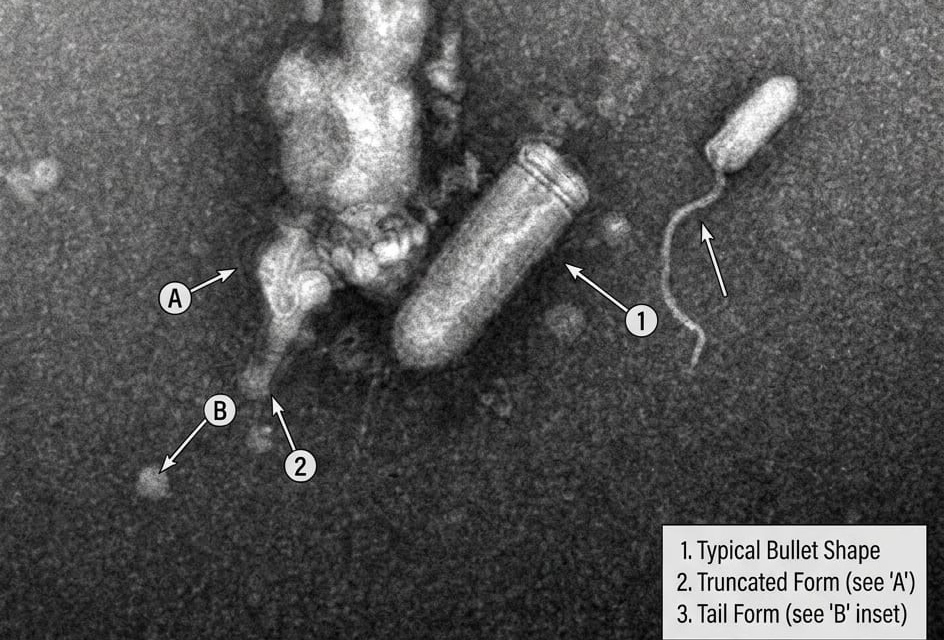
The uptick in cases aligns with the regional monsoon season, a time when environmental humidity and standing water create optimal breeding conditions for disease vectors. First identified by virologists in Nagpur, India, in 1966, Chandipura virus belongs to the Vesiculovirus genus within the Rhabdoviridae family—the same viral family that includes the rabies virus.
The primary biological vector responsible for transmitting CHPV to humans is the female phlebotomine sandfly (Phlebotomus papatasi). These miniature insects, roughly one-third the size of standard mosquitoes, thrive in organic debris, cracks in mud walls, and damp soil. While sandflies remain the principal reservoir, secondary transmission studies have investigated the potential vector competence of certain mosquito species, including Aedes aegypti.
“Chandipura virus acts with remarkable speed,” explains Dr. Vivek Jain, Senior Director and Unit Head of Pediatrics at Fortis Hospital, Shalimar Bagh, New Delhi, who is not directly involved in the Gujarat state outbreak management. “Unlike many seasonal pediatric viral infections that run a gradual course over a week, CHPV can breach the blood-brain barrier rapidly, causing severe neurological deterioration within 24 to 48 hours of initial symptom onset.”
Historically, CHPV outbreaks have occurred sporadically across central and western India, particularly in Andhra Pradesh, Maharashtra, and Gujarat. Data published by the Union Health Ministry during a major 2024 outbreak demonstrated that out of 148 recorded AES cases across multiple states, CHPV was confirmed in 51 instances—underscoring that while CHPV is a potent trigger for encephalitic illness, it operates alongside other circulating seasonal pathogens.
Clinical Progression: Identifying Early Red Flags
The initial clinical presentation of Chandipura virus infection frequently mimics routine childhood illnesses, making early triage challenging for caregivers and clinicians alike.
Initial Prodromal Phase
-
Sudden high-grade fever
-
Severe headache and malaise
-
Acute gastrointestinal distress (recurrent vomiting, diarrhea)
-
Irritability or marked physical weakness
Critical Neurological Transition
As the disease advances to target the central nervous system, symptoms escalate rapidly into Acute Encephalitis Syndrome:
[Sudden High Fever & Vomiting] ➔ [Progressive Drowsiness / Confusion] ➔ [Seizures / Loss of Consciousness]
-
Progressive lethargy or difficulty awakening the child
-
Behavioral changes and disorientation
-
Generalized or focal muscular seizures
-
Rapid decline into altered consciousness or coma
Due to the condensed window between early fever and central nervous system involvement, pediatricians advise against managed waiting periods or reliance on home remedies. Immediate evaluation at a tertiary healthcare facility equipped with pediatric intensive care units (PICU) is essential when high fever coincides with repeated vomiting or altered mental status.
Diagnostic Protocols and Supporting Care
Diagnosing Chandipura virus requires specialized molecular techniques. The primary gold standard is Reverse Transcription-Polymerase Chain Reaction (RT-PCR), which detects viral RNA in serum or cerebrospinal fluid during the early viremic phase. According to laboratory guidelines from the National Centre for Disease Control (NCDC), quantitative PCR processing typically requires a turnaround window of two to four days.
Because clinical deterioration often outpaces diagnostic turnarounds, medical teams must initiate supportive emergency care immediately upon clinical suspicion rather than waiting for laboratory confirmation.
Currently, there is no approved antiviral drug specific to Chandipura virus, nor is there a commercially available vaccine. Clinical management relies entirely on aggressive supportive therapy designed to maintain vital functions and prevent secondary brain injury:
| Clinical Objective | Intervention Strategy |
| Seizure Control | Rapid administration of intravenous anticonvulsants |
| Intracranial Pressure Management | Osmotic therapy and elevated head positioning to reduce cerebral edema |
| Hemodynamic Support | IV fluid resuscitation and vasopressors to maintain organ perfusion |
| Respiratory Protection | Early mechanical ventilation in cases of severe coma or airway compromise |
Public Health Response and Household Prevention
To contain the spread, the Union Health Ministry alongside state departments has initiated a multi-pronged outbreak response focused on vector abatement, community education, and rapid clinical referral systems. Field teams are conducting indoor residual spraying with insecticides in affected villages, targeting sandfly resting sites.
Preventing sandfly bites remains the primary line of defense for families living in or traveling through endemic zones. Medical experts recommend several evidence-based exposure reduction steps:
-
Vector Management: Repair cracks, fissures, and damp crevices in residential walls where sandflies breed. Keep livestock enclosures separated from living quarters.
-
Personal Protection: Dress children in lightweight, long-sleeved clothing that covers the limbs, particularly during dusk and dawn when sandfly activity peaks.
-
Barrier Protection: Utilize fine-mesh bed nets treated with insecticide. Standard mosquito netting may not stop smaller sandfly species unless fine-gauge mesh is used.
-
Repellents: Apply age-appropriate topical insect repellents containing DEET, Picaridin, or Oil of Lemon Eucalyptus (OLE) according to product safety labels.
-
Environmental Hygiene: Eliminate organic waste, animal manure, and dense vegetation immediately surrounding residential dwellings.
Limitations in Current Evidence and Epidemiological Realities
Epidemiologists caution against using raw figures to calculate a definitive Case Fatality Rate (CFR) for the current outbreak. Calculating a precise CFR requires matching confirmed deaths strictly against the overall denominator of total confirmed infections—not the broader, heterogeneous pool of suspected cases.
Furthermore, much of the existing medical literature on Chandipura virus is derived from retrospective observational studies and outbreak summaries rather than large-scale prospective clinical trials. A comprehensive 2024 review published in New Microbes and New Infections highlighted that while significant strides have been made in understanding the virus’s structural biology, critical knowledge gaps remain regarding long-term neurological outcomes among survivors and the exact mechanisms of viral entry into the central nervous system.
Public health experts stress that while the mortality rate among laboratory-confirmed encephalitis cases is elevated, widespread panic is counterproductive. The vast majority of routine childhood fevers are caused by self-limiting viral illnesses. Vigilance, timely medical consultation for severe symptoms, and adherence to vector control represent the most effective strategies for protecting vulnerable pediatric populations.
Medical Disclaimer
Medical Disclaimer: This article is for informational purposes only and should not be considered medical advice. Always consult with qualified healthcare professionals before making any health-related decisions or changes to your treatment plan. The information presented here is based on current research and expert opinions, which may evolve as new evidence emerges.
References


Happy
0 %

Sad
0 %

Excited
0 %

Sleepy
0 %

Angry
0 %

Surprise
0 %