 0
0
 0
0
Nairobi, Kenya — June 6, 2026
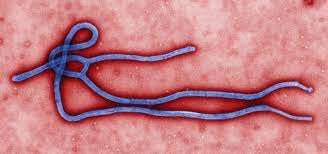
In a decisive move to halt an escalating public health crisis, the World Health Organization (WHO) and the Africa Centres for Disease Control and Prevention (Africa CDC) have launched a joint, six-month continental response plan valued at US$ 518 million. The emergency strategy aims to prepare for, rapidly detect, and control the ongoing Ebola outbreak tearing through parts of Central Africa. Caused by the rare and deadly Bundibugyo virus, the outbreak has quickly escalated across the Democratic Republic of the Congo (DRC) and neighboring Uganda, prompting health officials to mount a massive, coordinated cross-border defense.
Key Findings and Current Outbreak Statistics
The strategic framework, spanning June through November 2026, seeks to mobilize global funding to support African nations and international partners on the frontlines. The scale of the current crisis is severe. According to the European Centre for Disease Prevention and Control (ECDC) data updated through June 3, 2026, the DRC has registered 381 confirmed cases, including 64 deaths, with 233 individuals currently isolated in specialized hospital wards.
Meanwhile, Uganda has reported 19 confirmed cases and two deaths. Just yesterday, on June 5, Ugandan health authorities identified three new cases, all of whom were documented contacts of previously infected individuals, signaling active local transmission.
WHO Director-General Dr. Tedros Adhanom Ghebreyesus confirmed that this crisis represents the fourth-largest Ebola outbreak ever recorded. The Bundibugyo species of the virus is exceptionally rare, having emerged only twice before: in Uganda in 2007 and in the DRC in 2012. The current surge marks the largest and most geographically complex Bundibugyo outbreak in medical history.
Expert Commentary on the Response Strategy
Public health leaders emphasize that traditional, siloed approaches will not suffice given the fluidity of regional borders and population movement.
“The only way to beat this outbreak is through close partnership, working together under the leadership of the affected countries in one coordinated effort, guided by a simple principle: one plan, one budget, one team,” Dr. Tedros announced during the joint press conference in Nairobi. “Containing Ebola depends on political commitment, sustained financing, and the trust and engagement of communities. This plan places communities at the center, because without their participation, contact tracing falters, safe care is delayed, and transmission continues.”
Dr. Jean Kaseya, Director-General of Africa CDC, echoed this urgency, emphasizing the need for unprecedented logistical speed. “Ebola moves fast. Africa must move faster,” Dr. Kaseya stated. “This joint plan gives the continent a clear path to act with speed and unity: to save lives, support the affected countries, and protect neighboring communities.”
Despite the resolute rhetoric, international health officials acknowledge they are fighting an uphill battle. Dr. Tedros candidly admitted that “the outbreak is escalating rapidly, and we are still trying to catch up.” Independent infectious disease specialists have noted that overstrained local surveillance systems mean current case numbers likely represent a significant undercount.
Critical Context: No Approved Vaccines or Therapeutics
A primary driver of concern among epidemiologists is the total absence of licensed vaccines or targeted therapeutics for the Bundibugyo species. While the medical community successfully developed highly effective vaccines (such as Ervebo) and monoclonal antibody treatments for the more common Zaire strain of Ebola during previous West African outbreaks, these countermeasures do not provide cross-protection against the Bundibugyo strain.
Historical data indicates that the Bundibugyo virus carries a case fatality rate (CFR) ranging from 30% to 50%. A comprehensive meta-analysis published in the Journal of Infection and Public Health found a pooled baseline CFR of 32.8% across all documented historical outbreaks. While statistically less lethal than the Zaire strain—which carries an average CFR of 66.6%—the Bundibugyo virus remains an incredibly dangerous pathogen with no standardized cure.
Medical researchers are scrambling to fill this therapeutic void. Three experimental candidate vaccines are being fast-tracked:
-
The University of Oxford: Developing a viral-vector vaccine utilizing the same technology deployed for COVID-19, expected to begin clinical trials within two months.
-
IAVI: Adapting its existing recombinant vesicular stomatitis virus (rVSV) platform. Early non-human primate testing has demonstrated nearly 100% protection against the Bundibugyo strain.
-
Moderna: Utilizing its flexible messenger RNA (mRNA) platform to design a candidate targeting specific Bundibugyo surface glycoproteins.
Comprehensive Response Plan Components
The joint WHO-Africa CDC roadmap establishes a “One Response” operational matrix, standardizing clinical protocols across international borders. The $518 million budget is distributed across seven critical pillars:
-
Emergency Coordination & Surveillance: Setting up unified command centers and active contact-tracing networks.
-
Laboratory Diagnostics: Deploying mobile PCR testing labs to cut down specimen turnaround times in remote areas.
-
Infection Prevention & Control (IPC): Supplying personal protective equipment (PPE) and training to local clinic staff to prevent hospitals from becoming amplification points.
-
Clinical Care Optimization: Constructing specialized Ebola Treatment Units (ETUs) focused on aggressive supportive care, such as advanced fluid resuscitation.
-
Community Engagement: Partnering with local leaders and elders to co-design culturally respectful safe burial protocols.
-
Logistical Support: Ensuring supply chains remain open for essential non-Ebola health provisions.
-
Cross-Border Collaboration: Synchronizing screening measures at checkpoints along the porous DRC-Uganda border.
Geographic Spread and Transmission Challenges
Containing the pathogen is complicated by the socio-political realities of the affected regions. In the DRC, the epicenter resides in Ituri Province, which accounts for 359 confirmed cases distributed across 17 distinct health zones. Secondary clusters have registered 19 cases in North Kivu and three cases in South Kivu. This geographic zone is currently navigating long-standing humanitarian crises, civil insecurity, and high population displacement, making traditional epidemiological containment incredibly hazardous.
Conversely, Uganda’s situation highlights the dangers of urban transmission. Eight of the country’s cases have occurred within the densely populated capital city of Kampala, with an additional case found in the neighboring Wakiso district. All initial cases possessed direct travel links to the DRC, but subsequent contact tracing has confirmed that at least seven cases stem from local, urban transmission events.
Public Health Implications and Modeling Concerns
The potential trajectory of the virus has raised red flags at global health agencies. Recent predictive modeling released by the U.S. Centers for Disease Control and Prevention (CDC) suggests a worst-case scenario where cases could swell to 10,000 or even exceeding 20,000 if swift intervention is not achieved.
Dr. Satish Pillai, the incident manager for the U.S. CDC’s Ebola response, noted that “without robust public health measures, the modeling work suggests an outbreak of that scale is possible.” The CDC’s mathematical models highlight that containment hinges almost entirely on patient isolation rates; raising the quarantine rate of symptomatic individuals to 50% or 70% would flatten the curve significantly, keeping the total case burden closer to baseline levels.
Funding Gaps and Limitations
The primary obstacle to executing this continental defense plan remains financial. Out of the required $518 million, international donor commitments currently stand at just $315.8 million. Compounding the issue, this figure reflects a recent downward adjustment from an initial pledge of $498 million, as several international contributors scaled back their funding projections due to domestic fiscal constraints.
Furthermore, independent infectious disease specialists caution that epidemiological modeling in conflict zones is inherently imprecise. Ongoing regional insecurity prevents health workers from accessing certain health zones, meaning the high positivity rate observed in initial field samples likely masks a much wider geographic footprint.
Regional and Global Health Security
Though the WHO officially declared this outbreak a Public Health Emergency of International Concern (PHEIC) on May 17, 2026, the agency explicitly stated that the situation does not meet the criteria for a global pandemic emergency. Crucially, the WHO does not recommend any restrictions on international travel or trade.
Instead, international health authorities are urging neighboring East African nations to scale up routine screenings at entry points and ensure that response infrastructure remains flexible enough to manage concurrent health threats, including ongoing regional outbreaks of mpox, cholera, and measles.
What This Means for Readers
For the General Public & Travelers
-
Travel Advisory: Avoid non-essential travel to affected health zones within Ituri, North Kivu, and South Kivu provinces in the DRC, as well as active transmission areas in Kampala, Uganda.
-
Hygiene Practices: For those residing in or traveling through wider East and Central Africa, prioritize strict hand hygiene (using soap and water or alcohol-based sanitizers) and strictly avoid contact with the blood or bodily fluids of anyone showing signs of illness.
-
Symptom Awareness: Anyone returning from the region who develops a sudden fever, intense muscle pain, headache, sore throat, vomiting, or unexplained bruising should self-isolate immediately and contact telehealth services or a medical facility before arrival.
For Healthcare Professionals
-
Screening Protocols: Clinicians globally should update patient intake procedures to include detailed recent travel histories for anyone presenting with acute febrile illnesses.
-
Infection Control: Strict adherence to standard, contact, and droplet precautions must be maintained when evaluating suspected travel-related cases.
Medical Disclaimer: This article is for informational purposes only and should not be considered medical advice. Always consult with qualified healthcare professionals before making any health-related decisions or changes to your treatment plan. The information presented here is based on current research and expert opinions, which may evolve as new evidence emerges.
References
Study Citations
- https://health.economictimes.indiatimes.com/news/industry/who-announces-518-million-six-month-plan-to-fight-ebola/131540554?utm_source=top_story&utm_medium=homepage