 0
0
 0
0
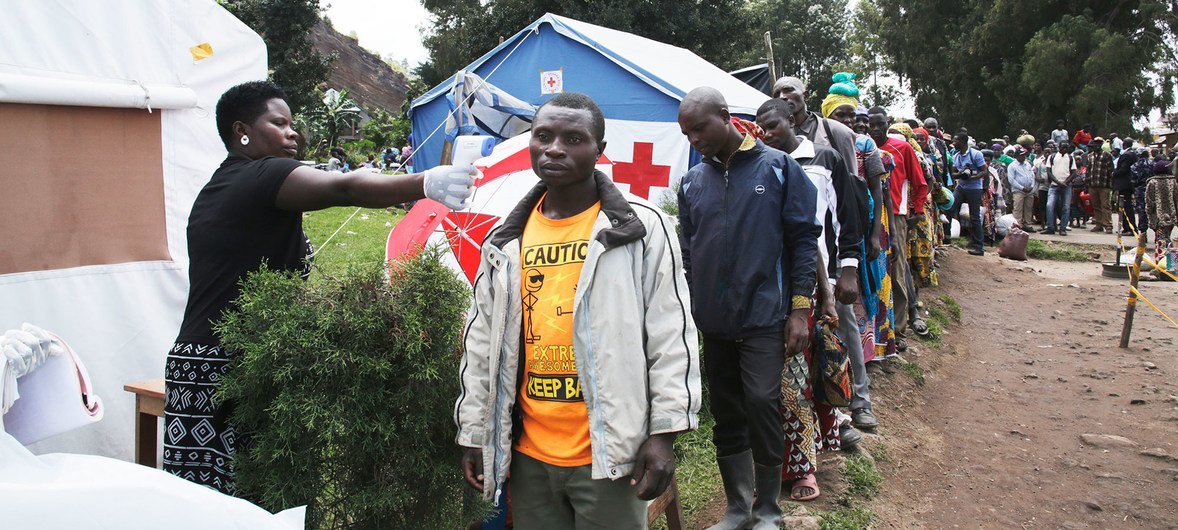
KINSHASA, Congo — World Health Organization (WHO) Director-General Tedros Adhanom Ghebreyesus arrived in Congo’s capital late Thursday to assess the escalating response to a rare and deadly Ebola virus outbreak. Healthcare workers on the ground are currently facing a “perfect storm” of inadequate supplies, deep-rooted community distrust, and active armed conflict in what officials describe as one of the world’s most challenging epidemic environments.
The outbreak, caused by the uncommon Bundibugyo strain of the Ebola virus, has rapidly escalated to 1,077 suspected cases and 238 suspected deaths as of Tuesday, according to Congo’s Public Health Emergency Operations Center and the WHO. On May 17, 2026, the WHO officially declared the situation a Public Health Emergency of International Concern (PHEIC), mobilizing global resources to contain a crisis that officials warn could become catastrophic if left unchecked.
A Rare Strain Without Approved Treatments
The Bundibugyo virus represents a distinct and thorny threat to global health security. Unlike the more common Zaire strain of Ebola—which was successfully combated in recent years using licensed vaccines and targeted therapeutics—the Bundibugyo strain currently has no approved vaccine or specific medical treatments.
“This strain lacks a vaccine and specific treatment,” stated Dr. Samuel-Roger Kamba, Congo’s Health Minister. “This variant has a very high lethality rate that can reach up to 50%.”
Historical data from the WHO indicates that the case fatality rate for Bundibugyo virus disease typically ranges between 30% and 50%. Dr. Geeta Sood, an infectious disease specialist at Hopkins Bay Medical Center who is not involved in the current deployment, noted that while Bundibugyo’s mortality rate is marginally lower than the Zaire strain—which frequently kills 60% to 90% of infected individuals—the total absence of licensed medical countermeasures makes it exceptionally dangerous in resource-limited settings.
Multiple Barriers to Containment
Medical teams responding to the crisis confront an overlapping web of humanitarian obstacles. The epicenter of the outbreak is located in the eastern Ituri province, a region already destabilized by years of armed conflict, mass population displacement, and severe food insecurity.
“Coming here is a significant way to demonstrate to the community that they are not alone,” Tedros told reporters upon landing at the Kinshasa airport, emphasizing the international community’s commitment.
According to field reports, five primary barriers are actively hindering containment efforts:
-
Scant Medical Supplies: Local healthcare facilities are operating with severely depleted personal protective equipment (PPE) and basic supportive care tools.
-
Community Distrust: Ongoing skepticism toward outside health interventions has complicated critical contact tracing and early case isolation.
-
Armed Conflict: Active fighting among regional militias restricts the movement of epidemiological teams and endangers field hospitals.
-
Mass Displacement: Thousands of people fleeing local violence are moving across regional borders, complicating tracking efforts and increasing transmission risks.
-
Severe Malnutrition: Widespread food scarcity has weakened the baseline immune health of the population, potentially worsening clinical outcomes for those infected.
The dangers to frontline workers are already evident, with at least four deaths reported among local healthcare staff, signaling dangerous gaps in infection prevention and control measures.
International Response and Experimental Frameworks
In response to the PHEIC designation, the international community has begun expanding financial and logistical support. The United States announced an additional $80 million in emergency funding, raising its total commitment past $112 million, while European Union medical aid arrived in Ituri province early Thursday.
Because no approved cure exists, the WHO has identified three experimental therapeutics that show potential against the Bundibugyo strain:
-
MBP134 (Mapp Biopharmaceutical)
-
Maftivimab (Regeneron)
-
Remdesivir (Gilead Sciences)
However, health authorities emphasize that these medications remain strictly experimental for this strain and require rigorous clinical trials to prove their efficacy. Furthermore, the WHO reviewed Merck’s Ervebo—the highly effective vaccine utilized against the Zaire strain—but determined it should not be deployed broadly in this outbreak due to a lack of evidence showing cross-protection against Bundibugyo.
The Debate Over Border Closures
The outbreak has also sparked geopolitical tension regarding travel restrictions. Following Uganda’s unilateral decision on May 27 to close its shared border with Congo, Tedros publicly advised against international travel bans.
“There are methods to manage workers and cases without enforcing strict travel bans, and we do not advocate for that as the WHO,” Tedros stated.
Under Uganda’s current emergency orders, the border is closed to all individuals except for authorized humanitarian transit, security personnel, or disease response cargo. Anyone permitted entry under these strict exceptions must undergo a mandatory 21-day isolation period.
The WHO warned that rigid border closures often backfire by driving the movement of people and trade goods to unmonitored, informal crossings, which ultimately accelerates the unmapped spread of the pathogen.
Ebola Strain Comparison Profile
+-------------------+-----------------------+-------------------------+
| Feature           | Zaire Strain          | Bundibugyo Strain       |
+-------------------+-----------------------+-------------------------+
| Historical Mortality| 60% - 90%             | 30% - 50%               |
| Approved Vaccine  | Yes (Ervebo)          | None                    |
| Approved Therapy  | Yes (Inmazeb/Ebanga)  | None (Experimental only)|
| Viral Replication | Rapid, high viral load| Slower replication rate |
+-------------------+-----------------------+-------------------------+
Transmission, Symptoms, and Public Health Uncertainty
The Bundibugyo virus is transmitted to humans through direct contact with the blood, secretions, or bodily fluids of infected wild animals (such as fruit bats or non-human primates) and spreads human-to-human via direct contact with broken skin or mucous membranes.
The disease presents initially with flu-like symptoms: sudden fever, profound weakness, muscle pain, headache, and sore throat. As the virus progresses, patients develop vomiting, diarrhea, impaired kidney and liver function, and, in advanced stages, internal and external hemorrhaging. Its incubation period ranges from 2 to 21 days.
Dr. Celine Gounder, an infectious disease specialist and epidemiologist who treated patients during the historic 2014–2016 West Africa Ebola epidemic, noted that the biological characteristics of this strain offer little room for complacency. “There’s nothing even close to ready for clinical trials,” Gounder warned regarding immediate, mass-producible Bundibugyo countermeasures.
Significant epidemiological uncertainties remain. The WHO acknowledged that because diagnostic testing capacity is severely constrained on the ground, the true geographic footprint of the disease is likely underestimated. Out of nearly 1,000 suspected deaths, only a fraction have received formal laboratory confirmation, meaning the outbreak could be substantially larger than current figures reflect.
What This Means for the Public
For the general global public and health-conscious consumers, the immediate risk of contracting the Bundibugyo strain remains exceedingly low unless one is traveling directly to active transmission zones in eastern Congo. International health agencies advise avoiding non-essential travel to Ituri province and recommend that any humanitarian or medical personnel deploying to central Africa undergo rigorous infection prevention training.
While the situation is critical, global health leaders maintain that standard public health interventions—meticulous contact tracing, community-led isolation, safe burial practices, and robust supportive clinical care—can successfully interrupt transmission.
Medical Disclaimer: This article is for informational purposes only and should not be considered medical advice. Always consult with qualified healthcare professionals before making any health-related decisions or changes to your treatment plan. The information presented here is based on current research and expert opinions, which may evolve as new evidence emerges.
References
- https://apnews.com/article/ebola-congo-who-tedros-31d5e72a16d3402e065354dc9488434e