 0
0
 0
0
LOS ANGELES — In a deeply personal televised appearance, veteran character actor A. Russell Andrews—widely recognized for his roles in Better Call Saul, Straight Outta Compton, and Grey’s Anatomy—publicly disclosed that he has been diagnosed with amyotrophic lateral sclerosis (ALS). Speaking on CNN alongside his fiancée, Andrews, 64, shared that he received the formal diagnosis in the late fall of 2025 after experiencing subtle, progressive symptoms that dates back to the COVID-19 pandemic. The announcement has thrust ALS back into the national spotlight, prompting critical conversations among health professionals and the public regarding early detection, evolving therapeutic landscapes, and the vital role of multidisciplinary medical care.
From Early Symptoms to Diagnosis
For Andrews, the journey to a definitive diagnosis was marked by subtle, easily dismissed physical changes. He recounted early warning signs that included frequently dropping everyday objects and experiencing transient, localized muscle weakness—sensations he noted occasionally felt alarming enough to mimic a stroke.
Following a comprehensive neurological workup, specialists confirmed he had ALS. By coming forward, Andrews joins a legacy of public figures who have humanized this complex condition, instantly shifting public attention toward a disease that is often misunderstood by the general population.
Understanding ALS: What Happens to the Body?
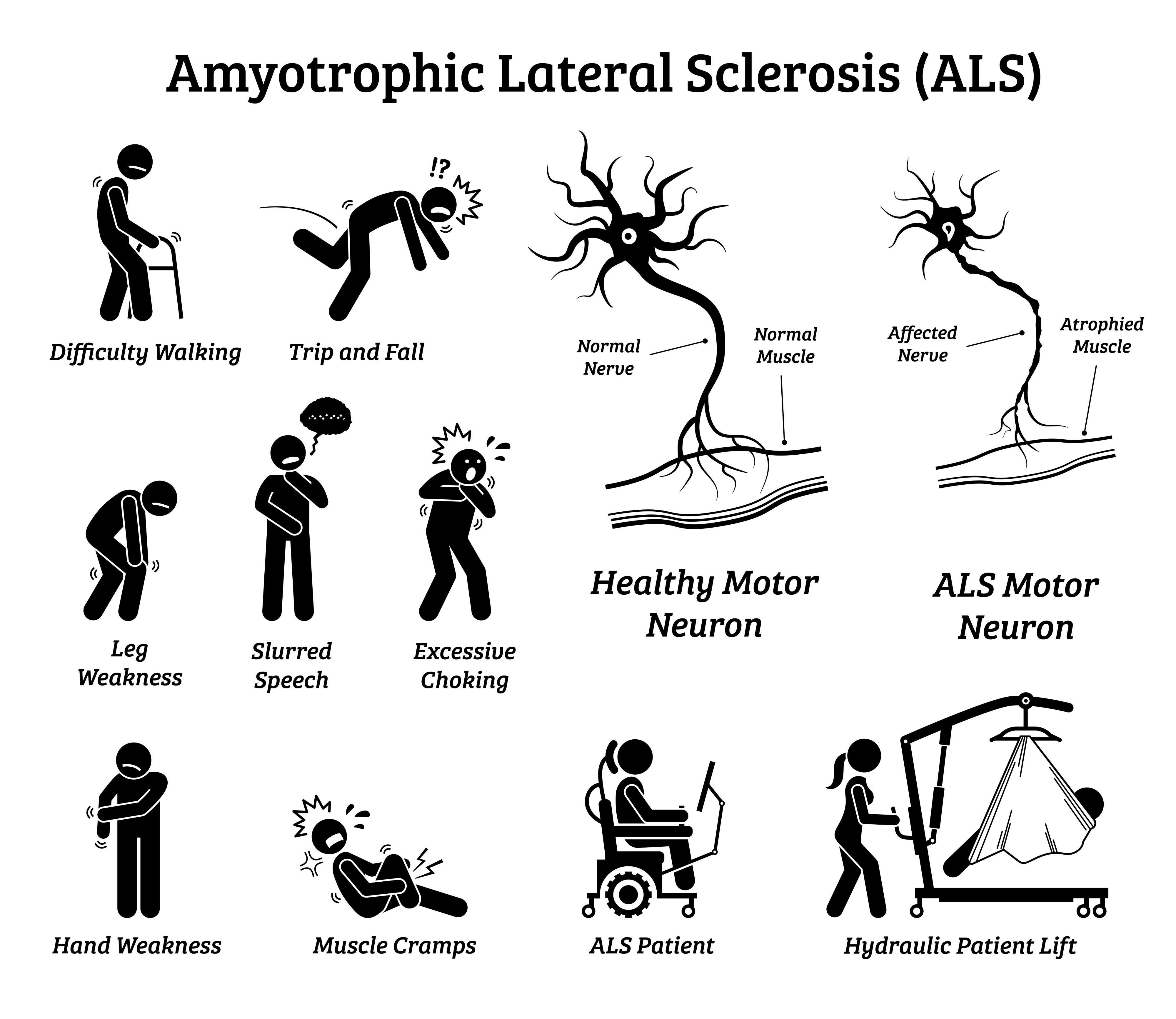
Amyotrophic lateral sclerosis, historically referred to as Lou Gehrig’s disease, is a progressive, neurodegenerative condition. It selectively targets motor neurons—the specialized nerve cells in the brain and spinal cord that dictate voluntary muscle movement.
When these motor neurons gradually degenerate and die, the signals they send to the muscles cease. Consequently, muscles that control vital functions experience wasting (atrophy) and weakness. Over time, individuals living with ALS experience a progressive decline in their ability to move, speak, swallow, and ultimately, breathe independently.
According to data compiled by federal health agencies, ALS typically manifests in mid- to late-adult life. It remains a relatively rare condition: epidemiologists estimate that approximately 5,000 individuals are diagnosed with ALS each year in the United States, with roughly 30,000 Americans living with the disease at any given time.
The Evolving Landscape of ALS Therapeutics
Historically, an ALS diagnosis carried a rigid, uniform prognosis, with median survival frequently cited as three to five years. However, modern clinical insights reveal that the disease trajectory is highly variable, and survival metrics are shifting due to proactive, comprehensive care models.
“ALS remains primarily a clinical diagnosis supported by specialized neurophysiologic testing and, increasingly, genetic testing,” explains Dr. Priya Mehta, a neurologist and motor neuron disease specialist at a major academic medical center, who was not involved in Andrews’ care. “Early symptoms like isolated hand weakness, mild slurred speech, or subtle difficulties with fine motor tasks should never be ignored. Early referral to a dedicated, multidisciplinary ALS clinic significantly improves symptom management, preserves independence, and enhances overall quality of life.”
While a universal cure has not yet been discovered, the therapeutic pipeline has expanded beyond the foundational drug riluzole, which has long been utilized to modestly extend survival. Modern interventions now include:
-
Edaravone: An intravenous or oral medication shown to help slow the decline of daily physical functioning in select patients.
-
Gene-Targeted Therapies: Cutting-edge treatments like tofersen, which specifically targets patients possessing a mutated SOD1 gene.
“Newer gene-targeted therapies offer highly precise, revolutionary options,” notes Dr. Mehta. “However, it is crucial for the public to understand that these apply only to very specific genetic subsets of patients and require exhaustive specialist assessment.”
Public Health Implications and the Reality of Care
Public disclosures by prominent figures like Russell Andrews serve an important public health function. They dismantle stigma, drive funding toward clinical research, and educate the public on when to seek medical evaluations. When individuals recognize early neurological indicators, they can seek specialist care faster, accelerating access to clinical trials and protective therapies.
For health systems, the rising profile of ALS underscores an urgent need for streamlined referral pathways. Managing the disease effectively demands a highly coordinated, multidisciplinary framework. A comprehensive care team typically bridges several specialties:
[Neurologist] ↔ [Respiratory Therapist] ↔ [Speech-Language Pathologist] ↔ [Dietitian/Nutritionist] ↔ [Palliative Care Specialist]
This collaborative approach ensures that as a patient’s physical needs evolve, interventions like non-invasive ventilation (to support breathing) and nutritional adjustments are introduced proactively rather than adaptively during a crisis. Furthermore, health systems must emphasize robust support for family caregivers, who carry immense emotional and logistical responsibilities throughout the progression of the disease.
Navigating the Nuances: A Balanced Perspective
While celebrity disclosures provide vital awareness, medical experts caution against overgeneralizing a single individual’s journey. Media coverage of high-profile diagnoses occasionally oversimplifies treatment efficacy or inadvertently implies a uniform timeline for disease progression.
In reality, many emerging therapies face significant real-world hurdles. High-cost barriers, rigid insurance navigation, and strict clinical eligibility criteria mean that advanced, mutation-specific drugs remain out of reach for a substantial portion of the patient population. Families navigating an ALS diagnosis are strongly encouraged to evaluate treatment claims strictly against peer-reviewed clinical evidence rather than mainstream media headlines.
Practical Action Steps for Readers
If you or a loved one notice persistent, unexplained physical changes, it is vital to approach them with clear-eyed medical scrutiny. Key signs that warrant an evaluation by a primary care physician or a neurologist include:
-
Frequent dropping of light objects or sudden clumsiness in fine motor tasks (e.g., buttoning a shirt, turning a key).
-
Persistent muscle twitching (fasciculations) or cramping in the arms, legs, or tongue.
-
Unexplained weakness in the hands, ankles, or feet, leading to tripping or difficulty walking.
-
Subtle slurring of words or difficulty projecting the voice.
Experiencing these symptoms does not automatically indicate an ALS diagnosis, as many treatable neurological and muscular conditions present similarly. However, securing an early specialist assessment remains the most reliable pathway to finding accurate answers, controlling symptoms, and maintaining autonomy over one’s long-term health decisions.
Medical Disclaimer
Medical Disclaimer: This article is for informational purposes only and should not be considered medical advice. Always consult with qualified healthcare professionals before making any health-related decisions or changes to your treatment plan. The information presented here is based on current research and expert opinions, which may evolve as new evidence emerges.
References
-
News Reports:
-
NDTV, “Better Call Saul Star Shares Emotional ALS Diagnosis,” May 17, 2026 (Summary of CNN interview broadcast).
-