 0
0
 0
0
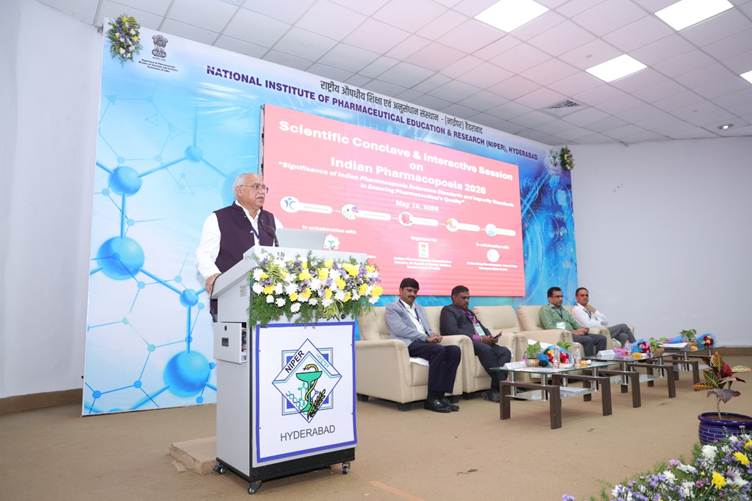
HYDERABAD, INDIA — In a major push toward tightening global medicine safety, the Indian Pharmacopoeia Commission (IPC) convened a landmark scientific conclave in Hyderabad on May 15, 2026. The high-level interactive session, hosted at the National Institute of Pharmaceutical Education and Research (NIPER), Hyderabad, laid the groundwork for the upcoming Indian Pharmacopoeia (IP) 2026—the official directory of drug standards for the world’s most prolific medicine-manufacturing nation.
For the first time in India’s regulatory history, the conclave bridged a critical gap by bringing pharmaceutical quality control scientists face-to-face with frontline medical clinicians. Their shared goal: evaluating how microscopic chemical impurities left behind during drug manufacturing can cause adverse reactions in patients, and establishing stringent new baseline standards to prevent them.
Why Drug Impurities Matter to Everyday Health
To understand the weight of this meeting, one must look at how modern medicines are made. No pharmaceutical pill, liquid, or injection is 100% pure active ingredient. During the chemical manufacturing process, minute trace amounts of secondary chemicals—known as pharmaceutical impurities—are inevitably generated.
While these impurities are measured in fractions of a percent, certain types can pose severe health risks if left unchecked.
“Impurity profiling and scientifically established pharmacopoeial standards are essential components in reducing adverse effects associated with pharmaceutical impurities,” explained Dr. V. Kalaiselvan, Secretary-cum-Scientific Director of the IPC, during his address.
The IPC is working to strengthen quality assurance mechanisms as India advances its broader national development goals.
To ensure that commercial medicines remain safe, factories use physical, high-purity chemical benchmarks called Indian Pharmacopoeia Reference Substances (IPRS). Think of an IPRS as a master tuning fork; manufacturers compare their mass-produced medications against this pure standard to confirm the identity, strength, and safety of their products.
The Clinical Link: Connecting the Lab to the Bedside
Historically, setting drug standards was treated as a purely industrial and chemical exercise. However, the 2026 conclave shifted the paradigm by integrating clinical perspectives.
When a patient experiences an unexpected side effect or an adverse drug reaction (ADR), the culprit is not always the primary medication itself; sometimes, it is an underlying chemical impurity.
[Chemical Synthesis] ──> [Trace Impurities Formed] ──> [If Unchecked: Potential Patient Adverse Reaction]
                               ▲
                 [IPRS Benchmarks Control This]
By bringing together the Central Drugs Standard Control Organization (CDSCO), state regulators, and medical doctors, the conclave established a holistic feedback loop. Clinicians shared real-world data on how patients react to medications, allowing analytical scientists to adjust the IP 2026 standards to target and eliminate the most dangerous trace compounds.
Prof. Shailendra Saraf, Director of NIPER Hyderabad, lauded the collaborative initiative. He noted that partnerships between the IPC and premier academic institutions create an invaluable ecosystem for capacity building, ensuring that future scientists and regulators are universally trained in the highest tiers of risk assessment.
Public Health Implications: Safeguarding the “Pharmacy of the World”
India supplies over 20% of the world’s global generic medicine exports, earning it the moniker “the pharmacy of the world.” Consequently, updating the Indian Pharmacopoeia is not just a domestic concern—it carries massive international public health implications.
According to data from India’s Ministry of Commerce and Industry, the country manufactures thousands of affordable generic medicines that sustain healthcare systems across the Americas, Europe, Africa, and Asia. Tightening impurity standards under the upcoming IP 2026 ensures that affordable generic drugs undergo identical, rigorous testing protocols as brand-name equivalents.
For the everyday consumer, this translates directly to peace of mind. When a patient picks up a prescription from a local pharmacy, the tightened standards mean the medication has been strictly vetted against highly specialized impurity reference standards, drastically minimizing the risk of toxic buildup or long-term complications from trace contaminants.
Technical Challenges and the Path Forward
While the regulatory vision is clear, implementation poses practical hurdles for the vast pharmaceutical sector, particularly for small and medium-sized enterprises (SMEs). Representing the industry’s perspective, the Indian Drug Manufacturers’ Association (IDMA) Telangana Chapter participated in an open, interactive dialogue at the close of the conclave.
Industry experts highlighted several challenges:
-
High Cost of Compliance: Acquiring advanced analytical testing equipment, such as High-Performance Liquid Chromatography (HPLC) and mass spectrometers, requires significant capital investment.
-
Sourcing Reference Standards: Procuring and maintaining highly stable IPRS materials can slow down production timelines if supply chains face bottlenecks.
-
Technical Expertise: Testing for minuscule genotoxic or nitrosamine impurities requires highly specialized, continuous training for laboratory personnel.
Balancing these commercial realities with uncompromising patient safety remains a delicate tightrope. Regulatory officials at the conclave, including Shri K. Narendran, Deputy Drugs Controller (India) at CDSCO Hyderabad, emphasized that while compliance guidelines will be strictly enforced, the government is committed to providing harmonized standards and clear regulatory pathways to assist manufacturers during the transition to IP 2026.
Ultimately, the consensus from the Hyderabad conclave was clear: pharmaceutical quality cannot be compromised. By shifting toward proactive risk assessment and prioritizing clinical safety, the upcoming Indian Pharmacopoeia 2026 aims to set a global benchmark for drug safety, ensuring that every dose delivered to a patient is both effective and profoundly safe.
References
Institutional and Event Sources
-
Press Information Bureau (PIB) Delhi, Government of India. (May 15, 2026). Scientific Conclave & Interactive Session on Indian Pharmacopoeia 2026 organized at NIPER, Hyderabad. Ministry of Health and Family Welfare.
Medical Disclaimer: This article is for informational purposes only and should not be considered medical advice. Always consult with qualified healthcare professionals before making any health-related decisions or changes to your treatment plan. The information presented here is based on current research and expert opinions, which may evolve as new evidence emerges.