 0
0
 0
0
KAMPALA, Uganda — The Ugandan Ministry of Health confirmed a new outbreak of Ebola virus disease (EVD) in the capital city of Kampala, following the death of a 59-year-old Congolese national at a local hospital. Officials identified the infection as an imported case from the neighboring Democratic Republic of the Congo (DRC).
The patient died in intensive care on May 14, 2026, after presenting with severe symptoms including fever, respiratory distress, epigastric pain, and hemorrhagic manifestations. While public health authorities report no confirmed secondary or localized transmission within Uganda, the detection of a lethal pathogen in a densely populated urban center has triggered an immediate nationwide alert, prompting extensive contact tracing and heightened border surveillance.
The Bundibugyo Strain: Clinical Profile and Past Patterns
The current outbreak is driven by the Bundibugyo ebolavirus (BDBV), one of six identified species within the Ebolavirus genus. First recognized by epidemiologists in 2007 during an outbreak in the Bundibugyo district of western Uganda, BDBV behaves differently than the more notorious Zaire ebolavirus strain.
According to a landmark historical analysis published in Emerging Infectious Diseases, the 2007 Ugandan outbreak resulted in 56 laboratory-confirmed cases with a case fatality rate (CFR) of approximately 25%. Broader meta-analyses examining historical Ebola data estimate the overall CFR for the Bundibugyo strain to be between 32% and 33%. While statistically less lethal than the Zaire strain—which frequently exhibits mortality rates upward of 60% to 90%—health authorities emphasize that BDBV remains a severe, life-threatening pathogen.
Because the Bundibugyo strain emerges less frequently than other variants, frontline clinicians face the challenge of diagnostic unfamiliarity. The World Health Organization (WHO) notes that the clinical progression typically mirrors other viral hemorrhagic fevers:
-
Early Stage: Non-specific symptoms including sudden fever, profound fatigue, muscle pain, and severe headache.
-
Advanced Stage: Vomiting, diarrhea, abdominal pain, impaired kidney and liver function, and a distinct maculopapular rash.
-
Severe Stage: Internal and external bleeding (hemorrhaging), which can manifest as bleeding from the gums, blood in stool, or bruising.
Without rapid supportive care, the disease can rapidly progress to multi-organ failure and death. However, early interventions—including intensive fluid resuscitation, electrolyte management, and targeted treatment of secondary complications—significantly optimize survival outcomes.
Detection and Cross-Border Collaboration
The containment of this case highlights the critical importance of regional bio-surveillance networks. Public health authorities in the DRC alerted their Ugandan counterparts on May 15, 2026, regarding a severely ill individual who had recently crossed the porous border between the two countries.
The patient had sought medical admission at Kampala’s Kibuli Muslim Hospital on May 11, complaining of acute gastric pain, nausea, and respiratory distress. His condition deteriorated rapidly over 48 hours. Medical personnel collected diagnostic samples prior to his death and dispatched them to Uganda’s Central Emergency Surveillance and Response Support Laboratory in Wandegeya.
Polymerase Chain Reaction (PCR) testing quickly confirmed the presence of the Bundibugyo ebolavirus. Although the patient’s body was repatriated to the DRC on the same day for traditional burial adjustments, epidemiologists are treating the brief window of transit through Kampala as a high-risk window for potential local exposure.
Containment Strategy and Emergency Response
In response to the positive laboratory confirmation, the Ugandan Ministry of Health immediately activated national and district-level Emergency Operations Centers (EOCs).
[Suspected Case Detected]
       │
       ▼
[Rapid Isolation & PCR Testing]
       │
       ▼
[Contact Tracing] ──► (21-Day Active Monitoring)
       │
       ▼
[Community Ring-Fencing & Vector Control]
To prevent a broader public health crisis, a multi-layered containment strategy has been deployed:
-
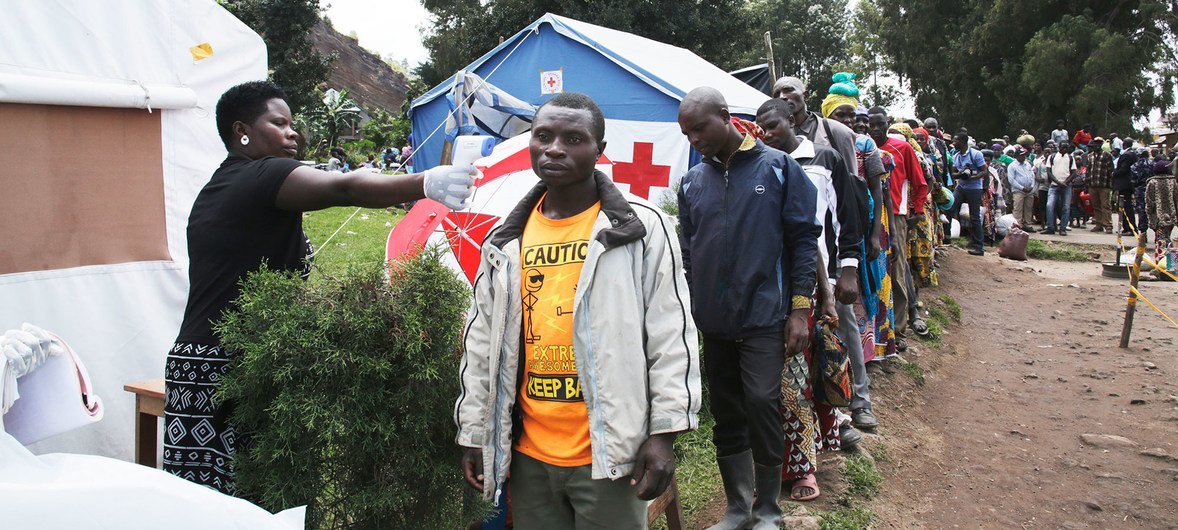
Surveillance Infrastructure: Rapid response teams have intensified screening protocols at official and informal border entry points along the western frontier. A specialized mobile laboratory unit has been dispatched to Bwera Hospital near the DRC border to drastically reduce diagnostic turnaround times.
-
Contact Tracing: Public health officials have isolated one high-risk individual—a close relative of the deceased—and placed all other identified contacts under a mandatory 21-day quarantine with daily clinical monitoring.
-
Infection Prevention and Control (IPC): The Ministry of Health has instructed all healthcare facilities to elevate their index of suspicion for febrile illnesses.
The WHO’s established IPC guidelines for viral hemorrhagic fevers dictate rigorous systematic triage, absolute isolation of suspected cases, and the strict use of advanced Personal Protective Equipment (PPE) to eliminate the risk of nosocomial (healthcare-acquired) transmission.
Regional Implications and Public Health Challenges
Uganda possesses a sophisticated public health infrastructure tailored to filovirus containment, having managed multiple historical outbreaks of both the Sudan and Bundibugyo strains. This institutional memory provides the country with robust frameworks for community engagement and risk communication.
However, severe challenges persist. The high volume of cross-border commerce, informal migration routes, and variable healthcare capacity in remote rural areas present continuous vulnerabilities. Independent public health experts warn that an imported urban case can seed a wider epidemic if frontline clinical reporting is delayed or if basic barrier nursing protocols fail.
Epidemiological data from the Centers for Disease Control and Prevention (CDC) reinforces that Ebola is not an airborne pathogen; it transmits exclusively via direct contact with the blood, secretions, or bodily fluids of a symptomatic or deceased individual. Consequently, standard public health measures remain highly effective at breaking chains of transmission when executed early.
Practical Guidance for the General Public
For individuals residing in or traveling through affected regions, public health agencies recommend adhering to fundamental preventative hygiene practices:
-
Avoid Symptomatic Contact: Do not engage in unprotected physical contact with anyone displaying signs of acute fever, vomiting, diarrhea, or unexplained bruising.
-
Practice Strict Hand Hygiene: Wash hands frequently with soap and running water, or utilize alcohol-based hand rubs containing at least 60% alcohol.
-
Abstain from Unsafe Burial Customs: Avoid participating in traditional funeral rituals that involve direct contact with the bodies of deceased individuals in outbreak zones.
-
Report Early: Seek immediate medical evaluation at designated health centers if a fever develops following recent travel to or from the DRC border region.
To facilitate rapid reporting and reduce community diagnostic delays, the Ugandan Ministry of Health has established a toll-free emergency hotline (0800-100-066) and a free SMS emergency short-code (6767).
Critical Limitations: The Vaccine Deficit
A significant complicating factor in managing this specific outbreak is the current limitation of preventative therapeutics. While highly effective, licensed vaccines exist to combat the Zaire strain of Ebola, there is currently no WHO-approved vaccine specifically indicated for the Bundibugyo strain.
Because cross-protection from existing vaccines is highly limited or non-existent against BDBV, the containment of this outbreak cannot rely on mass ring-vaccination strategies. Instead, public health success depends entirely on traditional, resource-intensive epidemiological intervention: meticulous contact tracing, rapid isolation, strict behavioral modifications, and robust community cooperation.
Expert Commentary: Building Resilient Systems
Global health leaders emphasize that the situation in Kampala underscores a recurring theme in global health security. Dr. John Nkengasong, former Director of the Africa Centres for Disease Control and Prevention (Africa CDC), has frequently noted that regional, cross-border synchrony is the defining variable in preventing localized spillover events from mutating into international emergencies.
“The primary objective is not merely attempting to seal an unsealable geographic border,” Dr. Nkengasong previously stated regarding regional biosecurity. “True health security relies on building resilient local health systems capable of rapidly isolating, testing, and treating suspect cases the moment they interface with a clinic.”
For Uganda and its neighboring nations, this imported case serves as an active reminder that infectious disease threats remain persistent where viruses circulate naturally in wildlife reservoirs. Continued vigilance, transparent epidemiological data sharing, and immediate clinical counter-measures remain the world’s most reliable defense.
Reference Section
- https://www.reuters.com/business/healthcare-pharmaceuticals/uganda-confirms-outbreak-ebola-virus-disease-health-ministry-2026-05-15/
Medical Disclaimer: This article is for informational purposes only and should not be considered medical advice. Always consult with qualified healthcare professionals before making any health-related decisions or changes to your treatment plan. The information presented here is based on current research and expert opinions, which may evolve as new evidence emerges.