 0
0
 0
0
Muzaffarpur, Bihar — June 6, 2026
A devastating fire tore through the Intensive Care Unit (ICU) of Prasad Hospital in Muzaffarpur early Thursday morning, killing six critically ill patients and leaving several others fighting for their lives. The tragedy has triggered swift government retribution, with the Bihar Civil Surgeon’s office immediately suspending the hospital’s operational license. Local police have arrested three high-ranking staff members—the ICU physician-in-charge, the head of administration, and the maintenance manager—as criminal investigations into severe safety lapses intensify. The incident underscores a deeply rooted, systemic vulnerability within India’s healthcare infrastructure, arriving just weeks after the Union Health Ministry issued strict new fire safety mandates.
Chronology of a Midnight Crisis
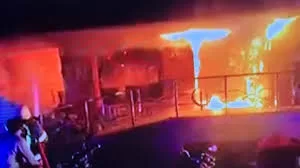
The blaze erupted at approximately 3:55 AM within the fifth-floor ICU of the hospital, located in Muzaffarpur’s crowded Brahmapura locality. At the time of the incident, 27 critically ill individuals were trapped inside the unit. Preliminary forensic assessments indicate that a catastrophic short circuit within the ICU’s oxygen delivery network and electronic patient monitoring system likely ignited the fire.
Fed by the oxygen-rich environment, thick, toxic smoke rapidly engulfed the intensive care unit and the adjacent cardiac care unit. The dense smoke effectively blinded rescue teams and choked patients who were physically tied to ventilators and life-support systems.
While fire department officials successfully evacuated nearly 20 patients from the burning wing, five individuals succumbed to smoke inhalation and thermal injuries at the scene. A sixth patient, transferred under critical conditions to a specialized facility in Patna, died early Friday morning. Multiple survivors remain hospitalized in critical condition, with medical teams working to treat severe respiratory tract burns from the toxic fumes.
The Perfect Storm: Why ICUs Are Fire Volcanoes
The tragedy highlights a frightening reality known well to emergency planners: modern intensive care units are uniquely predisposed to rapidly spreading fires.
Medical experts point out that three elements come together in an ICU to create an exceptional fire hazard:
-
High Electrical Loads: Dozens of ventilators, dialysis machines, and monitors run continuously on a single grid.
-
Oxygen-Rich Air: Ambient oxygen levels are frequently elevated due to localized leaks or high-flow oxygen therapies, making materials ignite faster and burn hotter.
-
Immobile Patients: Patients are often sedated, intubated, or physically frail, making independent evacuation impossible.
“Hospitals remain uniquely vulnerable to fire disasters,” explains Dr. Narin Sehgal, Medical Director at Sehgal Neo Hospital in Delhi, who was not involved in the Muzaffarpur incident. “The combination of high electrical loads and an oxygen-rich atmosphere means a tiny spark can turn into an unmanageable blaze within seconds. Regular, rigorous electrical safety audits and real-time staff drills are not optional bureaucratic hurdles—they are the literal baseline for patient survival.”
This vulnerability is heavily documented. A 2025 study published in the journal Fire Safety revealed that electrical malfunctions coupled with oxygen system failures represent the primary driver of healthcare-associated fires worldwide. Crucially, the research highlighted a glaring human element: 83.3% of healthcare staff working in high-risk zones like ICUs and operating theaters reported feeling completely untrained or unequipped to manage a sudden fire emergency.
A Direct Violation of New Federal Mandates
The Muzaffarpur disaster occurred directly on the heels of the Union Health Ministry releasing its highly anticipated National Guidelines on Fire and Life Safety in Healthcare Facilities (2026) in May. The updated framework explicitly requires hospitals to restructure their physical layouts and emergency protocols, focusing heavily on vulnerable units like ICUs, Neonatal Intensive Care Units (NICUs), and Pediatric Intensive Care Units (PICUs).
The mandated federal framework strictly requires:
-
Tailored Evacuation Plans: Phased, horizontal evacuation strategies where patients are moved laterally away from smoke zones rather than immediately forced down vertical stairwells.
-
Local Suppression Infrastructure: At least one 2kg ABC-type fire extinguisher located inside every ICU pod for immediate containment.
-
Continuous Power Safeties: Ample battery-operated emergency lighting and dedicated monthly electrical checklists.
-
Independent Oversight: The creation of internal Fire Safety Committees led by certified Fire Safety Officers.
Investigators are currently evaluating whether Prasad Hospital ignored these newly updated rules. The ICU’s location on the fifth floor, with an isolated waiting area on the fourth floor, created a bottleneck that severely delayed emergency crews.
Legal Repercussions and Systemic Violations
Muzaffarpur District Magistrate Subrat Kumar Sen confirmed that the facility’s registration has been revoked, and management has been served a strict show-cause notice requiring a detailed accounting of their safety infrastructure within seven days.
Concurrently, police actions have targeted individual accountability. Mohibullah Ansari, Muzaffarpur City Superintendent of Police, announced the arrests of Dr. Pankaj (the ICU physician-in-charge), Ram Kumar (head of administration), and Ajit Kumar (maintenance manager). Investigators have noted that multiple key staff members were allegedly absent from their designated duty stations when the fire initially broke out, leaving patients entirely unattended during the critical first minutes of the disaster.
Investigation Scope: Key Compliance Vectors Under Scrutiny
├── Structural & Architectural Flaws (5th Floor Isolation)
├── Validity & Renewal Status of the Fire NOC (No Objection Certificate)
├── Presence & Functionality of Automated Smoke Detectors/Sprinklers
└── Maintenance Records of Oxygen Pipelines and Electrical Grids
This incident is part of a deeply concerning historical trend. A 2024 investigative report by The Indian Express tracked 11 major hospital fires across India since 2019, which collectively claimed 107 lives. The investigation revealed that short circuits caused nearly 80% of those fires, and an overwhelming majority of the implicated facilities lacked basic, functional firefighting equipment or valid safety clearances.
Balancing the Narrative: The Institutional Burden
While public outrage centers heavily on negligence, hospital administration advocates argue that healthcare facilities face extraordinary systemic hurdles. During a similar hospital ICU fire investigation, institutional representatives noted that older hospital structures are frequently difficult to retrofit with modern fire-retardant materials and compartmentalized fire doors.
Furthermore, healthcare advocates point out that massive spikes in seasonal patient loads frequently strain electrical grids beyond their engineered capacity, particularly during peak summer months when air conditioning systems operate continuously alongside heavy medical machinery. However, regulatory authorities maintain that structural limitations cannot excuse the absence of fundamental safety measures or the abandonment of patient care duties during a crisis.
What This Means for Patients and Families
For families and health-conscious consumers, the tragedy highlights the critical need to evaluate a hospital’s safety record alongside its medical credentials. When arranging for inpatient care, particularly within intensive care environments, families are urged to actively verify the facility’s safety infrastructure.
| Safety Indicator | Critical Questions to Ask Hospital Administration |
| Certification | Does the facility hold a current, valid Fire No Objection Certificate (NOC)? |
| Staff Readiness | How frequently does the floor staff undergo practical, hands-on evacuation drills? |
| Equipment | Are there independent, battery-powered emergency lights and functional extinguishers within view of the ICU? |
| Evacuation Route | What is the lateral evacuation plan if primary stairwells or elevators become blocked by smoke? |
To bridge the widespread gap in staff training, the Ministry of Health has launched an open-access training module titled “Fire Safety in Healthcare Facilities” on the federal iGOT Karmayogi digital platform. This initiative aims to quickly provide healthcare workers across the country with standardized, life-saving emergency response skills.
Among the six victims lost in the Muzaffarpur blaze, initial reports have identified Krishnandan Prasad Singh, Geeta Devi, Uday Kumar, and Shashank. The state government has announced an ex-gratia compensation of ₹4 lakh for each of the victims’ families, though community leaders emphasize that financial compensation cannot replace the urgent need for structural safety reforms across India’s medical institutions.
Medical Disclaimer
This article is for informational purposes only and should not be considered medical advice. Always consult with qualified healthcare professionals before making any health-related decisions or changes to your treatment plan. The information presented here is based on current research and expert opinions, which may evolve as new evidence emerges.
References
-
India Today. “Bihar govt suspends hospital licence after ICU fire kills six in Muzaffarpur.” Report published June 6, 2026.