 0
0
 0
0
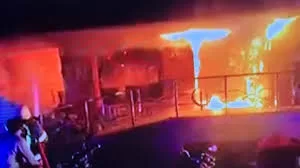
MUZAFFARPUR, Bihar — A devastating fire tore through the intensive care unit (ICU) of Prasad Hospital, a private healthcare facility in Bihar’s Muzaffarpur district, early Thursday morning, June 4, 2026. The tragedy resulted in the deaths of at least four critically ill patients and left several others injured. The incident has sent shockwaves through the local community and reignited a fierce national debate regarding the systemic gaps in hospital fire safety protocols across India.
The blaze, which broke out between 3:55 AM and 4:00 AM on the hospital’s fifth floor, rapidly filled the sealed ICU environment with dense, toxic smoke. Evacuation efforts were severely compromised by the vulnerabilities of the patients, many of whom were immobilized or dependent on life-support systems. While local firefighting teams arrived promptly to bring the flames under control and rescue approximately 20 patients, the tragedy underscores a recurring, lethal pattern in the country’s healthcare infrastructure.
Fatal Short Circuit: What Triggered the Blaze
Preliminary investigations by local authorities suggest that an electrical short circuit inside the ICU triggered the disaster. Investigators believe the initial spark occurred within specialized ICU medical equipment, which rapidly led to a subsequent blast in a wall-mounted air conditioning unit.
Muzaffarpur District Magistrate Subrat Kumar Sen confirmed the fatalities, noting that initial reports indicated three deaths before the toll was officially updated. Bihar Chief Minister Samrat Choudhary later confirmed that four patients had lost their lives. The victims have been identified as:
-
Shashank Kumar (30)
-
Uday Kumar
-
Geeta Devi
-
Brijnand Rai
The victims ranged in age from 30 to 76 years. In the wake of the incident, Chief Minister Choudhary expressed deep condolences, describing the event as “extremely tragic.” The state government has announced an ex-gratia compensation of ₹4 lakh (approximately $4,800 USD) for the families of each deceased patient, assuring the public that district medical teams are fully mobilized to care for the surviving, displaced patients.
The “Perfect Storm”: Why ICU Fires Are Inherently Lethal
Medical experts point out that ICUs and Neonatal ICUs (NICUs) are uniquely high-risk environments when it comes to fire hazards.
Dr. Rajesh Kumar, a critical care specialist with two decades of experience at the All India Institute of Medical Sciences (AIIMS) in New Delhi, who was not involved in the Muzaffarpur incident, explains the clinical complexity of these emergencies.
“ICUs house our most vulnerable patients—individuals physically incapable of saving themselves,” Dr. Kumar said. “They are frequently sedated, intubated on mechanical ventilators, or tethered to multiple intravenous lines. When a fire breaks out, you aren’t just dealing with flames; you are dealing with an oxygen-rich atmosphere that accelerates combustion, a maze of electrical wiring, and dense smoke that cuts off visibility instantly. Moving these patients without disrupting their life support is a logistical nightmare.”
Data from the National Disaster Management Authority (NDMA) reinforces Dr. Kumar’s warnings. According to NDMA reports, electrical short circuits are the primary driver of hospital fires in India, accounting for a staggering 89% of all outbreaks. Flammable medical chemicals and gases account for another 4%.
A Chronic Pattern Across Indian Healthcare
The tragedy in Muzaffarpur is not an isolated event; rather, it is the latest entry in a long line of catastrophic hospital fires that have plagued both private and public medical centers across India over the past decade.
| Location & Facility | Date | Fatalities | Primary Suspected Cause |
| AMRI Hospital, Kolkata | December 2011 | 90+ deaths | Electrical malfunction / Basement storage |
| Dreams Mall COVID Hospital, Mumbai | March 2021 | 9 deaths | Unknown / Structural fire propagation |
| Vijay Vallabh Hospital, Virar, Maharashtra | April 2021 | 15 deaths | Air conditioning unit explosion |
| Patel Welfare Hospital, Bharuch, Gujarat | May 2021 | 18 deaths | COVID-19 ward electrical overload |
| Maharani Laxmi Bai Medical College, Jhansi, UP | November 2024 | 10 deaths | NICU electrical short circuit |
| SMS Hospital, Jaipur, Rajasthan | October 2025 | 6 deaths | Neuro-ICU electrical failure |
| SCB Medical College, Cuttack, Odisha | March 2026 | 10 deaths | Trauma center short circuit |
| Prasad Hospital, Muzaffarpur, Bihar | June 2026 | 4 deaths | ICU electrical short circuit / AC blast |
A comprehensive peer-reviewed study led by researcher S. Juyal, titled “An Analysis of Failures Leading to Fire Accidents in Hospitals,” revealed a troubling systemic equilibrium: 49% of major hospital fires occurred in private facilities, while 51% occurred in government run hospitals. Crucially, the study found that roughly half of the evaluated hospitals were actively non-compliant with standard national safety norms.
Policy vs. Practice: The New 2026 Guidelines
The Muzaffarpur tragedy occurs just as India’s Union Health Ministry rolled out its highly anticipated National Guidelines on Fire and Life Safety in Healthcare Facilities (2026). This updated framework represents a significant policy overhaul from previous 2020 iterations.
The 2026 guidelines introduce mandatory, specialized safety protocols tailored specifically for critical care zones like ICUs, NICUs, and operating theaters. A major pillar of the new directive is the shift toward phased, horizontal evacuation strategies—moving critically ill, non-ambulatory patients sideways into adjacent, fire-resistant zones on the same floor, rather than attempting immediate vertical evacuation down stairwells, which can abruptly disconnect life-sustaining equipment.
Furthermore, to maintain National Accreditation Board for Hospitals & Healthcare Providers (NABH) status, facilities must now maintain a valid Fire No-Objection Certificate (NOC) strictly tied to the updated National Building Code guidelines.
However, many independent safety analysts argue that policy changes mean very little without rigorous local enforcement.
“The 2026 guidelines look excellent on paper,” notes Dr. Anjali Sharma, an independent fire safety consultant specializing in institutional healthcare compliance. “But the underlying issue in India is implementation. Far too many hospitals view fire safety as a bureaucratic box-checking exercise to secure an initial license to operate. Once that certificate is on the wall, fire extinguishers expire, emergency exit doors are chained shut to prevent theft, and staff rotation means the people on duty during a 4:00 AM crisis have never participated in a single mock drill.”
Identifying the Safety Gaps
Safety audits published by the NDMA highlight several critical vulnerabilities that remain pervasive across Indian healthcare institutions:
-
Lack of Automation: Unlike developed nations, a vast majority of Indian medical facilities lack automated water-sprinkler systems or smart smoke-extraction dampers in critical wards.
-
Overloaded Infrastructure: The indiscriminate, continuous operation of heavy commercial air conditioning units and high-wattage life-support machines frequently overloads historical internal power grids.
-
System Neglect: Emergency escape routes, designated fire elevators, and localized alarm triggers are frequently found to be non-operational or obstructed during surprise inspections.
-
No Routine Auditing: Independent third-party inspection of internal power grids and wiring integrity remains voluntary rather than strictly enforced.
Institutional Accountability and Public Health Implications
The incident at Prasad Hospital has sparked immediate legal and regulatory scrutiny. Bihar’s Deputy Chief Minister Vijay Kumar Choudhary announced that a specialized multi-disciplinary committee has been formed to investigate the exact cause of the fire. The committee’s mandate includes determining whether the private administration ignored warning signs of electrical stress, and assessing if the facility possessed functioning emergency response infrastructure.
For the general public, this tragedy shifts the concept of patient safety. When evaluating healthcare options, families are increasingly forced to look beyond clinical reputations and medical technology, and actively consider the physical safety of the building structure itself.
Consumer and Administrative Checklist
For Families of Patients:
-
Verify Certifications: Explicitly ask the hospital administration if the facility holds a current, updated Fire No-Objection Certificate (NOC).
-
Locate Exits: Physically locate the emergency exits and fire-isolated stairwells upon admission to an ICU or inpatient ward.
-
Observe Infrastructure: Note whether basic tools like fire extinguishers are visible, unblocked, and display valid inspection tags.
-
Inquire About Drills: Ask the floor nursing supervisor if the current shift staff have been trained in horizontal evacuation protocols.
For Healthcare Administrators:
-
Execute Grid Audits: Commission immediate, thorough thermal imaging audits of internal electrical wiring to locate hidden hot spots.
-
Enforce Compliance: Clear all emergency exit paths, unlock designated fire stairwells, and test automated smoke alarms monthly.
-
Train Overnight Staff: Focus fire safety and evacuation training on the night shifts, when staffing is thin and emergency response times are traditionally slower.
Medical Disclaimer: This article is for informational purposes only and should not be considered medical advice. Always consult with qualified healthcare professionals before making any health-related decisions or changes to your treatment plan. The information presented here is based on current research and expert opinions, which may evolve as new evidence emerges.
References
-
Prasad Hospital Incident Reports: Local administrative briefs and verified media documentation regarding the Muzaffarpur ICU fire occurring June 4, 2026