 0
0
 0
0
March 22, 2026
A landmark meta-analysis published this month has pulled back the curtain on a “hidden” complication of the global diabetes epidemic. Researchers have found that more than one in every two people living with type 2 diabetes (T2D) also suffers from fatty pancreas disease (FPD)—a condition that may be quietly accelerating the progression of their diabetes and increasing the risk of severe long-term complications.
The study, led by Saeed Ahmad and a team of researchers at Beth Israel Deaconess Medical Center, pooled data from 12 observational studies involving more than 6,300 patients. The findings, published in Diabetes Research and Clinical Practice, reveal a staggering prevalence rate of approximately 54%. This suggests that for millions of people worldwide, managing blood sugar is only half the battle; the very organ responsible for producing insulin is being infiltrated by metabolic fat.
Understanding the “Greasy” Pancreas
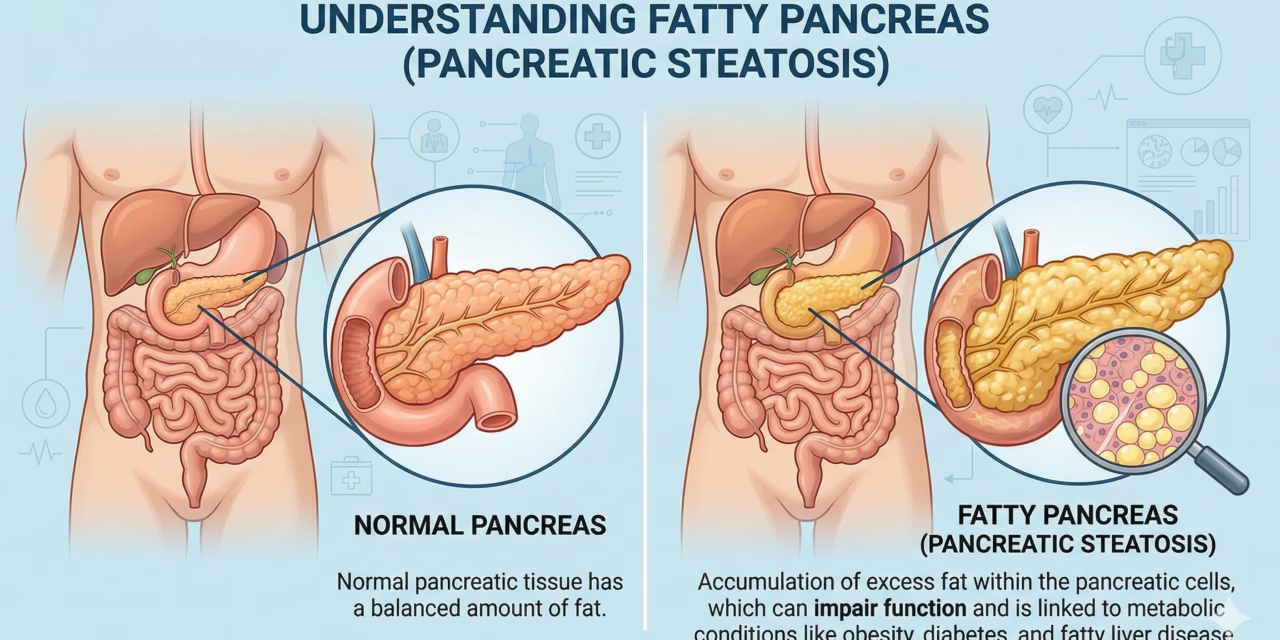
Fatty pancreas disease, scientifically known as nonalcoholic fatty pancreas disease (NAFPD), occurs when excess fat deposits accumulate within the pancreatic tissue. While the medical community has long focused on “fatty liver” (MASLD), the pancreas has remained largely in the shadows.
To understand the impact, imagine the pancreas as a precision-engineered engine designed to produce insulin. “In practical terms, fat buildup clogs the machinery,” explains the study’s lead authors. Much like grease hampers an engine’s output, these lipid deposits disrupt the beta cells—the specialized units that secrete insulin—and the exocrine cells that produce digestive enzymes.
When these cells are “clogged,” insulin production slows down. This creates a dangerous feedback loop: as the pancreas struggles to produce insulin, blood sugar rises, which in turn encourages more fat storage in the organs, further damaging the pancreas.
Key Findings: A Global Perspective
The meta-analysis utilized a generalized linear mixed model to estimate that 54.28% of T2D patients have FPD. However, the researchers noted significant geographical and demographic variations:
-
Regional Differences: Prevalence was notably higher in European cohorts (69.19%) compared to Asian populations (42.85%). While Asians showed lower rates, researchers warn this may be due to different dietary patterns or environmental factors rather than a lack of risk.
-
Clinical Settings: Patients screened in hospital-based settings showed a higher prevalence (57.90%) than those in general community screenings.
-
Consistency in Detection: Interestingly, the prevalence remained consistent regardless of whether doctors used ultrasound or high-resolution MRI, suggesting that standard imaging is becoming increasingly effective at spotting the condition.
The Vicious Cycle of Metabolic Fat
The link between obesity and diabetes is well-documented, but FPD adds a new layer of complexity. The study highlights that visceral fat—the “hidden” fat stored around internal organs—is the primary driver.
In India, often referred to as the “diabetes capital of the world,” this news is particularly concerning. The 2023 ICMR-INDIAB study reported that over 101 million Indian adults live with T2D. With urban prevalence hitting 11.2%, the emergence of FPD as a common comorbidity suggests that millions may be at risk for secondary issues like chronic pancreatitis or even an elevated risk of pancreatic cancer.
“This meta-analysis solidifies FPD as a common T2D comorbidity,” says Dr. Elena Rossi, an endocrinologist at Mayo Clinic who was not involved in the research. “It urges us to consider routine pancreatic imaging in high-risk patients to enable early intervention before the damage to beta-cells becomes irreversible.”
Limitations and the “Chicken or Egg” Debate
While the numbers are compelling, the scientific community remains cautious. The study noted high “heterogeneity,” meaning the results varied significantly between different smaller studies.
One of the biggest remaining questions is causality: Does a fatty pancreas cause type 2 diabetes, or does the metabolic environment of diabetes cause the pancreas to become fatty? Because most current data is “cross-sectional” (a snapshot in time), researchers cannot yet definitively say which comes first. Furthermore, lower rates in Asian populations might reflect underdiagnosis rather than true protection, highlighting a need for more localized research in regions like South Asia.
Taking Action: Can You “Degrease” Your Pancreas?
The good news for patients is that unlike some diabetic complications, FPD may be highly responsive to lifestyle changes. Currently, there are no FDA-approved drugs specifically for “fatty pancreas,” but the strategies used to manage fatty liver and T2D are highly effective.
Recommended Management Strategies:
-
Weight Loss: Losing just 5% to 10% of total body weight can significantly reduce organ fat and improve pancreatic function.
-
The “Low-Fat, High-Fiber” Approach: Shift toward a diet rich in vegetables, lean proteins, and ancient grains like millets, while strictly limiting processed sugars and fried foods.
-
Consistent Movement: Aiming for 150 minutes of moderate activity, such as brisk walking or yoga, helps burn visceral fat and boosts insulin sensitivity.
-
Alcohol and Sugar Cessation: Both substances place direct stress on the pancreas. Opting for water or herbal teas can help “flush” the system and reduce inflammation.
A Call for Modern Screening
As the global prevalence of diabetes continues to climb—reaching 14% of the world’s adult population according to the WHO—the Ahmad study serves as a wake-up call for healthcare providers.
The research team and independent experts are now calling for a reclassification of the disease to “Metabolic Dysfunction-Associated Fatty Pancreas Disease” (MAFPD). This change would align it with the recent rebranding of fatty liver disease, emphasizing that the condition is a symptom of a larger metabolic crisis rather than an isolated organ issue.
For the person living with diabetes, the message is clear: protecting the pancreas requires looking beyond the glucose monitor and focusing on the overall “clutter” of metabolic fat in the body.
Reference Section
Primary Study:
- https://www.ndtv.com/health/fatty-pancreas-detected-in-nearly-50-of-type-2-diabetes-patients-finds-study-11248062
Medical Disclaimer: This article is for informational purposes only and should not be considered medical advice. Always consult with qualified healthcare professionals before making any health-related decisions or changes to your treatment plan. The information presented here is based on current research and expert opinions, which may evolve as new evidence emerges.