 0
0
 0
0
Health and Medical News Journalist
LONDON — A groundbreaking global study analyzing two decades of satellite data from 1,400 cities has overturned long-held assumptions about climate change and urban environments. The fastest-warming metropolitan areas are not the already scorching desert hubs we expect, but rather cold-climate cities experiencing dramatic temperature surges during winter months.
Led by Marzie Naserikia, a climate researcher at the University of New South Wales (UNSW) in Sydney, Australia, and published in Communications Earth & Environment, the research reveals that global urban heat exposure during extreme days has risen by approximately 51% worldwide over the last 20 years. Crucially, this surge is driven predominantly by baseline climate warming rather than local population growth alone, presenting an immediate, unprecedented challenge to public health systems designed for colder weather.
The Winter Surge: Cold Cities Lead the Global Trend
For decades, urban heat research focused heavily on famously hot metropolises like Phoenix, Arizona, or Cairo, Egypt. However, Naserikia’s team discovered that the sharpest temperature jumps are actually occurring across cold-climate cities, particularly in Eastern Europe and Western Asia.
While slower-warming cities in summer zones saw daytime increases averaging around $1^\circ\text{F}$ ($0.6^\circ\text{C}$), the fastest-warming cold cities experienced massive spikes of up to $7^\circ\text{F}$ ($4^\circ\text{C}$).
Researchers attribute this phenomenon to a compounding feedback loop: rapidly decreasing winter snow cover. Snow acts as a natural mirror, reflecting sunlight away from the earth (a concept known as albedo). As snow cover diminishes due to global warming, darker urban surfaces and rapid concrete construction absorb and store that solar radiation instead, intensifying local temperatures.
| Warming Metric | Fastest-Warming Cities (e.g., Eastern Europe, Western Asia) | Slower-Warming Cities (Various Regions) |
| Daytime Temp Increase | Up to $7^\circ\text{F}$ ($4^\circ\text{C}$) | About $1^\circ\text{F}$ ($0.6^\circ\text{C}$) |
| Primary Risk Season | Winter | Summer |
| Primary Driver | Climate Warming (~71% of increase) | Population Growth / Urbanization |
The Nighttime Heat Crisis
While daytime spikes in cold cities represent a shifting climate paradigm, the data also highlights an intensifying nighttime crisis in arid and tropical cities. Across drier regions, dangerously hot nights now occur roughly 47% more frequently than they did 20 years ago.
This shift represents a severe physiological threat. Medical experts emphasize that nighttime cooling is vital for human survival during prolonged heat events.
“This is particularly alarming because cool nights allow the human body to recover from daytime heat stress,” explains Dr. Shilu Tong, a professor of epidemiology at the Queensland University of Technology and lead author of a landmark BMJ review on urban heat. “When that relief disappears, physiological strain accumulates, raising risks for heat exhaustion, poor sleep, and acute cardiovascular stress.”
By isolating the data, the UNSW researchers disentangled the two major forces driving urban heat:
-
Climate warming increased overall heat exposure by more than 80% above what population growth alone would produce globally. In cold continental zones, it drove roughly 71% of daytime temperature increases.
-
Population growth and concrete expansion remained the dominant drivers in arid cities, contributing to nearly 69% of the localized heat increase.
How Urban Heat Impacts the Body
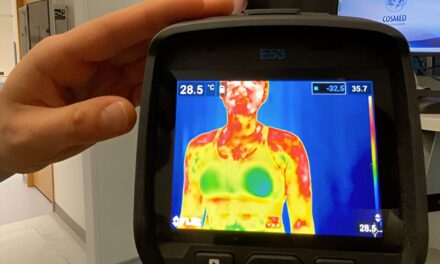
When environmental temperatures rise, the human body relies on thermoregulation—the internal process of maintaining a stable core temperature, primarily through sweating and increased blood flow to the skin. When ambient heat remains high, especially overnight, this system experiences profound strain.
Who is Most at Risk?
The health burden of this warming trend falls disproportionately on vulnerable populations:
-
Older Adults (Over 65): Naturally reduced thermoregulation capacities and a higher likelihood of underlying health conditions. According to World Health Organization (WHO) data, heat-related mortality for people over 65 increased by approximately 85% when comparing the 2000–2004 period to 2017–2021.
-
Individuals with Chronic Illnesses: Cardiovascular diseases are aggravated because the heart must pump significantly harder to cool the body. Respiratory illnesses like asthma worsen as rising heat traps ambient air pollution and increases ground-level ozone.
-
Socioeconomically Disadvantaged Communities: Populations with limited access to air conditioning, proper home insulation, or shaded green spaces.
-
Outdoor Workers & Children: Those with prolonged, direct environmental exposure or developing physiological systems.
Compounding Medical Complications
The clinical consequences of unmitigated urban heat range from acute emergencies to systemic organ strain:
-
Direct Heat Illness: Heat exhaustion can quickly progress to heatstroke—a catastrophic medical emergency where the body’s core temperature surpasses $104^\circ\text{F}$ ($40^\circ\text{C}$), risking permanent organ damage or death.
-
Renal and Metabolic Stress: Prolonged sweating without adequate fluid replacement leads to severe dehydration, electrolyte imbalances, and acute kidney injury.
-
Mental Health and Sleep Disruption: Elevated nighttime temperatures strongly correlate with poor sleep quality, which clinical data links to amplified symptoms of anxiety, depression, and cognitive decline.
“We’re seeing the urban heat island effect amplify heatwave impacts,” notes Dr. Patrick Kinney, a professor of urban health and sustainability at the Boston University School of Public Health, who was not involved in the study. “Cities can routinely be $1.8^\circ\text{F}$ to $5.4^\circ\text{F}$ hotter than surrounding rural areas. During extreme events, that differential can skyrocket to $18^\circ\text{F}$ ($10^\circ\text{C}$), particularly at night when concrete releases trapped daytime heat.”
Re-Engineering Public Health Infrastructure
Public health officials warn that the world is heading toward a convergence of three parallel trends: accelerating climate change, an aging global demographic, and rapid urbanization, with 68% of the world population projected to live in cities by 2050.
Because the drivers of heat exposure vary by region, urban planners and public health officials must move away from generic, one-size-fits-all solutions.
[Urban Heat Profiles & Targeted Interventions]

Cold-Climate Cities (Winter-Dominant Warming)
└── Challenge: Buildings designed to trap heat, vanishing snow insulation
└── Interventions: Reflective building materials, cool roofs, targeted winter health tracking

Arid & Fast-Growing Cities (Population-Dominant Warming)
└── Challenge: Concrete sprawl, lack of shade, severe nighttime heat
└── Interventions: Green infrastructure, shade canopies, automated early warning networks
Widely proven mitigation strategies include:
-
Increasing Albedo (Reflectivity): Coating roofs and pavements with reflective white materials can lower localized urban temperatures by $1^\circ\text{C}$ to $3.5^\circ\text{C}$.
-
Strategic Urban Greening: Planting urban forests, pocket parks, and ivy-covered green walls provides immediate shade and natural evaporative cooling.
-
Heat-Health Warning Systems: Launching community-wide action plans that trigger the opening of air-conditioned public cooling centers, distribute water, and mandate safety breaks for outdoor laborers during spikes.
Data shows that combining increased reflectivity with aggressive urban vegetation can offset anywhere from 40% to 99% of projected heat-related mortality increases.
Study Limitations and Nuance
While the 20-year analysis provides unprecedented scale, independent scientists urge careful interpretation of certain variables. First, satellite data measures land surface temperature (the heat radiating directly off pavements and roofs) rather than the ambient air temperature measured by standard weather station thermometers. While the two track closely at a city-wide average, human exposure occurs in the air, which can fluctuate based on wind and local shade.
Additionally, because historical research has focused almost exclusively on tropical or desert climates, there is a distinct lack of long-term epidemiological data regarding how populations accustomed to cold weather adapt to sudden heat anomalies. Individual vulnerability also varies heavily based on personal acclimatization, economic resources, and existing medical care.
Practical Protections: Managing Heat in Daily Life
As cities adjust their infrastructure, individuals must take proactive steps to safeguard their health during unusually hot periods.
Personal Protection Protocols
-
Time Outdoor Activity Wisely: Restrict strenuous exercise, heavy lifting, or running to the early morning or late evening hours. Avoid direct midday sun, where the perceived thermal stress on the body can feel significantly higher than the reported air temperature.
-
Hydrate Methodically: Do not wait until you feel thirsty to drink water. Aim for roughly one cup of water per hour, or 2 to 3 liters spread evenly throughout the day.
-
Utilize Public Spaces: If your home lacks adequate cooling, spend 2 to 3 hours of the hottest part of the day in air-conditioned public spaces like libraries, shopping centers, or designated local cooling shelters.
Optimizing Home Environments
-
Smart Ventilation: Keep windows sealed and covered with light-colored blinds or curtains during the peak heat of the day. Open them entirely at night only if the outdoor air drops below your indoor temperature.
-
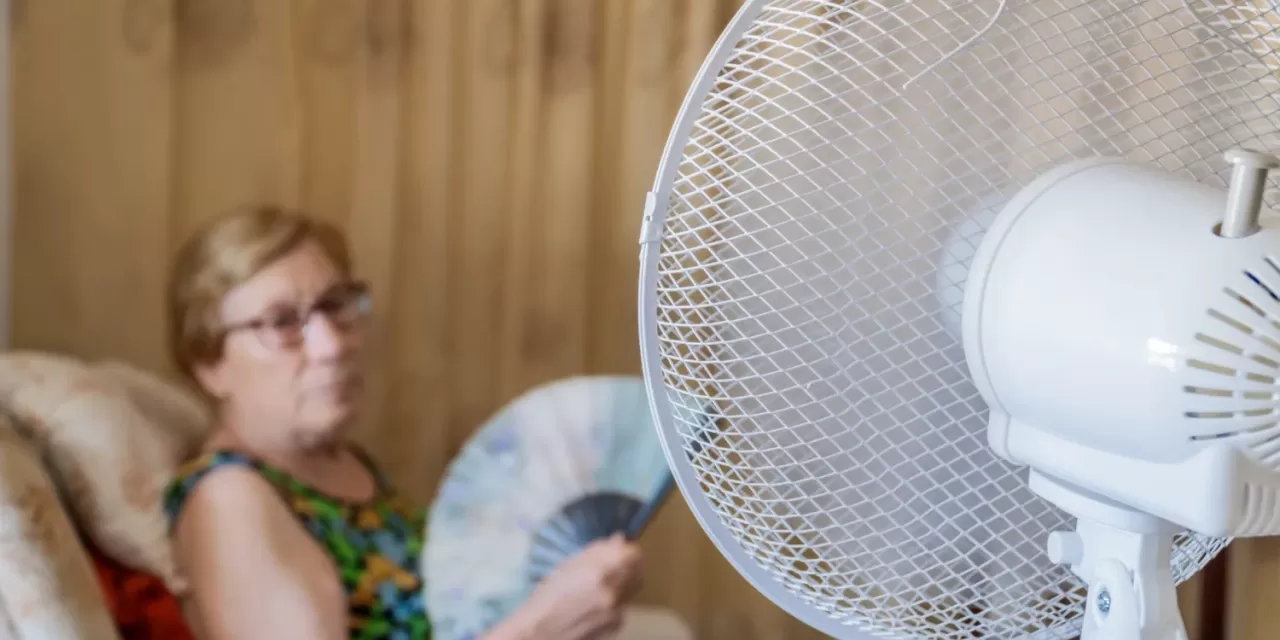
The Fan Misconception: Electric fans provide comfort by circulating air, but the WHO warns that they lose their ability to cool the human body once indoor air temperatures exceed $104^\circ\text{F}$ ($40^\circ\text{C}$). Above this threshold, fans can actually accelerate heat exhaustion by blowing air that is hotter than skin temperature across the body.
-
Air Conditioning Settings: If you have an AC unit, setting the thermostat to a moderate $27^\circ\text{C}$ ($81^\circ\text{F}$) combined with a ceiling fan can provide comfortable cooling while preventing power grid failures.
Finally, check regularly on vulnerable neighbors. Taking a few moments to call or visit elderly individuals living alone, or those managing chronic heart, lung, or kidney conditions, saves lives when temperatures spike unexpectedly.
The Bottom Line
This comprehensive look at two decades of urban data fundamentally alters our understanding of environmental risk. Cold-climate cities can no longer assume their geographic locations insulate them from the dangers of extreme heat exposure.
The accelerating pace of urban warming demands immediate, coordinated policy changes. By combining robust environmental data with targeted localized health interventions, cities can successfully adapt, protect their most vulnerable citizens, and mitigate the growing physiological toll of a warming world.
Medical Disclaimer
Medical Disclaimer: This article is for informational purposes only and should not be considered medical advice. Always consult with qualified healthcare professionals before making any health-related decisions or changes to your treatment plan. The information presented here is based on current research and expert opinions, which may evolve as new evidence emerges.
References
- https://www.earth.com/news/urban-heat-is-rising-across-1400-cities-the-real-shock-is-how-fast-exposure-is-growing/