 0
0
 0
0
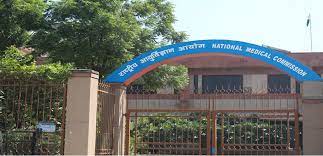
CHENNAI — The Tamil Nadu government is preparing to file a writ petition in the Supreme Court of India following a controversial regulatory shift that could strip up to 650 Bachelor of Medicine, Bachelor of Surgery (MBBS) seats from the state’s public counseling pool. The dispute erupted after the National Medical Commission (NMC) updated its portal to reflect that three private medical institutions—St. Peter’s Medical College, Dhanalakshmi Srinivasan Institute of Medical Sciences, and Srinivasan Medical College—have been granted autonomous “deemed-university” status by the University Grants Commission (UGC).
State health officials, who learned of the approval only after the online update, argue that the transition bypassed mandatory state oversight. The legal battle, poised to reshape the 2026–2027 academic admissions cycle, highlights a critical, growing friction point in public health policy: the tension between institutional autonomy for educational centers and a state’s ability to guarantee equitable healthcare access for its most vulnerable populations.
The Core Deficit: Quotas, Costs, and the 7.5% Policy
At the heart of the government’s alarm is how “deemed” status alters the basic math of medical school admissions. In India, private medical colleges affiliated with state universities must surrender a significant percentage of their seats to the state government’s centralized counseling pool. These “government quota” seats are filled based on National Eligibility cum Entrance Test (NEET) scores but are subject to state reservation policies and highly subsidized tuition rates.
Once an institution transitions into a deemed university, it operates under the direct purview of the federal government’s UGC. Its seat allocation shifts entirely to national-level counseling administered by the Directorate General of Health Services (DGHS). Consequently, the state loses its direct quota. While reports diverge slightly on the exact impact—ranging from 461 to 650 seats depending on how specific category allocations are counted—the policy implications remain stark.
Most critically, Tamil Nadu’s landmark 7.5% horizontal reservation policy, which legally guarantees medical seats to underprivileged students graduating from government schools, does not automatically apply to federally managed deemed universities.
Furthermore, the financial barrier for families is set to skyrocket. Tuition fees at state-regulated private colleges typically hover around several hundred thousand rupees annually for quota students. In contrast, independent deemed universities routinely charge between 1.5 million to 2.5 million rupees ($18,000 to $30,000 USD) per year. For an aspiring doctor from a lower-income bracket, this shift effectively transforms an earned seat into an unaffordable luxury.
The Legal Loopholes: The Fight Over the NOC
The upcoming Supreme Court battle will hinge on administrative timelines and conflicting interpretations of the UGC (Institutions Deemed to be Universities) Regulations. Under these rules, a private college seeking autonomous status must obtain a No-Objection Certificate (NOC) from its state-affiliating university—in this case, the Tamil Nadu Dr. MGR Medical University.
However, the regulations contain a “deemed approval” clause: if the state university fails to respond to an NOC application within a strictly prescribed statutory window, the UGC can assume the state has no objections and push the application forward.
According to state investigative reports:
-
One college successfully secured its status after the Tamil Nadu Dr. MGR Medical University missed the deadline to officially log an objection.
-
Two other colleges allegedly bypassed the state university entirely, submitting their portfolios directly to the UGC by arguing specific procedural exemptions.
Tamil Nadu Health Minister K.G. Arunraj has publicly contested these pathways, asserting that a passive lack of response due to bureaucratic delays does not equal valid state consent, especially when substantial public-interest resources are at stake.
Public Health Implications: Diversity in the Workforce
Beyond the immediate anxiety gripping families ahead of the upcoming NEET counseling session, health policy experts warn that modifying the socioeconomic makeup of medical batches has long-term consequences for grassroots healthcare delivery.
Decades of public health data show that doctors originating from rural or lower-income backgrounds are statistically far more likely to return to underserved communities to practice medicine. Tamil Nadu has historically been recognized as a top-tier performer in medical accessibility precisely because its quota systems deliberately diversified the pipeline of incoming physicians.
If hundreds of affordable seats shift annually into a less regulated, high-cost channel, the demographic profile of the state’s medical workforce will inevitably narrow. The resulting system risks producing physicians who are concentrated heavily in affluent urban centers, worsening the physician shortages already plaguing rural primary health centers.
The Counterpoint: Autonomy and Academic Excellence
Supporters of the colleges’ transition offer a very different perspective, viewing the development as a positive evolution for medical education standards. Institutional autonomy allows universities to design progressive curricula, update training methodologies without waiting years for state approval, and invest capital directly into advanced clinical research infrastructure.
From a strict regulatory standpoint, proponents argue that institutions meeting the rigorous infrastructural and academic benchmarks set by the UGC should not have their growth artificially stunted by state protectionism, particularly if the state failed to utilize its legal window to object. They emphasize that deemed universities still admit students purely on NEET merit, maintaining academic integrity even if the geographic and financial demographics shift.
A Nationally Watched Precedent
As Tamil Nadu’s legal team finalizes its writ petition, the case is drawing close scrutiny from health ministries across India. The Supreme Court’s eventual ruling will do more than just decide the fate of 650 seats in Chennai or Coimbatore; it will establish a binding legal precedent defining exactly where an individual institution’s right to academic self-governance ends, and a state’s duty to safeguard affordable, equitable healthcare education begins.
References
-
“3 medical colleges get deemed university status, TN plans SC challenge after 650 MBBS seats exit state quota,” Medical Dialogues, published July 9, 2026.
Medical Disclaimer: This article is for informational purposes only and should not be considered medical advice. Always consult with qualified healthcare professionals before making any health-related decisions or changes to your treatment plan. The information presented here is based on current research and expert opinions, which may evolve as new evidence emerges.