 0
0
 0
0
NEW DELHI — Researchers and clinicians report that tiny samples of human tears can carry critical biomarkers for diseases ranging from diabetes and rheumatoid arthritis to neurodegenerative and serious ocular conditions. Point-of-care tear tests—diagnostic tools performed right at the time and place of patient care—are rapidly moving from research laboratories into clinical trials, with early commercialization already underway in some regions. This shifting frontier promises to transform how systemic conditions are screened, monitored, and managed without the need for a single needle.
From Lubrication to Lab Sample: The Science of Tears
For decades, tears were viewed primarily through a limited lens: a salty fluid meant to lubricate the eye, wash away dust, or reflect emotional states. However, medical science is uncovering a far more intricate reality. Tears are a complex biological fluid produced by the lacrimal glands and specialized cells on the ocular surface. Beyond water, they contain a dense matrix of electrolytes, lipids, small molecules, and thousands of proteins.
Because the blood vessels supplying the lacrimal glands are highly permeable, molecules circulating in the bloodstream actively filter into tear fluid.
“Tears contain a dynamic mixture of locally produced and systemically derived proteins and metabolites,” explains Dr. Aris Thorne, an independent ophthalmology researcher who has spent over a decade studying ocular biomarkers. “This makes them an incredibly rich, entirely noninvasive window into both localized ocular health and broader systemic physiology.”
Redefining Diabetes Monitoring: The 100-Patient Breakthrough
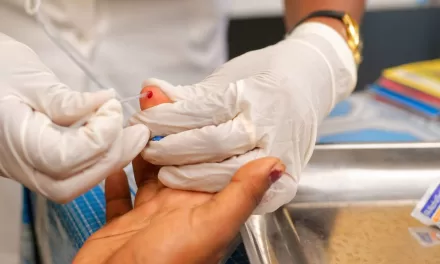
The most advanced front of this research lies in diabetes management. Traditionally, individuals living with diabetes rely on finger-prick blood tests or continuous glucose monitors to track their blood sugar. Tear-based diagnostics offer a painless alternative.
Several global research collectives and biotechnology companies are currently developing point-of-care kits designed to measure glycated albumin—a protein that reflects intermediate-term blood sugar levels over the preceding two to three weeks.
Tear Diagnostics vs. Standard Phlebotomy
│
├── Tear Testing: Noninvasive ➔ Microfluidic Strip ➔ Rapid Point-of-Care Results
└── Blood Testing: Invasive ➔ Needle Draw ➔ Laboratory Processing ➔ Delayed Turnaround
In a recent clinical trial involving 100 patients, investigators evaluated the relationship between tear fluid and traditional blood tests. The study revealed a strong statistical correlation ($r = 0.722$) between the levels of glycated albumin found in a patient’s tears and those measured in their blood. A correlation coefficient ($r$) ranges from -1 to +1; a value of 0.722 indicates a highly robust, positive relationship, meaning that as blood sugar markers rise, tear markers mirror that increase with remarkable predictability.
Building on these findings, a point-of-care tear testing kit developed in India has recently entered late-stage clinical testing. Innovators are aiming for a commercial rollout in select regional markets within the next few years, positioning it as a tool for rapid public health screenings.
Catching Inflammatory and Ocular Diseases Early
The diagnostic potential of tears extends well beyond metabolic conditions. Scientists are leveraging microfluidic devices—specialized chips that manipulate minute fluid volumes—to capture early signs of chronic inflammatory conditions, such as rheumatoid arthritis.
When systemic inflammation occurs, the body releases signaling proteins called cytokines. Researchers have discovered that these inflammatory changes are detectable in tear fluid, often preceding visible clinical symptoms or structural joint damage.
Similarly, the technology holds profound implications for tracking ocular disorders like diabetic retinopathy, a condition that damages the blood vessels of the retina and stands as a leading cause of blindness.
| Potential Application | Target Biomarker Group | Primary Clinical Value |
| Diabetes Management | Glycated albumin | Painless, frequent intermediate-term glucose tracking |
| Rheumatoid Arthritis | Inflammatory cytokines | Early detection of systemic autoimmune flare-ups |
| Diabetic Retinopathy | Vascular endothelial growth factors | Neonatal and adult blindness prevention screening |
| Neurodegenerative Disease | Specific protein aggregates | Noninvasive accessibility to central nervous system markers |
Public Health Implications: Lowering Barriers to Care
From a public health perspective, the advent of reliable tear testing could democratize preventative medicine. Needle phlebotomy (drawing blood from a vein) requires trained technicians, specialized disposal systems, and sterile environments. Furthermore, a significant segment of the population avoids routine health screenings due to a profound fear of needles or limited access to clinics with phlebotomy resources.
Noninvasive tear tests could drastically increase screening uptake. A patient could walk into a local primary care facility, a remote community health outpost, or an optometry clinic, provide a single drop of tear fluid via a comfortable paper strip, and receive diagnostic feedback within minutes.
This model is particularly promising for:
-
Neonatal Care: Screening premature infants at risk for retinopathy without the trauma of repeated blood draws.
-
Rural and Remote Clinics: Conducting health surveillance in regions lacking cold-chain storage for blood samples or immediate access to centralized laboratories.
-
Chronic Disease Compliance: Encouraging more frequent monitoring among patients who find traditional blood sampling physically or financially prohibitive.
The Caveats: Why Correlation is Not Equivalence
Despite the undeniable promise of the technology, leading clinicians urge a measured dose of journalistic and scientific caution. The journey from a successful clinical trial to an universally accepted diagnostic standard is steep and filled with physiological hurdles.
1. The Volume and Consistency Problem
Tear volumes are incredibly small and naturally variable. A patient’s tear concentration can be drastically altered by ambient humidity, wind, current medications (such as antihistamines), and age. Furthermore, common conditions like dry eye disease significantly alter the baseline chemistry of the ocular surface, potentially skewing test results.
2. Standardization Obstacles
How a tear is collected matters. Stimulating reflex tears (for example, by exposing the eye to a gentle waft of air) dilutes the sample, yielding entirely different protein concentrations than naturally resting “basal” tears. Until universal, automated collection protocols are established, reproducibility remains a major challenge.
3. Clinical Interchangeability
A statistical correlation of $r = 0.722$ is a brilliant scientific indicator, but it does not mean tear testing is ready to replace blood tests today. Establishing distinct diagnostic thresholds—the exact number that determines whether a patient passes or fails a screening—requires massive, multi-center validation studies across diverse populations.
“We are looking at an incredibly elegant piece of science,” says Dr. Thorne. “But we must be careful not to confuse a strong statistical correlation with clinical equivalence. Until these tests undergo rigorous, independent replication and clear regulatory hurdles, they cannot be used to alter a patient’s core treatment strategy.”
Looking Ahead: The Prospective Clinic
Imagine a hypothetical diabetes clinic a decade from now. A patient sits down for a routine check-up. Instead of a finger-prick, the clinician places a specialized, non-irritating diagnostic strip against the lower eyelid for a few seconds. The strip changes color or feeds data directly into a digital reader, sparking an immediate, actionable conversation about glucose control and medication adjustments.
While this streamlined workflow remains prospective, the velocity of current clinical trials suggests it is a matter of when, not perhaps. For the present moment, readers should view tear-based diagnostics as an exciting, emerging frontier. Standard clinical practices—including venous blood draws and traditional imaging—remain the definitive backbone for diagnosing and monitoring serious chronic conditions.
Medical communities, researchers, and consumers alike should closely watch for upcoming peer-reviewed, multi-center trials and pre-market regulatory decisions to see when this laboratory marvel will officially arrive at a clinic near them.
Reference Section
- https://www.medscape.com/viewarticle/tears-well-diagnostic-info-no-crying-required-2026a1000l9f
Medical Disclaimer: This article is for informational purposes only and should not be considered medical advice. Always consult with qualified healthcare professionals before making any health-related decisions or changes to your treatment plan. The information presented here is based on current research and expert opinions, which may evolve as new evidence emerges.