 0
0
 0
0
RANCHI, JHARKHAND — In a landmark intervention addressing a profound breach of medical safety, the Jharkhand High Court has ordered the immediate registration of a First Information Report (FIR) against staff at Chaibasa Sadar Hospital. The order follows a devastating cluster of infections where five children, aged 5 to 7, tested positive for HIV after receiving blood transfusions for thalassemia. Justice Gautam Kumar Chaudhary, presiding over the writ petition on February 4, 2026, rebuked local authorities for delays in legal action, emphasizing that the state has a non-negotiable duty to protect its most vulnerable citizens from preventable medical harm.
A Dual Lifelong Burden: The Incident at Chaibasa
The crisis first came to light in October 2025, when a 7-year-old boy undergoing routine treatment for thalassemia major—a genetic blood disorder requiring lifelong transfusions—tested positive for HIV. Subsequent screenings of the hospital’s regular pediatric patients revealed four more children had been infected.
All five victims belong to marginalized communities in the West Singhbhum district, families who relied on the government-run Chaibasa Sadar Hospital for life-sustaining care. These children now face a “double jeopardy” diagnosis: managing the complications of thalassemia alongside a lifelong HIV infection.
The state government responded by suspending the West Singhbhum civil surgeon, the blood bank’s medical officer, and several laboratory technicians. While the state announced a compensation package of ₹2 lakh per child, advocacy groups and the High Court have signaled that financial restitution alone cannot address the systemic negligence that allowed contaminated blood into the supply chain.
The Thalassemia Context: Why India is at High Risk
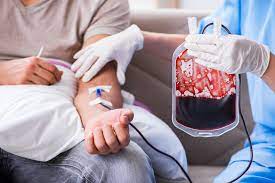
India is often referred to as the “thalassemia capital of the world.” The condition impairs the body’s ability to produce hemoglobin, leading to severe anemia. For those with thalassemia major, survival depends on receiving 20 to 25 blood transfusions every year, often starting as early as six months of age.
-
National Burden: Over 150,000 patients currently live with the disorder in India.
-
New Cases: Approximately 12,000 infants are born with thalassemia major annually.
-
Transmission Risk: Because of the sheer volume of transfusions required, these patients are significantly more exposed to Transfusion-Transmitted Infections (TTIs) than the general population.
Despite mandatory screening for HIV, Hepatitis B, and Hepatitis C, the sheer scale of the blood banking system—which processes nearly 30 million units annually—leaves room for error if protocols are not strictly audited.
Screening Lapses and the “Window Period”
The National AIDS Control Organisation (NACO) mandates that every unit of donated blood must undergo rigorous testing using ELISA (Enzyme-Linked Immunosorbent Assay) or Chemiluminescence Immunoassay (CLIA). However, a critical vulnerability remains: the window period.
The window period is the time immediately after an individual is infected with HIV but before the virus produces enough antibodies to be detected by standard tests.
“Clustering of HIV infections in thalassaemic children may be an indication of systemic lapses in blood-bank regulation, screening, and monitoring,” warns Dr. Neeraj Nischal, Additional Professor of Medicine at AIIMS Delhi.
To bridge this gap, many experts advocate for Nucleic Acid Testing (NAT). Unlike antibody tests, NAT detects the genetic material of the virus itself, significantly shortening the window period. While NAT can reduce the risk of HIV transmission to roughly 1 in 2 million transfusions, many public hospitals in resource-limited settings still lack the funding or infrastructure to implement it universally.
Expert Commentary: A Preventable Tragedy
Medical professionals across India have expressed outrage over the Chaibasa incident, citing it as a symptom of a larger governance issue.
Dr. Ishwar Gilada, President Emeritus of the AIDS Society of India, notes that while TTI rates have plummeted over the last two decades, this case is a “grim reminder” that safety cannot be taken for granted. “Thalassemia patients are high-risk because of repeated exposure; one lapse in a single donor’s history can devastate multiple lives,” Gilada stated.
Deepak Chopra, of the Thalassemia Patients Advocacy Group, labeled the incident a “preventable failure,” noting that discrepancies in testing records and inadequate staffing at the Chaibasa blood bank were flagged during the preliminary probe.
Public Health Implications and Policy Shifts
The Jharkhand High Court’s intervention is expected to catalyze broader reforms. Public health experts are calling for:
-
Universal NAT Implementation: Making Nucleic Acid Testing mandatory in all government blood banks.
-
Centralized Screening: Moving away from small, decentralized hospital blood banks toward larger, state-of-the-art regional centers.
-
Blood Bank Audits: Regular, unannounced inspections by independent bodies to ensure adherence to NACO guidelines.
The state of Jharkhand has currently restricted the Chaibasa blood bank to emergency use only, routing all routine stocks to external facilities for double-validation.
Advice for Patients and Families
For families managing thalassemia, the following steps can help mitigate risks:
-
Inquire about NAT: Ask if the blood bank uses Nucleic Acid Testing in addition to standard ELISA.
-
Seek Accredited Facilities: Where possible, use blood banks accredited by the National Accreditation Board for Hospitals & Healthcare Providers (NABH).
-
Regular Screening: Patients should be screened for TTIs (HIV and Hepatitis) every 3 to 6 months to ensure early detection and treatment.
-
Advocacy: Joining groups like the Thalassemia Society can provide access to “safe-blood” camps and financial support for Bone Marrow Transplants (BMT), which can offer a permanent cure.
Limitations and Counterarguments
While the evidence in Chaibasa points toward transfusion-related transmission, investigators must also rule out other potential sources, such as unsterile needles or maternal transmission, to ensure a comprehensive legal and medical case. However, the clustering of five cases within one pediatric unit strongly suggests a common institutional source.
Medical Disclaimer: This article is for informational purposes only and should not be considered medical advice. Always consult with qualified healthcare professionals before making any health-related decisions or changes to your treatment plan. The information presented here is based on current research and expert opinions, which may evolve as new evidence emerges.
References
- https://medicaldialogues.in/news/health/hospital-diagnostics/jharkhand-hc-orders-fir-after-five-children-test-hiv-positive-following-blood-transfusions-164163