 0
0
 0
0
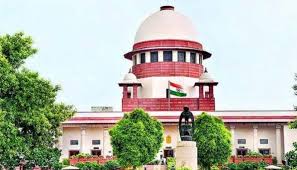
NEW DELHI — The Supreme Court of India on Wednesday, June 24, 2026, dismissed a petition from a medical aspirant belonging to the Economically Weaker Section (EWS) category who sought to bring private medical college fees on par with government institutions. A division bench comprising Justices B.V. Nagarathna and Joymalya Bagchi ruled that self-financing private colleges cannot be legally compelled to match the highly subsidized tuition rates of state-funded institutions. While the decision reinforces the financial autonomy of private education providers, it leaves open a critical public health and policy question: how can underprivileged students realistically use their reserved seats when the cost of education vastly exceeds their family income?
The Core Dispute: Income Ceilings vs. High Tuition Fees
The legal battle originated in Rajasthan, where a 22-year-old medical aspirant, Harshvardhan Singh, challenged the state’s medical counseling board and the fee structures approved by the State Fee Regulatory Committee. Singh, who holds a valid EWS certificate, was allotted a seat under the general category at a private medical college during the National Eligibility-cum-Entrance Test (NEET-UG) counseling process.
The core of the petitioner’s argument lies in a glaring mathematical mismatch between structural reservation policy and economic reality:
-
The EWS Income Limit: To qualify for the EWS reservation category in India, a family’s gross annual income must be below ₹8 lakh.
-
Private College Fees: The annual tuition fees for an undergraduate medical (MBBS) seat in Rajasthan’s private institutions range from ₹18.9 lakh to ₹25 lakh.
The petitioner argued that charging an EWS candidate up to ₹25 lakh per year makes the constitutional benefit of reservation completely ineffective in practice. The plea urged the court to mandate that self-financing institutions provide affordable options or align their rates with government medical colleges for underprivileged students.
The Court’s Rationale: Protecting the Institutional Supply of Doctors
In delivering the order, the Supreme Court upheld a previous ruling by the Rajasthan High Court, which found no illegality in the fee structures approved by the state’s regulatory body. The bench emphasized that private and government medical colleges operate on fundamentally different financial ecosystems.
“You cannot say private educational institutions shall charge the same as government institutions,” Justice Nagarathna observed during the proceedings. “That cannot be. These are self-financing institutes. For government ones… they get grants from the State. There is a vital difference.”
The court expressed concern that forcing private institutions to drastically slash their tuition rates to match government standards could jeopardize the entire medical education infrastructure. The bench warned that without financial viability, private colleges would face closure, reducing the overall capacity to train new healthcare professionals.
“Assistance of private medical colleges to the State in the field of medical education will stop then. We need doctors in this country,” Justice Nagarathna remarked, suggesting instead that students facing financial hardships explore alternative options such as state subvention schemes, loans, or dedicated scholarships.
Legal Background: The Limits of Fee Regulation
This judgment aligns with a long series of landmark Supreme Court rulings that attempt to balance institutional autonomy with student protection. Under the historic T.M.A. Pai Foundation v. State of Karnataka (2002) framework, the apex court clearly established that while private, self-financing educational institutions have the right to establish reasonable fee structures to recover costs and reinvest in infrastructure, they are strictly prohibited from charging “capitation fees” (unauthorized upfront premiums) or engaging in commercial profiteering.
Subsequent rulings have further defined these boundaries:
-
Najiya Neermunda v. Kunhitharuvai Memorial Charitable Trust (2021): The court reaffirmed that the power to determine and regulate fair fees rests with State Fee Regulatory Committees, ensuring pricing remains “non-exploitative.”
-
Narayana Medical College v. State of Andhra Pradesh (2022): The top court struck down a unilateral fee hike to ₹24 lakh per year because it bypassed the official regulatory committee process, proving that courts will step in when colleges violate established transparent procedures.
In the Rajasthan case, because the tuition fees had been officially vetted and approved by the State Fee Regulatory Committee, the Supreme Court found no grounds of arbitrariness or illegality to justify judicial intervention.
Expert Perspectives and Public Health Implications
Public health policy experts note that the ruling exposes a deep, structural vulnerability in India’s healthcare pipeline. On one hand, the country is pushing to expand its medical workforce to meet the World Health Organization’s recommended ratio of one doctor per 1,000 people. Private institutions play a massive role in expanding this capacity, bearing heavy expenditures for modern clinical laboratories, hospital equipment, and specialized faculty salaries.
However, student advocacy groups argue that treating reservation and affordability as separate issues diminishes the social impact of the EWS quota. When an EWS student qualifies purely on merit but cannot secure a rare, highly competitive government seat, a private seat becomes a mirage if it requires a multi-million rupee investment.
Health administration experts suggest that the long-term solution lies in policy design rather than judicial mandates. If the state wants to ensure equitable access to medical professions, it must introduce more robust support frameworks. This could include state-backed interest-free education loans, corporate social responsibility (CSR) funded medical scholarships, or an expansion of public-private partnership (PPP) models where the government subsidizes a portion of private seats in exchange for mandatory rural public health service from graduates.
Limitations of the Verdict and the Road Ahead
While this dismissal ends the immediate legal challenge for the petitioner in Rajasthan, it does not permanently close the chapter on medical education affordability. The Supreme Court explicitly stated in its order that the broader “question of law, if any, is kept open” for future examination.
Furthermore, the legal status of an Office Memorandum issued by the National Medical Commission (NMC) remains a point of nationwide debate. The NMC had previously recommended that the fees for 50% of the seats in private medical colleges and deemed universities should be kept at par with government medical colleges in the respective state. While states like Maharashtra and West Bengal have integrated variations of this guidelines, the Rajasthan High Court previously deemed the memorandum recommendatory rather than mandatory.
Until a uniform national policy or a legislative directive bridges the financial chasm between the ₹8 lakh EWS qualification threshold and the ₹25 lakh cost of private training, the door remains wide open for future policy overhauls and legal challenges.
Medical Disclaimer
Medical Disclaimer: This article is for informational purposes only and should not be considered medical advice. Always consult with qualified healthcare professionals before making any health-related decisions or changes to your treatment plan. The information presented here is based on current research and expert opinions, which may evolve as new evidence emerges.
References
- https://medicaldialogues.in/news/education/private-medical-colleges-cannot-be-forced-to-match-govt-mbbs-fees-sc-junks-ews-candidates-plea-173643
For a detailed breakdown of how this decision impacts reservation policies and seat allocations across different states, you can watch this Supreme Court on Private Medical College Fees & EWS Quota Rules Explained video, which provides a comprehensive legal and political analysis of the decision’s immediate aftermath.