 0
0
 0
0
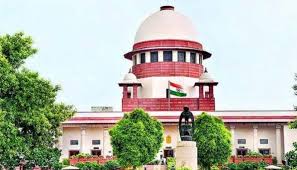
NEW DELHI — In a move that could fundamentally reshape advanced medical training and public healthcare staffing across India, the Supreme Court of India has signaled strong support for lowering the qualifying percentile in the National Eligibility-cum-Entrance Test for Super Speciality (NEET-SS) for in-service government doctors. During a high-stakes hearing on June 24, 2026, a vacation bench questioned whether doctors serving on the frontlines of public health should be held to the same grueling preparation standards as candidates who have the luxury of studying full-time.
The judicial intervention addresses a critical bottleneck in India’s medical education system: hundreds of advanced medical seats remain empty even as public hospitals face severe shortages of highly specialized clinicians. The case centers on 152 vacant super-specialty seats in Tamil Nadu that were originally reserved for government doctors but were slated to be transferred to the open All India Quota due to a lack of candidates meeting the stringent qualifying thresholds. The apex court’s observations draw fresh attention to the delicate balance between maintaining rigorous academic standards and addressing the practical realities of India’s strained public healthcare infrastructure.
The Core Dispute: Work Shifts vs. Exam Prep
The legal challenge was brought forward by the Tamil Nadu Medical Officers Association, highlighting a stark gap in the current admission system. For the 2025–26 academic year, 219 super-specialty seats—which grant entry into advanced Doctorate of Medicine (DM) and Master of Chirurgiae (MCh) programs—were earmarked for in-service candidates in Tamil Nadu. However, after two exhaustive rounds of counseling, only 68 seats were filled, leaving 152 vacancies. Meanwhile, more than 111 in-service doctors remain on a waiting list, disqualified only because they fell short of the uniform percentile cut-off.
A bench comprising Justices B.V. Nagarathna and Joymalya Bagchi explicitly questioned the rationale of shifting these reserved seats away before addressing the underlying barrier: the uniform qualifying percentile.
“Government doctors work for the people of the State,” Justice Nagarathna observed during the proceedings. If these physicians acquire advanced specialized skills, she emphasized, they directly elevate the quality of public healthcare.
The bench noted that in-service candidates are actively treating patients, often in understaffed or remote facilities, leaving them unable to “sit at home and study” like general aspirants. Consequently, the court indicated that the qualifying percentile “has to be reduced” to accommodate the unique constraints faced by working medical officers.
The Public Health Calculus: Scaling Up Specialist Care
The implications of this case extend far beyond a standard academic admissions dispute. It strikes at the heart of how India intends to build and retain specialist capacity within its state-run healthcare systems. Super-specialists in fields like cardiology, neurosurgery, neonatology, and critical care are overwhelmingly concentrated in affluent urban private hospitals, leaving a vast majority of the population without accessible advanced care.
When in-service doctors receive super-specialty training, they are typically bound by state bonds to return to the public system, bringing high-level expertise back to community and district-level government hospitals.
India’s Vacant Seat Crisis
The problem is not isolated to Tamil Nadu. Data presented during the petition revealed a startling national trend: nearly 1,800 super-specialty medical seats remain vacant across India.
| Academic Year 2025–26 | Total Seats / Status |
| National Vacant Super-Specialty Seats | ~1,800 seats nationwide |
| Tamil Nadu In-Service Earmarked Seats | 219 seats |
| Seats Filled After Two Counseling Rounds | 68 seats |
| Current Tamil Nadu Vacancies | 152 seats |
| In-Service Doctors on Tamil Nadu Waiting List | 111+ candidates |
Medical education administrators argue that leaving thousands of advanced training slots empty represents a massive loss of public resource utility, especially when qualified, experienced medical officers are eager to fill them.
Expert Perspectives: Redefining “Merit” in Healthcare
To understand the broader policy friction, a helpful analogy is often used by medical educators: Imagine two runners competing to reach the exact same finish line. One trains full-time with professional coaching, while the other runs the same distance immediately after wrapping up an exhausting 12-hour shift of physical labor. The Supreme Court is essentially asking whether the second runner’s threshold for qualification should be adjusted to account for unequal starting conditions.
“True merit in medicine cannot be measured solely by an individual’s ability to memorize textbooks for a multiple-choice exam,” says Dr. Arindam Bose, a veteran medical education consultant and former government hospital administrator who is not involved in the litigation. “In-service doctors possess years of invaluable, practical clinical judgment and bedside experience that a fresh graduate simply does lacks. By rigidly insisting on a singular exam score threshold, the system rewards exam preparation time over proven public service.”
Dr. Bose points out that from a healthcare planning perspective, the country desperately needs mechanisms that incentivize doctors to stay within the public sector. “Lowering the percentile for these candidates isn’t a dilution of standards; it’s a pragmatic workforce strategy,” he adds.
Counterarguments and the Standardization Dilemma
Despite the clear public health benefits, the counter-perspective involves valid concerns regarding standardized testing integrity and equity. Regulatory bodies like the National Medical Commission (NMC) and the Directorate General of Health Services (DGHS) have historically resisted lowering percentile cut-offs aggressively, citing worries over maintaining high academic standards in complex medical specialties.
Opponents of category-based cut-off reductions argue that:
-
Uniformity: Lowering thresholds for specific sub-groups can complicate counseling algorithms and lead to legal challenges regarding fair competition.
-
Precedent: Past medical entrance disputes have shown that frequent adjustments to cut-off scores mid-stream can cause administrative instability and delay the academic calendar.
-
Quality Assurance: Some regulatory purists maintain that super-specialty care requires a baseline level of theoretical mastery that must be uniformly demonstrated, regardless of an applicant’s professional background.
Furthermore, this hearing does not constitute a final judgment. The Supreme Court has merely indicated its prima facie view while addressing the immediate crisis of Tamil Nadu’s unallocated seats. The bench has issued formal notices to the Union Government, the NMC, the DGHS, the Medical Counselling Committee (MCC), and the Tamil Nadu government, listing the matter for a comprehensive hearing on July 15, 2026.
What This Means for Doctors and Patients
For the medical community, particularly post-graduate doctors balancing public hospital shifts with NEET-SS aspirations, this development offers a glimmer of hope for a more empathetic admission framework. It acknowledges their dual burden as healthcare providers and competitive examinees.
For the general public and health-conscious consumers, the downstream impact is structural but vital. When a government doctor specializes, that expertise directly populates public health systems that serve the underprivileged. A resolution that fills vacant seats with committed, in-service doctors means that a patient visiting a state-run hospital down the line may gain access to a cardiologist or a pediatric surgeon who would otherwise only be available in a costly private facility.
The final policy trajectory will become clearer following the responses from central medical regulators during the upcoming July 15 session.
Reference Section
- https://medicaldialogues.in/news/education/neet-ss-cut-off-percentile-should-be-reduced-for-govt-doctors-as-they-serve-while-studying-supreme-court-173673
Medical Disclaimer: This article is for informational purposes only and should not be considered medical advice. Always consult with qualified healthcare professionals before making any health-related decisions or changes to your treatment plan. The information presented here is based on current research and expert opinions, which may evolve as new evidence emerges.