 0
0
 0
0
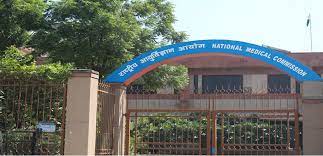
NEW DELHI — In a significant move to overhaul the quality and financial stability of medical education in India, the National Medical Commission (NMC) has notified draft amendments to its 2023 regulations. The proposed changes, announced on February 22, 2026, under the Medical Assessment and Rating Board (MARB), aim to tighten the scrutiny of how new medical institutions are established and how existing ones expand. By introducing mandatory financial reserves and stricter penalties for misconduct, the regulator seeks to ensure that India’s rapid expansion of medical seats does not come at the expense of educational standards or student security.
A New Era of Eligibility: Expanding the Player Pool
The proposed “Establishment of New Medical Institutions, Assessment & Rating (Amendment) Regulations, 2026” introduce a fundamental shift in who can train the next generation of Indian doctors.
Currently, the 2023 regulations restricted private participation primarily to “Section 8” non-profit companies. The 2026 draft seeks to:
-
Broaden Corporate Entry: Clause 6(g) is set to be amended to allow any company incorporated under the Companies Act, 2013, to establish a medical college, removing the “non-profit only” barrier.
-
Empower Local Trusts: A new Clause 6(h) will explicitly permit trusts registered under state laws to open institutions.
-
Central Government Realignment: The draft proposes deleting Clause 6(a), which previously designated only the Central Government as an eligible entity, likely to streamline the categories under broader governmental and private umbrellas.
While this opening of doors is expected to attract significant investment, it has sparked a debate among educators regarding the balance between “for-profit” motives and the sanctity of medical training.
Financial Safeguards: The Mandatory Corpus Fund
Perhaps the most impactful change is the insertion of Clause 15, which mandates a Corpus Fund for all medical colleges—both new and existing.
Under the new rules:
-
Mandatory Undertaking: Applicants must pledge a dedicated fund specifically for the institution’s operations.
-
Universal Application: Even currently functioning colleges must establish and maintain this fund.
-
MARB Oversight: The specific amount will be determined by the MARB and can be revised periodically to reflect economic changes.
“The move toward a mandatory corpus fund is a step in the right direction,” says Dr. Rajesh Khera, an epidemiologist and public-health policy analyst. “It can prevent colleges from becoming financially unstable mid-course. However, the real test will be how stringently the NMC enforces these norms.”
This financial “safety net” is designed to protect students and faculty from the sudden closure of institutions due to bankruptcy, a scenario that has historically left thousands of medical aspirants in professional limbo.
Zero Tolerance for “Pressure Tactics”
The NMC is also seeking to insulate the regulatory process from outside influence. The draft sharpens the teeth of Clause 31, focusing on misconduct and malpractice during the application process.
The amendments explicitly state that any attempt to pressurize the MARB or NMC through individuals or outside agencies will lead to an immediate halt of the application. Furthermore, the MARB will now have the power to reject applications not just for a single year, but for a specified number of years if foul play is detected.
Quality vs. Quantity: The Public Health Context
India has seen a meteoric rise in medical capacity, reaching approximately 109,000 MBBS seats and 68,000 PG seats by the 2024 academic cycle. However, quantity does not always equal quality.
The 2026 amendments act as a regulatory “filter.” By requiring a Solvency Certificate based on the last completed financial year and demanding that the Consent of Affiliation (CoA) be current and institution-specific, the NMC is eliminating “paper colleges”—entities that exist on documents but lack the infrastructure to support actual students.
“Allowing any registered company to set up medical colleges injects more flexibility, but it also demands a more rigorous inspection regime,” notes Dr. Manoj Kumar, a senior medical educator. “The stakes are high because substandard colleges can produce doctors who are under-prepared for real-world practice.”
What This Means for Students and Parents
For the average health-conscious consumer and aspiring medical student, these changes offer a layer of consumer protection:
-
Institutional Stability: The corpus fund reduces the risk of a college cutting essential clinical services or faculty salaries.
-
Informed Choices: The MARB’s commitment to publishing ratings and inspection reports on the NMC portal allows families to look beyond “glossy brochures” and see the actual compliance status of a college.
-
Stricter Gatekeeping: The “no-opportunity” policy for incomplete applications means only serious, well-prepared entities will make it through the initial screening, potentially raising the baseline quality of new institutions.
Comparison Table: 2023 vs. 2026 (Proposed)
| Feature | 2023 Regulation | 2026 Proposed Amendment |
| Corporate Eligibility | Restricted to Section 8 (Non-profit) | Any company under Companies Act, 2013 |
| Corpus Fund | Requested as documentary proof | Mandatory for ALL (new & existing) |
| Incomplete Apps | Often allowed time for corrections | Summary rejection (No opportunity) |
| Penalty for Pressure | Process withheld for one year | Rejection for multiple specified years |
The Road Ahead
The draft amendments are currently in a 30-day public comment period (ending mid-March 2026). Stakeholders, including doctors, student unions, and hospital groups, are encouraged to submit feedback to the NMC.
While the regulations address financial and administrative transparency, they do not yet solve the “clinical material” puzzle—ensuring every student has access to enough patients for hands-on learning. As the NMC moves toward digital inspections and biometric attendance (AEBAS), the medical community remains cautiously optimistic that these rules will finally bridge the gap between India’s healthcare needs and its educational standards.
References
-
National Medical Commission. (2026). Establishment of New Medical Institutions, Assessment and Rating (Amendment) Regulations, 2026 (Draft). Gazette of India.
Medical Disclaimer: This article is for informational purposes only and should not be considered medical advice. Always consult with qualified healthcare professionals before making any health-related decisions or changes to your treatment plan. The information presented here is based on current research and expert opinions, which may evolve as new evidence emerges.