 0
0
 0
0
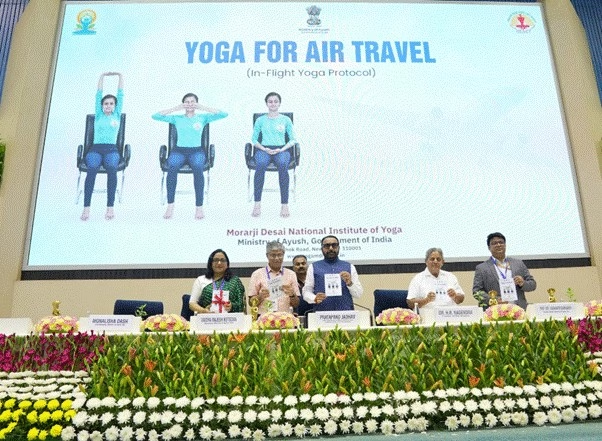
NEW DELHI – In an era where global connectivity often comes at the cost of physical exhaustion, the Indian Ministry of Ayush has launched a strategic health intervention aimed at the clouds. On March 20, 2026, during the Yoga Mahotsav, Union Minister Shri Prataprao Jadhav introduced a “Smart Yoga” protocol specifically engineered for the unique physiological rigors of air travel.
The initiative, developed by the Morarji Desai National Institute of Yoga (MDNIY), seeks to mitigate the “economy class syndrome”—a colloquial term for the stiffness, dehydration, and circulatory risks associated with prolonged confinement in pressurized cabins. At its core, the program is a 5-minute seated routine designed to be performed within the constraints of a standard airplane seat, proving that wellness does not require a yoga mat or a studio.
“Yoga is a powerful tool for preventive health and well-being,” stated Minister Jadhav during the launch. “This in-flight protocol reflects our commitment to making yoga accessible in every setting—even at 35,000 feet—so that individuals can stay active, relaxed, and balanced during travel.”
The Physiology of Flight: Why 5 Minutes Matters
Air travel presents a hostile environment for the human body. Research published in The Lancet has long documented the risks of prolonged immobility, most notably Deep Vein Thrombosis (DVT)—blood clots that form in deep veins, usually the legs. When passengers remain sedentary for hours, blood flow slows, and the lower extremities can pool fluid, leading to edema and discomfort.
Beyond vascular risks, the low humidity of cabin air (often below 20%) and fluctuations in barometric pressure contribute to systemic fatigue and gastrointestinal distress.
“The cabin environment is a physiological stressor,” says Dr. Ananya Sharma, a cardiovascular specialist not affiliated with the Ministry. “When you combine low oxygen saturation with physical stasis, you see a spike in cortisol and a drop in metabolic efficiency. A structured 5-minute intervention isn’t just about ‘stretching’; it’s about mechanical assistance for the lymphatic and circulatory systems.”
Inside the Protocol: From ‘Centering’ to ‘Pranayama’
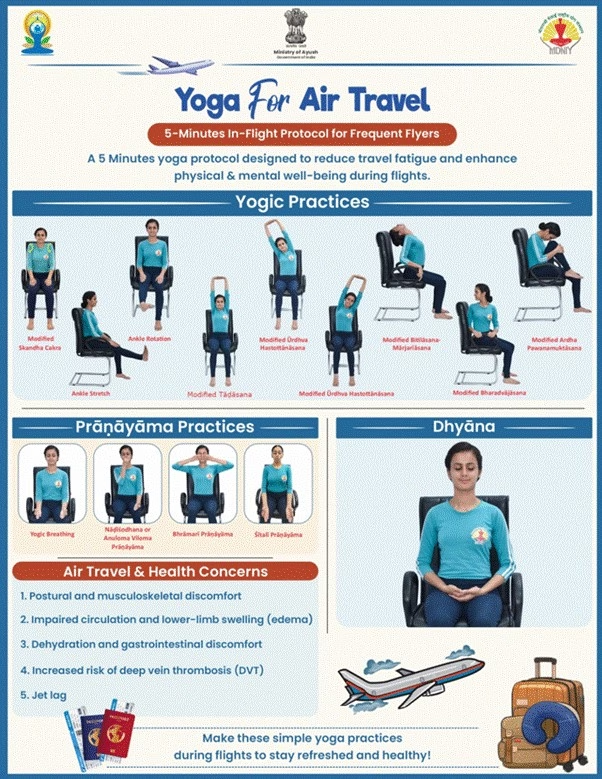
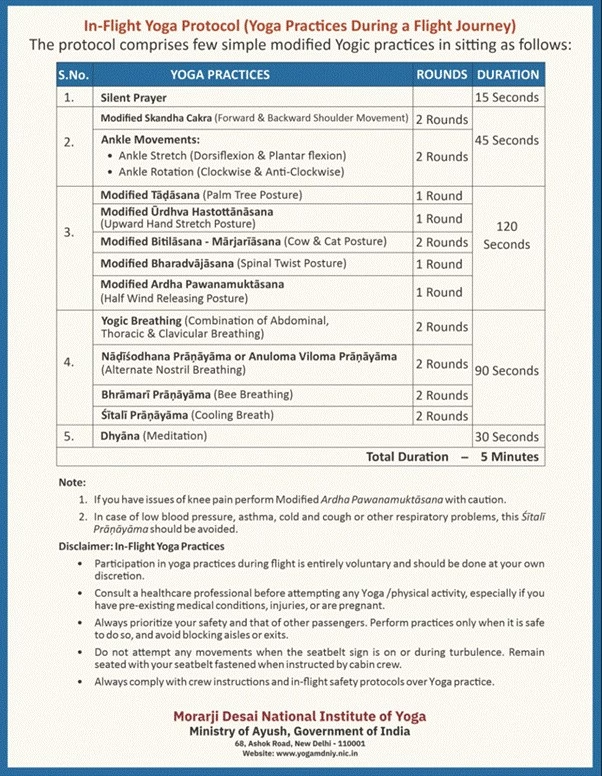
The Ayush Ministry’s routine is a distilled version of traditional Hatha Yoga, stripped of complex transitions to suit a seated environment. The 300-second sequence is divided into five targeted phases:
-
Centering (15 seconds): A brief mental grounding to reduce sympathetic nervous system activation (the “fight or flight” response).
-
Gentle Joint Movements (45 seconds): Focused on “neck rolls” and “ankle pumps.” Ankle dorsiflexion is particularly critical as it engages the calf muscle pump, the primary mechanism for returning venous blood to the heart.
-
Seated Asanas (2 minutes): Modified versions of Tadasana (seated mountain pose) and spinal twists. These movements aim to decompress the intervertebral discs which often suffer during long periods of slouching.
-
Pranayama (90 seconds): Controlled breathing techniques like Anulom Vilom (alternate nostril breathing) and Bhramari (humming bee breath). These practices are designed to improve oxygenation and induce a relaxation response.
-
Meditation (30 seconds): A final cognitive reset to combat the mental fog of jet lag.
Vaidya Rajesh Kotecha, Secretary of the Ministry of Ayush, emphasized the preventive nature of the routine. “Integrating yoga into daily routines—even in constrained environments—can significantly improve circulation and support overall well-being,” he noted.
Bridging the Gap: Public Health and Practicality
For the average traveler, the appeal lies in the lack of “friction.” There is no need to stand in the aisle or disturb neighbors. However, medical experts urge a balanced view. While the protocol is a significant step forward in travel wellness, it is not a panacea for high-risk individuals.
“For most healthy passengers, this 5-minute routine is an excellent prophylactic measure,” notes Dr. Sharma. “However, it should be seen as a supplement to, not a replacement for, other travel essentials like staying hydrated and, for those with high DVT risk, wearing compression stockings.”
Critics of in-flight wellness trends often point out that “performative” health can sometimes lead to a false sense of security. The Ministry has countered this by ensuring the protocol is evidence-based and easy to memorize, encouraging a genuine behavioral shift rather than a one-time gimmick.
Global Implications for the “Frequent Flyer”
As international travel volume continues to surge post-pandemic, the “Yoga for Air Travel” initiative arrives at a critical juncture. The World Health Organization (WHO) has previously highlighted that the risk of DVT doubles after a flight of four hours or more. By institutionalizing a “Smart Yoga” routine, India is positioning itself as a leader in “portable” preventive medicine.
Ms. Monalisa Dash, Joint Secretary at the Ministry of Ayush, highlighted that the goal is to build a “culture of wellness that travels with individuals.” This sentiment is echoed by travel industry analysts who suggest that airlines may soon integrate these protocols into their in-flight entertainment systems to enhance passenger experience and safety.
Final Thoughts for the Traveler
The next time the “fasten seatbelt” sign turns off, the Ayush Ministry suggests your first move shouldn’t be for the remote, but for your breath. In the high-pressure environment of modern aviation, five minutes of intentional movement might be the most important part of your itinerary.
Medical Disclaimer: This article is for informational purposes only and should not be considered medical advice. Always consult with qualified healthcare professionals before making any health-related decisions or changes to your treatment plan. The information presented here is based on current research and expert opinions, which may evolve as new evidence emerges.
References and Sources
Primary Source:
-
Press Information Bureau (PIB) Delhi. “Yoga is a powerful tool for preventive health and well-being: Union Ayush Minister Shri Prataprao Jadhav.” Posted 20 March 2026.