 0
0
 0
0
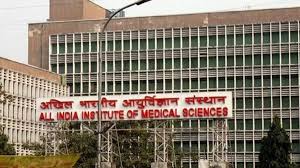
NEW DELHI — In a major effort to modernize administrative practices within public healthcare, the All India Institute of Medical Sciences (AIIMS), New Delhi, announced on Sunday the results of a massive faculty recruitment drive utilizing blockchain-based digital safeguards. The six-month selection process concluded with the hiring of more than 460 medical educators and clinicians across 50-plus disciplines, filling vital vacancies at both the flagship AIIMS New Delhi campus and the AIIMS-Central Armed Police Forces Institute of Medical Sciences (CAPFIMS) at Maidan Garhi.
The recruitment drive drew more than 3,200 applicants competing for 265 posts at AIIMS New Delhi and 199 posts at the CAPFIMS campus. The positions spanned critical academic and clinical tiers from Assistant Professors to senior Professors. To prevent traditional recruitment vulnerabilities—such as data leaks, back-dated alterations, or external administrative interference—the institute locked all applicant scores using digital one-time passwords (OTPs). Automated software, governed by pre-defined algorithms, generated the final merit lists. Human intervention was strictly limited to resolving mathematical ties, executing a process that AIIMS officials describe as a potential new model for transparent public-sector hiring.
Addressing a Critical Healthcare Vacancy Crisis
The reliance on advanced data architecture comes at a challenging period for the institution. Parliamentary data from the 2025–2026 academic year revealed that faculty vacancies across the national network of AIIMS institutions reached a four-year high, averaging a 40.2% vacancy rate with 2,561 posts left unfilled nationwide. AIIMS Delhi itself recorded 462 vacant positions—roughly 35.4% of its total sanctioned strength.
The downstream public health consequences of these empty offices are felt directly by patients and medical students alike. When academic and clinical seats remain empty, remaining medical staff face heavier clinical workloads, leading to clinician burnout, longer patient wait times for specialized procedures, and a slower expansion of critical tertiary services. Furthermore, the shortage of experienced faculty threatens the quality of hands-on clinical training essential for the next generation of physicians.
AIIMS Faculty Vacancy Trends (National Average)
2022-23: [|||||||||||||||||||] 38.8%
2023-24: [||||||||||||||||||||] 40.2%
2024-25: [|||||||||||||||||||] 37.6%
2025-26: [||||||||||||||||||||] 40.2% (2,561 vacant posts)
By completing this recruitment cycle, AIIMS aims to stabilize its teacher-to-student ratio and expand specialized healthcare services. However, the administrative backlogs inherent to conventional public sector hiring have historically delayed these urgent appointments—a problem AIIMS hoped to solve via automated, secure infrastructure.
How Blockchain Redefines the Audit Trail
In conventional recruitment databases, data is stored centrally, meaning an individual with administrative privileges can alter or overwrite records without necessarily triggering an external alert. Blockchain modifies this system by operating as an immutable ledger—a decentralized, digital record-keeping system where once a piece of data is entered and validated, it cannot be edited, overwritten, or deleted retroactively.
A systematic review published in JMIR Medical Informatics highlights that blockchain’s primary utility in healthcare infrastructure lies in ensuring data integrity, providing strict access control, maintaining secure logging, and establishing “non-repudiation”—the inability of any party to deny the authenticity of their data entry.
In the AIIMS protocol, candidate marks from interviews and assessments were entered into the system and immediate OTP-based digital locks were applied. The algorithm then processed the scores autonomously. Any subsequent attempt to tamper with the scores would corrupt the cryptographic hash of that block, immediately alerting independent oversight bodies and leaving a clear, permanent audit trail.
Expert Perspectives: Infrastructure vs. Novelty
While the technology offers significant promise, medical policy and health-systems experts urge caution against viewing blockchain as a standalone cure for systemic administrative issues.
“Blockchain is a robust cryptographic tool for preserving records securely, but it is not inherently superior to a well-built, conventional database with strict access logs,” notes Dr. Rajesh Malhotra, a health policy analyst not involved in the AIIMS recruitment framework. “The true value depends entirely on implementation, independent oversight, and whether the system actually improves accountability. A digital ledger is only as good as the governance rules surrounding who enters the data in the first place.”
This perspective aligns with a 2025 healthcare organizational study published in SAGE Journals, which surveyed 322 healthcare professionals regarding the adoption of blockchain tools. The study identified that professional willingness to trust and accept these advanced digital tools is heavily driven by perceived organizational transparency and active stakeholder engagement, rather than the mere sophistication of the software code.
Limitations, Logistics, and Scalability
Public health journalists and independent technology auditors point out several key limitations in evaluating the AIIMS rollout. The initial announcements provided by the institute did not include a technical architecture audit, leaving it unclear whether a public, private, or hybrid blockchain network was utilized.
Additionally, critics note that blockchain introduces substantial technical complexity and infrastructure costs. While a premier national institute like AIIMS Delhi possesses the financial resources and dedicated information technology teams to maintain decentralized ledgers, smaller state-level medical colleges or rural district hospitals may find the costs and administrative upkeep of such systems prohibitive. Furthermore, automated algorithm-driven selection processes cannot resolve qualitative complaints regarding interview fairness or structural biases in the initial screening criteria.
The Broader Impact on Daily Health Decisions
For health-conscious consumers and the general public, this structural upgrade has tangible, real-world implications. Institutional accountability and fair hiring practices dictate the quality of care delivered at the bedside. When a premier hospital selects its faculty based strictly on merit, insulated from external interference, the standard of clinical teaching and research rises, directly impacting patient outcomes and medical breakthroughs.
For healthcare professionals, the AIIMS experiment signals a shift where digital governance tools are expanding beyond electronic health records (EHRs) and directly into core human resource and administrative networks. If this blockchain-backed process proves reproducible, it may well serve as a framework for other public institutions to manage high-stakes hiring and examination workflows, ultimately stabilizing the healthcare workforce and improving the delivery of public medicine.
References
-
News Report: “AIIMS Delhi announces results for 460 faculty posts using blockchain technology,” IANS via Bhaskar Live, Published July 6, 2026.
Medical Disclaimer: This article is for informational purposes only and should not be considered medical advice. Always consult with qualified healthcare professionals before making any health-related decisions or changes to your treatment plan. The information presented here is based on current research and expert opinions, which may evolve as new evidence emerges.