 0
0
 0
0
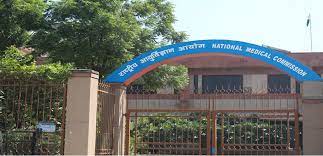
NEW DELHI — A Supreme Court-appointed amicus curiae has delivered a damning assessment of India’s medical education regulatory system. The report explicitly blames persistent vacancies at the National Medical Commission (NMC) and the central government’s failure to fill key statutory posts for recurring delays in medical admissions, approvals, inspections, and appeals. These prolonged systemic bottlenecks have severely disrupted academic calendars across the country, raising urgent concerns among medical professionals, educators, and aspiring healthcare students.
Senior advocate Maninder Singh, serving as the amicus curiae—an independent expert appointed to advise the court—filed his comprehensive report with the Supreme Court on June 9, 2026. He stated that these administrative lapses have left medical students “bearing the brunt of the system’s shortcomings.”
The report reveals that for the 2025–26 academic session alone, postgraduate (PG) medical admissions continued until February 2026, while undergraduate (UG) admissions stretched into December 2025. These timelines extend far beyond the legally prescribed academic schedules, throwing students’ lives and hospital staffing into uncertainty.
Key Findings: A Regulator Operating Without Leadership
The amicus report identifies a critical structural failure within the nation’s apex medical education regulator. Six years after the National Medical Commission Act 2019 came into force to overhaul medical education, several statutory leadership positions across the commission and its autonomous boards remain completely vacant.
Official NMC records and court submissions highlight a glaring lack of leadership in vital branches:
| Autonomous Board / Position | Current Regulatory Status |
| President, Undergraduate Medical Education Board (UGMEB) | Vacant |
| President, Ethics and Medical Registration Board (EMRB) | Vacant |
| UGMEB Board Members | All five statutory positions remain unfilled |
| Postgraduate Medical Education Board (PGMEB) | Functioning with only the President (Dr. Vijay Oza); other members missing |
| NMC Secretary | Central government failed to fill the post for its full prescribed tenure |
Dr. Abhijat Chandrakant Sheth currently serves as the NMC Chairman, having been appointed by the Appointments Committee of the Cabinet in July 2025 for a four-year term. However, the report stresses that the absence of regular, full-time office-bearers across these critical independent boards has crippled the commission’s capacity. The regulatory void has severely delayed the framing of essential guidelines, processing of college applications, granting of seat permissions, and timely resolution of legal appeals.
Students Pay the Highest Price
“The most sufferers in these delays are the students,” Singh’s report stated explicitly. Because approvals, infrastructure renewals, and state counselling processes are not completed within the mandated windows, precious medical seats across the country frequently go unfilled.
The report highlighted that formal permissions and seat renewals for MBBS courses continued deep into November 2025, even though the official academic session had commenced months earlier on September 1, 2025.
The consequences extend beyond individual academic stress. Legal and administrative appeals relating to PG courses and seat increases have frequently become infructuous—meaning they lose all practical relevance—because national counselling rounds moved ahead before the shorthanded NMC could issue formal decisions. In practical terms, students who successfully won legal appeals to secure additional seats found their victories entirely meaningless because the enrollment deadlines had already passed.
Transparency Concerns Cloud Regulatory Approvals
Beyond administrative inertia, the amicus report flagged a disturbing decline in institutional transparency. Inspection reports of medical colleges—which evaluate the adequacy of hospital infrastructure, lab equipment, and clinical material—and formal regulatory decisions are no longer being routinely disclosed in the public domain. This directly violates statutory provisions under the NMC Act 2019, which explicitly mandate public publication to maintain oversight.
“It is very unfortunate that an authority responsible for regulating standards of medical education in the country and performing various functions under the National Medical Commission (NMC) Act, 2019 is functioning without office-bearers,” the submission stated.
Context: Rapid Expansion Amid Deepening Structural Gaps
This regulatory dysfunction occurs at a time when India is aggressively expanding its medical education capacity to meet high patient demands. The NMC approved 10,650 new undergraduate (MBBS) seats for the 2025–26 academic year, bringing the country’s total MBBS seat count to an unprecedented 137,600. Additionally, the commission reported an increase of approximately 8,416 postgraduate seats for the same session, raising the overall PG count from 49,915 in 2024–25 to 58,331.
Yet, physical capacity expansion has failed to fix structural vacancies. Despite a 39% rise in overall MBBS seats between 2020 and 2025, more than 2,800 undergraduate seats remained completely vacant during the 2024–25 academic cycle because of chaotic admission timelines. Unfilled seats peaked in 2022–23 at 4,146, followed by 2,959 in 2023–24 and 2,849 in 2024–25.
Faculty Shortages: A Parallel Crisis
The leadership vacuum at the federal level directly compounds a separate, critical problem on the ground: severe shortages of teaching doctors in medical colleges.
A recent evaluation by the Maharashtra University of Health Sciences (MUHS) revealed that more than 50% of sanctioned teaching positions in several state-run medical colleges remain entirely unfilled. In newly established institutions, such as the government medical college at Ratnagiri, a staggering 82% of approved faculty positions are vacant, leaving only 18% of the teaching staff to train students.
Under strict NMC norms, every medical college must maintain at least 90% of its sanctioned teaching staff to retain its official recognition. Falling below this benchmark can result in the immediate cancellation of a college’s recognition status, a penalty that has hit postgraduate specialized programmes particularly hard.
To mitigate the staff shortage, the NMC introduced heavily debated revised regulations. These changes allow private specialists with 10 years of clinical experience to be directly appointed as associate professors, and doctors with two years of experience to join as assistant professors, bypassing the traditionally mandatory senior residency training.
Expert Perspectives and Public Health Implications
Medical education experts note that India’s overall doctor-to-population ratio has technically improved to approximately 1:811 to 1:834, successfully surpassing the World Health Organization’s (WHO) recommended benchmark of 1:1,000. However, public health experts emphasize that this national average masks deep geographic inequalities. Urban centers remain highly saturated with medical professionals, while rural and tribal districts continue to face severely understaffed primary health centers and a total absence of specialists.
The ongoing admission delays and regulatory instability carry broader, worrying implications for India’s long-term public health infrastructure. In the Union Budget, the government announced an ambitious plan to add 75,000 new medical education seats across the country over the next five years. However, public health analysts warn that persistent regulatory vacancies and acute faculty shortages threaten to undermine the quality of this expansion.
For aspiring students, prolonged admission delays create severe psychological distress, disrupt financial planning, and stall career progression. For the broader public health system, delayed admissions and vacant seats mean fewer trained doctors entering clinical practice each year, directly stalling efforts to fix the rural-urban healthcare divide.
Limitations and Counterarguments
While the amicus report places the blame squarely on bureaucratic vacancies, the document does not address whether the government faces genuine hurdles in recruiting qualified candidates. Finding top-tier medical professionals who possess the highly specialized experience required for medical education regulatory roles remains an ongoing challenge nationwide.
Additionally, critics note that admission delays are not driven entirely by NMC vacancies. Other external variables are at play, including complex, ongoing Supreme Court litigation regarding transparency issues within the National Board of Examinations in Medical Sciences (NBEMS)—specifically involving demands for the public disclosure of official question papers and answer keys.
Furthermore, some local authorities argue that the system is not in total breakdown. Tamil Nadu Health Minister Ma Subramanian recently characterized the NMC’s strict compliance and show-cause notices to regional medical colleges as a “routine affair every year,” suggesting that certain regulatory friction points indicate standard, ongoing quality control rather than systemic collapse.
What Comes Next
The Supreme Court is slated to formally review the amicus curiae’s report. Legal experts anticipate this could lead to direct judicial mandates ordering the central government to fill all vacant statutory positions at the NMC without further delay. The NMC has previously directed individual state governments to expedite regional medical faculty recruitment within a six-month window, following a similar directive from the Patna High Court.
For thousands of medical aspirants nationwide, the resolution of these high-level regulatory vacancies will dictate whether the upcoming academic sessions return to a stable, predictable timeline—or continue the cycle of administrative delays that has plagued the system despite years of attempted reform.
Medical Disclaimer
Medical Disclaimer: This article is for informational purposes only and should not be considered medical advice. Always consult with qualified healthcare professionals before making any health-related decisions or changes to your treatment plan. The information presented here is based on current research and expert opinions, which may evolve as new evidence emerges.
References
- https://health.economictimes.indiatimes.com/news/policy/nmc-vacancies-delaying-medical-admissions-amicus/131622609?utm_source=latest_news&utm_medium=homepage