 0
0
 0
0
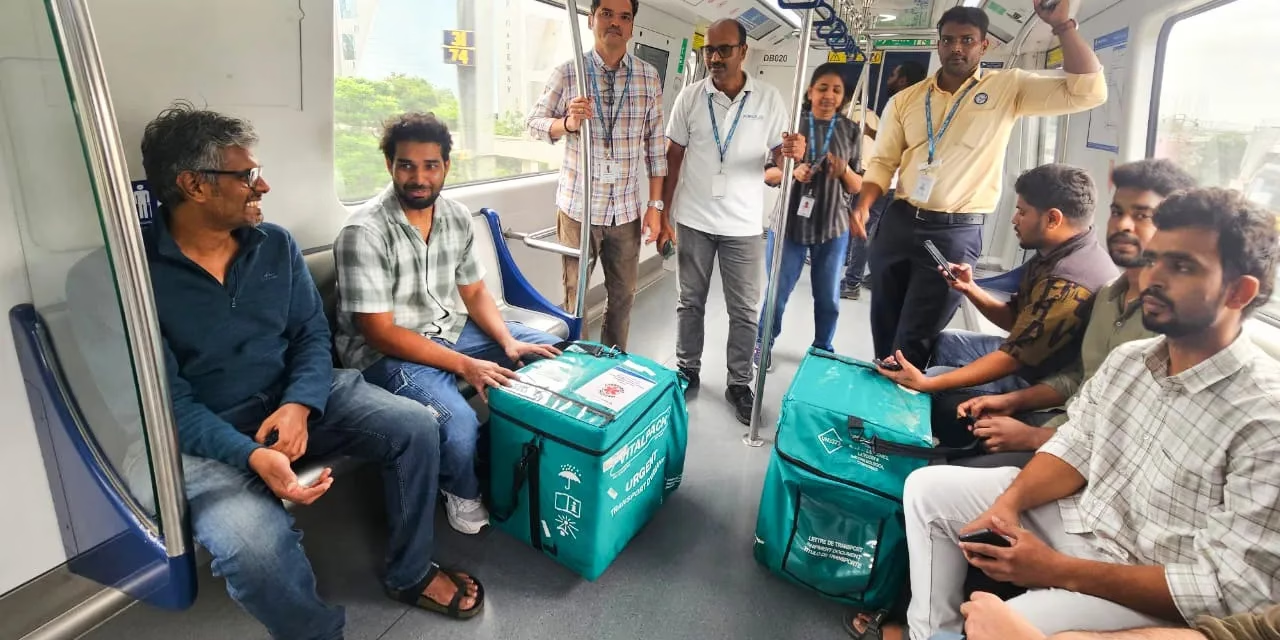
HYDERABAD, India — On August 1, 2026, healthcare workers and transit officials in Hyderabad accomplished a high-stakes logistical feat: moving a donor heart and pair of lungs across 14 kilometers of dense urban sprawl in just 25 minutes.
The successful transport—moving the vital organs from CARE Hospitals in Gachibowli to KIMS Hospitals in Secunderabad—was made possible not by blue-light road escorts, but by converting the Hyderabad Metro Rail network into a non-stop “green corridor.” Between 11:40 a.m. and 12:05 p.m., a specialized train bypassed daily commuter traffic across 13 stations, providing surgical teams with the crucial window needed to save a patient’s life.
This operation highlights how public transit infrastructure, traditionally built for daily commutes, is becoming an essential lifeline in modern medical logistics.
The Race Against Ischemic Time
In transplant medicine, time is the ultimate variable. The moment an organ is harvested from a deceased donor, it enters a state known as cold ischemic time—the period during which the organ is chilled and deprived of blood circulation and oxygen.
According to guidelines established by the International Society for Heart and Lung Transplantation (ISHLT), the acceptable cold ischemic time for a donor heart is strictly under four hours. Beyond this four-hour threshold, the risk of primary graft dysfunction—a severe condition where the transplanted heart fails to function adequately in the recipient—increases significantly.
While lungs are somewhat more resilient, clinical research published in peer-reviewed journals demonstrates that prolonged preservation time directly correlates with worse long-term graft survival and higher post-operative complications.
“A delay of even 15 to 30 minutes in transit can be the difference between an organ functioning immediately upon reperfusion or suffering irreversible cellular injury,” explains Dr. Ananya Sharma, a senior transplant cardiologist who was not involved in the August 1 operation. “When navigating metropolitan congestion, unpredictable traffic bottlenecks present an unacceptable hazard. Fixed-guideway transit eliminates that variable entirely.”
Strategic Precision: How the Seamless Transfer Unfolded
The August 1 transit operation required real-time synchronization between medical teams, transit controllers, and state health authorities:
This incident is not an isolated experiment. Hyderabad Metro Rail previously operated similar organ corridors—including heart transfers in January and September 2025—establishing a reliable framework for emergency transit integration.
Institutional Coordination and Public Health Systems
Successful organ transport extends beyond logistics; it relies on systemic policy frameworks. In Telangana, this infrastructure is managed through Jeevandan, the state’s cadaver organ donation initiative. Established to create transparent allocation mechanisms and improve deceased donation rates, Jeevandan acts as the central node connecting donor families, hospital networks, and municipal agencies.
When a donor family provides consent, Jeevandan coordinates organ allocation based on medical urgency and compatibility. However, moving organs across modern cities requires assistance beyond the medical sector.
By formalizing protocols between health authorities like Jeevandan and transit operators, municipal leaders are redefining the role of public transportation in community health.
| Transport Option | Major Advantages | Key Risks & Limitations |
| Ground Ambulance (Standard) | Direct point-to-point delivery without transfers | Highly vulnerable to urban traffic delays and weather |
| Helicopter / Air Ambulance | High speed over long distances | Expensive, weather-dependent, requires helipad access |
| Metro Rail Corridor | Unaffected by traffic; reliable transit times | Limited by fixed lines and station-to-hospital distance |
Realities, Limitations, and the Bigger Picture
While rail-based organ transit offers distinct advantages, medical experts emphasize that it is not a universal solution for every transplant scenario.
“It is vital to maintain perspective,” cautions Dr. Sharma. “A green rail corridor is an efficient tool, but its utility depends on geography. If the donor or receiving facility is located far from a station, the time lost during secondary ambulance transfers can cancel out the benefits gained on the tracks.”
Furthermore, logistical speed is only one link in a complex clinical chain. The ultimate success of a transplant relies on numerous variables:
-
Donor organ quality: Pre-existing health conditions and cause of death impact organ viability.
-
Recipient health: The surgical stability and immunological readiness of the patient receiving the organ.
-
Surgical execution: Precision during the explant and implantation surgeries.
-
Post-operative management: Immunosuppressive therapy regimens and early infection control.
What This Means for Readers and Healthcare Delivery
For the public, the Hyderabad operation serves as a reminder of how civic infrastructure and medical advances intersect to save lives. It highlights the importance of organ donor awareness; even the most efficient transit system relies on donor consent.
For urban planners and public health strategists, this model offers a scalable blueprint. As cities become more congested, utilizing existing rail infrastructure for rapid emergency medical transport provides a reliable, low-cost alternative to aerial transport or road closures.
References
-
Hyderabad Metro Rail. Official Press Statement: Hyderabad Metro facilitates priority transit for donor heart, lungs. Published August 1, 2026.
Medical Disclaimer: This article is for informational purposes only and should not be considered medical advice. Always consult with qualified healthcare professionals before making any health-related decisions or changes to your treatment plan. The information presented here is based on current research and expert opinions, which may evolve as new evidence emerges.