 0
0
 0
0
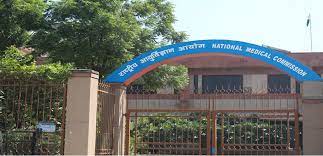
NEW DELHI — In a major regulatory sweep just ahead of the upcoming medical admission season, India’s apex medical education regulator, the National Medical Commission (NMC), has issued show-cause notices to more than 100 medical colleges across the country. The institutions have been flagged for failing to meet mandatory minimum standards regarding patient volumes, hospital bed occupancy, and essential teaching staff.
According to media reports published on July 6, 2026, the affected colleges—which include both government-run and private institutions across several states, including Gujarat—have been given a strict 45-day window to rectify these deficiencies. Failure to comply with the mandated standards could result in severe regulatory penalties, including a ban on admitting new Bachelor of Medicine, Bachelor of Surgery (MBBS) students for the upcoming academic year.
The enforcement drive underscores an ongoing struggle within India’s rapidly expanding healthcare education sector: balancing the urgent national need for more doctors with the absolute necessity of maintaining rigorous training quality.
Inside the Numbers: What the NMC Norms Require
For a medical college to legally operate and accept students in India, it must maintain a fully functioning teaching hospital. These hospitals serve a dual purpose: providing free or subsidized healthcare to the public and acting as a living classroom for trainee physicians.
To ensure students receive adequate clinical exposure, the NMC enforces strict, quantifiable baselines. For an institution offering 150 MBBS seats, the statutory requirements include:
-
Outpatient Department (OPD) Load: An average of at least 800 patients visiting the clinic daily.
-
Inpatient Bed Occupancy: A minimum of 480 admitted patients on any given day.
-
Medical Staffing: A baseline of 204 qualified doctors, residents, and essential clinical staff.
During recent physical and digital monitoring inspections, the NMC found that the flagged institutions fell substantially below these thresholds. In some instances, colleges reported numbers on paper that did not align with actual hospital footfall or physical biometric attendance logs for faculty.
Why Patient Load and Staffing Form the Bedrock of Medical Training
In medical education, text-based learning can only go so far. Clinical exposure—the time a student spends interacting with real patients, taking medical histories, observing symptoms, and assisting in procedures—is what transforms a student into a safe, competent clinician.
“Patient load is not a bureaucratic metric; it is the absolute baseline of a doctor’s education,” explains Dr. Rajeev Sood, a veteran medical educator and former hospital administrator who has reviewed regulatory compliance frameworks. “If a teaching hospital averages only 200 or 300 outpatients a day instead of 800, a third-year medical student might go weeks without seeing common clinical presentations, like an acute appendicitis or advanced diabetic complications. You cannot learn to diagnose what you have never seen.”
However, experts also note that high patient numbers alone do not guarantee an excellent education. A hospital can have crowded hallways but still fail if there is weak faculty supervision, poor medical documentation, or an absence of structured bedside teaching. This is precisely why the NMC’s latest drive targets a triad of issues: infrastructure, patient volume, and physical staff presence.
The Growth vs. Quality Dilemma in India’s Healthcare System
India’s medical education system has seen unprecedented growth over the last decade, with the total number of MBBS seats across the country expanding dramatically to meet a historic shortage of doctors. However, public health experts point out that infrastructure and human resources have struggled to keep pace with this rapid expansion.
Recruiting qualified medical faculty remains a systemic bottleneck, particularly for newly established colleges in rural or semi-urban areas. Furthermore, low patient loads at certain teaching hospitals sometimes highlight broader, structural public health challenges rather than simple institutional neglect.
In many regions, patients bypass local government teaching hospitals in favor of corporate private care due to perceived quality differences, or because local referral systems are broken. Consequently, a newly upgraded medical college might boast state-of-the-art diagnostic machinery but lack the steady stream of patients required to train its students effectively.
Counterarguments and Institutional Challenges
While independent medical educators agree that strict regulation is necessary to safeguard the profession, some argue that a rigid, one-size-fits-all punitive approach can trigger unintended disruptions.
“The challenge for regulators is not merely identifying deficiencies, but ensuring that well-intentioned institutions have a realistic, supportive pathway to correct them,” noted a senior medical education administrator from a state health university, speaking on the condition of anonymity. “Halting admissions at 100 colleges simultaneously would pull thousands of medical seats out of a highly competitive market, causing massive anxiety for students and families who have spent years preparing for competitive entrance exams.”
Furthermore, representatives from several medical colleges have previously noted that unexpected shifts in seasonal diseases or local holidays can temporarily skew patient turnout data during random inspection windows, arguing that evaluations should rely on broader, annualized data trends rather than single-day snapshots.
What This Means for Aspiring Medical Students and the Public
For the general public, this regulatory crackdown does not signify an immediate threat to patient safety. Instead, it serves as an administrative quality control mechanism designed to ensure that the next generation of physicians is properly vetted and thoroughly trained.
For aspiring medical students and their families currently navigating the stressful admission season, the NMC’s compliance drive offers a vital lesson. Experts advise looking far beyond campus branding, modern architecture, or a high seat count when selecting an institution.
Before committing to a medical college, candidates should actively investigate the hospital’s actual daily patient footfall, the consistency of its senior faculty, its clinical facilities, and its historic regulatory track record. Ultimately, a medical degree is only as valuable as the hands-on clinical experience that backs it up.
Medical Disclaimer
This article is for informational purposes only and should not be considered medical advice. Always consult with qualified healthcare professionals before making any health-related decisions or changes to your treatment plan. The information presented here is based on current research and expert opinions, which may evolve as new evidence emerges.
References
-
Study & Media Citations:
-
Medical Dialogues. “NMC issues notice to over 100 medical colleges over patient load, staff shortages: Report.” Published July 6, 2026.
-