 0
0
 0
0
CAMBRIDGE, Mass. — In a milestone advancement for regenerative medicine, a team of tissue engineers at the Massachusetts Institute of Technology (MIT) has successfully developed injectable, miniature “satellite livers.” When tested in mice, these tiny bioengineered grafts quickly plugged into the surrounding blood supply, functioning stably for at least eight weeks. The breakthrough, published in the peer-reviewed journal Cell Biomaterials, introduces a compelling new proof-of-concept: instead of replacing an entire failing organ via major surgery, clinicians might one day inject supplementary, functional liver tissue directly into the abdomen to support patients in severe liver distress.
While the research is still in its early laboratory stages, it points to a critical future lifeline. It could serve as a temporary “bridge therapy” to keep patients stable while they wait on agonizingly long transplant lists, or offer a permanent source of baseline support for individuals who are otherwise too frail to undergo a major, traditional organ transplant.
The Engineering Behind the ‘Satellite Liver’
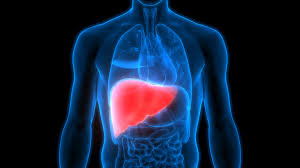
The human liver is a highly complex chemical processing plant, responsible for filtering toxins, regulating metabolic processes, and producing vital blood proteins. Replicating this intricate machine outside the body has historically been a massive scientific bottleneck.
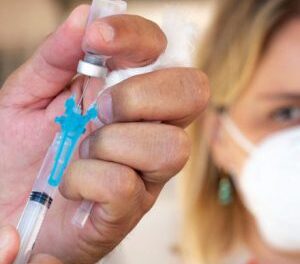
To overcome this, the MIT engineering team developed a modular delivery system. They combined primary liver cells (hepatocytes) with supportive connective tissue cells (fibroblasts) and suspended them inside specialized hydrogel microspheres. This mixture is fluid enough to pass through a standard syringe needle.
Once inside the mouse model, these components spontaneously organized themselves into a compact, highly functional “satellite” tissue network.
“We are essentially engineering a highly specialized, localized niche for cell transplantation,” explained Vardhman Kumar, the study’s lead author. “Instead of trying to rebuild a full organ structure from scratch, we provide the micro-environment these cells need to adapt, survive, and get to work quickly.”
Crucially, the study noted that neighboring blood vessels quickly grew into the newly introduced grafts. This localized blood flow provided the cells with vital oxygen and nutrients, keeping them viable for the entire two-month observation window. The mini-livers successfully performed signature functions, producing key proteins and metabolic enzymes associated with a healthy, native liver.
Senior author Sangeeta Bhatia, a pioneer in tissue engineering, noted that the core goal of this project isn’t immediate total organ replacement. Rather, it is about providing a “booster function.” By leaving the patient’s existing, diseased liver in place, the injectable grafts act as external reinforcement, taking over a fraction of the metabolic workload to keep the patient viable.
Furthermore, the researchers placed these grafts within abdominal fat tissue and monitored their development using non-invasive ultrasound imaging. In a clinical setting, this means future tracking and follow-up could be performed without resorting to repeated exploratory surgeries.
A Desperate Search for Transplant Alternatives
The urgency driving this research stems from a severe, persistent public health crisis. According to data from the Centers for Disease Control and Prevention (CDC), an estimated 4.5 million adults in the United States are currently diagnosed with chronic liver disease or cirrhosis.
The standard curative treatment for end-stage liver failure remains an orthotopic liver transplant—a procedure where the damaged organ is completely removed and replaced by a donor organ. However, demand dramatically outstrips supply.
Data compiled by the Organ Procurement and Transplantation Network (OPTN) and the Scientific Registry of Transplant Recipients (SRTR) illustrates this stark deficit:
| Year (2022) | Transplant System Metrics |
| Total Successful Transplants | 9,527 adults received a liver transplant |
| Active Waiting List Backlog | 10,548 adults remained on the waitlist at year-end |
| The Core Problem | More patients are actively waiting than the entire system can supply annually |
This imbalance means hundreds of patients die every year while waiting for a matching donor.
Scientists have explored bioengineered liver tissue for more than a decade to fill this void. Prior studies out of Kyushu University and the University of Pittsburgh demonstrated that miniature livers could be successfully grown from human stem cells and survive inside rats for several days. However, those models faced long-term survival issues, and the authors of those early studies repeatedly cautioned that major hurdles remained before bioengineered tissue could realistically scale up to help human beings. The MIT study’s eight-week survival window marks a major leap forward in tissue durability.
Expert Perspectives and Clinical Realities
While independent hepatologists and transplant surgeons welcome the data, they urge the public to temper immediate expectations.
“The concept is elegant, and the engineering behind the vascular integration is highly promising,” says Dr. Elena Vance, a transplant hepatologist not involved in the MIT research. “However, the clinical standard for treating end-stage liver disease remains a whole-organ transplant. For any bioengineered device or secondary graft to alter current medical practice, it must prove it can deliver durable, long-term metabolic function and remain entirely safe in human subjects over years, not just weeks.”
Dr. Vance also highlighted a major practical concern that the MIT team must resolve: immune rejection.
Because the current prototype uses standard donor liver cells, patients receiving these injections would likely need the same heavy regimen of immunosuppressive drugs that traditional transplant recipients take. This poses a distinct medical dilemma, as physicians would have to weigh whether adding a small amount of extra liver function justifies exposing a frail patient to the systemic risks of long-term immune suppression.
The MIT researchers are actively working to address this limitation. Current follow-up investigations are focusing on developing “immune-evasive” cells that can bypass the host immune system entirely, as well as localized, slow-release drug delivery systems engineered directly into the hydrogel microspheres to prevent rejection locally without suppressing the whole body.
What Patients and Families Should Understand
For families navigating the realities of advanced liver disease, it is vital to recognize that these injectable mini-livers are an early-stage laboratory concept, not an immediate, off-the-shelf alternative to surgery.
Because the study was conducted entirely within a small animal model, it cannot yet demonstrate how these grafts will behave across human biology. A mouse requires a vastly smaller volume of liver function to survive than a human being. Whether a scalable version of these microspheres can successfully shoulder a meaningful percentage of a human adult’s full metabolic workload remains an open question.
If the technology successfully navigates human clinical trials in the coming decade, it will likely alter public health in two distinct ways:
-
A Temporary “Bridge to Transplant”: For patients currently deteriorating on transplant waiting lists, a quick, outpatient injection of satellite liver cells could provide just enough metabolic support to stabilize their health, preventing multi-organ failure and buying them valuable months to find a matching donor organ.
-
An Alternative for Ineligible Patients: Many individuals with advanced liver disease are officially disqualified from receiving a transplant because advanced age, severe cardiovascular disease, or physical frailty makes a massive abdominal surgery too dangerous. A minimally invasive injection into abdominal tissue could offer these individuals a safer way to recover a baseline level of liver function.
Limitations and the Road Ahead
Medical breakthroughs in small animals frequently encounter unforeseen obstacles during human scaling. The eight-week timeline tracked by the MIT engineers is a breakthrough for laboratory tissue engineering, but it is a brief snapshot compared to the decades of durability required by human patients.
Additionally, the manufacturing requirements for this therapy are steep. Preparing highly specialized cell mixtures, maintaining the integrity of the biomaterials, and executing the precise ultrasound-guided delivery requires specialized clinical infrastructure. Scaling this from a tightly controlled academic lab to a widespread, accessible medical treatment will require substantial industrial development.
Historically, experimental tissue-engineering projects have shown that partial, supplemental support is far easier to achieve than full organ replacement. The phrase “mini-liver” should not evoke images of a complete, pristine organ grown in a laboratory dish. Rather, think of it as a biological patch—a functional assistant designed to help a struggling organ get through a crisis.
The road from a successful mouse model to a routine clinical treatment is long, expensive, and uncertain. Yet, against the backdrop of a permanent organ shortage, this study provides a crucial foundational step toward a future where a simple injection might replace the need for the scalpel.
Medical Disclaimer
Medical Disclaimer: This article is for informational purposes only and should not be considered medical advice. Always consult with qualified healthcare professionals before making any health-related decisions or changes to your treatment plan. The information presented here is based on current research and expert opinions, which may evolve as new evidence emerges.
References
- https://scitechdaily.com/scientists-create-tiny-mini-livers-that-could-one-day-replace-liver-transplants/