 0
0
 0
0
ISLAMABAD, Pakistan — In a landmark victory for public health in South Asia, Pakistan has successfully reduced its national tobacco consumption by 15.7% over the past decade. Driven by aggressive taxation, expanded packaging warnings, and structural bans on informal sales, the sweeping decline highlights the efficacy of the World Health Organization’s (WHO) Framework Convention on Tobacco Control (FCTC).
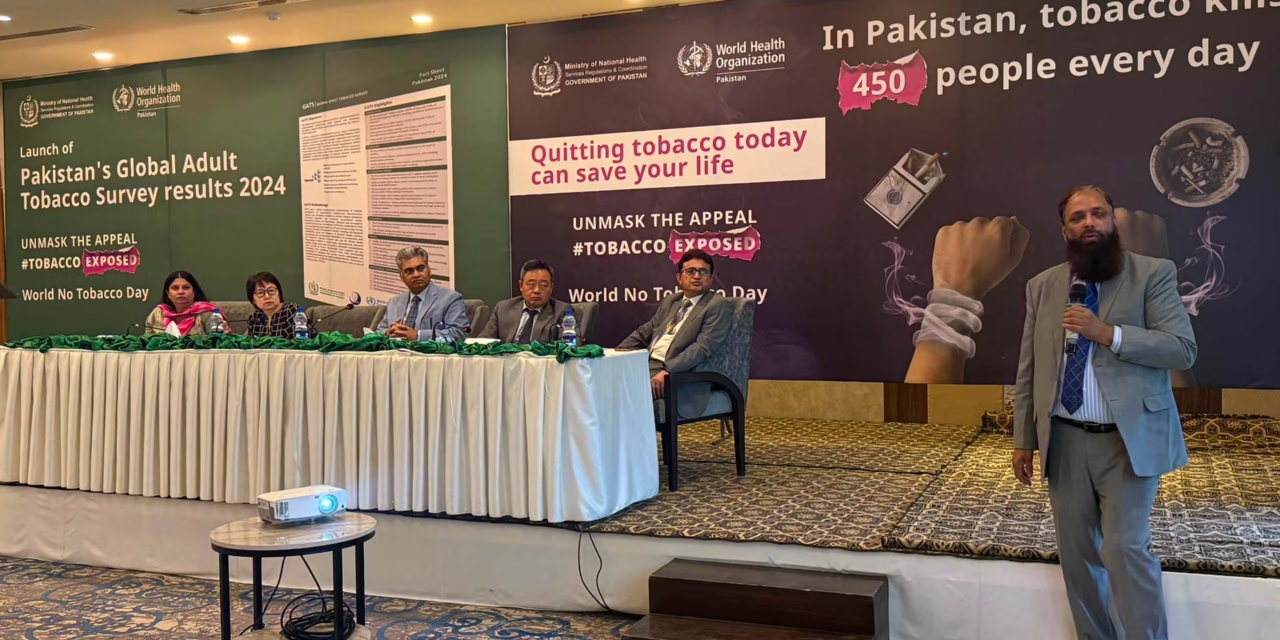
The findings, anchored in the newly released Global Adult Tobacco Survey (GATS) 2024, were presented on June 6, 2026, in Islamabad by the WHO and Pakistan’s Ministry of National Health Services, Regulations and Coordination (MONHSRC). Spearheaded by Federal Health Minister Syed Mustafa Kamal as part of extended World No Tobacco Day events under the theme “Unmask the Appeal – Countering Tobacco and Nicotine Addiction,” the data provides a rigorous, science-based roadmap for developing nations battling the global tobacco epidemic.
Yet, as health officials celebrate a decade of measurable progress, independent experts warn that a lack of cessation services, shifting industry tactics, and emerging nicotine products threaten to stall these hard-won gains.
The Strategy: What Drove the Decade-Long Decline?
Pakistan’s multi-pronged approach under the FCTC framework—which the country ratified in 2004—demonstrates how systematic legislative pressure can alter population-level behavior. According to the GATS 2024 data, which finalized more than 11,000 interviews across the country with a 95.6% response rate, several core strategies accelerated the downward trend:
-
Aggressive Fiscal Policies: Public health experts point to a historic 208% increase in tobacco taxation implemented during the 2022–2023 fiscal year as the primary catalyst. Raising retail prices remains the single most effective tool to deter youth initiation and encourage lower-income users to quit.
-
Targeting Informal Sales: A nationwide ban on the sale of “loose” (single) cigarettes successfully disrupted the casual, low-cost purchase pipelines that tobacco companies frequently use to hook adolescents.
-
Sustained Public Safety Measures: Robust provincial infrastructure, via dedicated Tobacco Control Cells, enforced massive graphic health warnings on packaging and clamped down on point-of-sale marketing, driving overall retail advertising exposure down from 20.4% to 17.8%.
The most immediate, visible payoff of these policies emerged in the dramatic drop in secondhand smoke exposure across both public and private environments.
10-Year Decline in Secondhand Smoke Exposure
The implementation of strict smoke-free zones drastically lowered exposure to toxic secondhand smoke between 2014 and 2024:
| Public & Private Environments | 2014 Exposure Rate | 2024 Exposure Rate | Total Percentage Point Drop |
| Workplaces | 69.1% | 35.9% | ↓ 33.2% |
| Public Transportation | 76.2% | 45.4% | ↓ 30.8% |
| Restaurants | 86.0% | 55.2% | ↓ 30.8% |
| Government Buildings | 64.6% | 40.7% | ↓ 23.9% |
| Homes | 48.3% | 28.8% | ↓ 19.5% |
| Schools | 25.1% | 11.5% | ↓ 13.6% |
| Healthcare Facilities | 37.6% | 24.5% | ↓ 13.1% |
A Persistent Public Health Toll
Despite a clear 10-year downward trajectory, public health advocates emphasize that Pakistan’s current baseline remains deeply concerning. Tobacco products are still used by 16.1% of adults aged 15 and older, meaning approximately 22.7 million people across the nation remain active consumers.
The human and financial toll of this ongoing crisis is severe:
-
Mortality: Tobacco use claims nearly 164,000 lives annually in Pakistan—averaging 448 deaths every day. Secondhand smoke exposure alone accounts for approximately 31,000 of those annual fatalities.
-
Economic Strain: Independent financial assessments reveal that tobacco costs Pakistan over 1,800 billion Pakistani rupees (roughly US$6.6 billion) every year in lost productivity and healthcare expenses. This economic drain is nearly seven times larger than the tobacco industry’s entire annual tax contribution of Rs265 billion ($945 million).
Emerging Battlefields: Youth Targeting and Shifting Demographics
As traditional smoking decreases, the public health arena faces a dynamic and rapidly evolving threat. Health Secretary Muhammad Aslam Ghauri warned that the tobacco industry is successfully leveraging modern digital avenues to preserve its consumer base.
“The emergence of electronic cigarettes, vaping devices, heated tobacco products, and digital advertising platforms has transformed the tobacco epidemic into a more complex public health challenge,” Ghauri stated during the survey’s release. “The aggressive targeting of youth through flavored products, social media influence, and misleading perceptions regarding ‘safer alternatives’ demands urgent and coordinated policy action.”
Simultaneously, the GATS 2024 data exposed a troubling gender-based shift: female tobacco consumption rose slightly by 1.7%, with 5.9% of women aged 15 and older now utilizing tobacco products. Public health analysts suggest this counter-trend indicates targeted marketing strategies by tobacco firms to position newer, smoke-free nicotine pouches and electronic devices as lifestyle accessories for young women.
Policy Deficits: The Unfinished Agenda
To sustain its regional leadership in tobacco control, Pakistan must address critical legislative and clinical gaps. Independent reviews show that the country’s anti-tobacco machinery is operating below its full potential:
-
Stagnant Taxation: While the 2022–2023 tax hike was historic, Federal Excise Duty (FED) rates on cigarettes have remained completely frozen since February 2023. This stagnation allows inflation to make cigarettes progressively more affordable over time. Currently, taxes comprise 45.9% of the retail price for economy brands and 66% for premium brands—well below the WHO’s recommended baseline of 75%.
-
The Cessation Gap: The survey exposed a severe lack of structured medical support for individuals trying to break their addiction. Active quit attempts over a 12-month period stagnated, dropping from 24.7% to 24.1%. More alarmingly, the percentage of patients who reported receiving clinical advice to quit from their doctor or healthcare provider fell from 51.8% to 49.9%.
-
Illicit Trade and Compliance Failure: Enforcement remains a notable weak link. Market sampling indicates that nearly 50% of active cigarette packs on store shelves completely lack mandatory retail price printing and Track-and-Trace System (TTS) stamps, violating the Finance Act of 2024.
What This Means for Global Health Policy
Pakistan’s decade-long experience offers an invaluable blueprint for other low- and middle-income countries, which collectively house roughly 75% of the world’s smokers. It proves that despite limited resources and intense industry pushback, statutory mandates can successfully shift societal norms and safeguard public air quality.
“The GATS 2024 results confirm that, together, we can protect and save lives thanks to international cooperation and the implementation of specific measures such as taxation and banning tobacco advertisements that are particularly targeting our children and teenagers,” said Dr. Luo Dapeng, the WHO Representative in Pakistan. “The science is very clear: all tobacco products are killers. WHO will always stand with Pakistan to protect our children and our families from this public health threat.”
For health-conscious consumers and healthcare professionals worldwide, the medical consensus reaffirmed by this ten-year study remains absolute: all tobacco and nicotine systems—including e-cigarettes, vapes, and heated tobacco units—carry severe long-term cardiovascular and carcinogenic risks. Sustained policy intervention is not a bureaucratic hurdle; it is an essential investment in human longevity and economic survival.
References
Study Citations
-
WHO Pakistan. “Tobacco costs Pakistan 164,000 lives and US$ 6.6 billion annually.” Public Health Briefing, updated 2025/2026.
Medical Disclaimer: This article is for informational purposes only and should not be considered medical advice. Always consult with qualified healthcare professionals before making any health-related decisions or changes to your treatment plan. The information presented here is based on current research and expert opinions, which may evolve as new evidence emerges.