 0
0
 0
0
March 30, 2026
In a development that could rewrite the protocol for post-heart attack care, researchers have unveiled a revolutionary “self-amplifying” RNA therapy that allows the heart to repair itself through a simple muscle injection. The study, published in the journal Science on March 4, 2026, demonstrates that a single shot in the arm can turn skeletal muscle into a “bio-factory,” producing a protective hormone that travels to the heart to stimulate healing and reduce scarring. Led by biomedical engineer Ke Cheng and a multi-institutional team including researchers from Columbia University, the therapy has shown “robust” success in both mouse and swine models, offering a non-invasive alternative to complex stem cell surgeries or high-risk cardiac interventions.
The Heart Attack Crisis: A Gap in Care
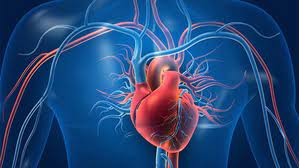
A heart attack, or myocardial infarction (MI), occurs when blood flow to the heart is obstructed, starving the muscle of oxygen and causing the death of cardiomyocytes—the specialized cells responsible for the heart’s rhythmic pumping. While modern medicine has mastered “reperfusion” (restoring blood flow via stents or surgery), it has long struggled with the aftermath.
Once heart tissue dies, the human body typically replaces it with stiff, non-functional scar tissue (fibrosis). This loss of elasticity often leads to chronic heart failure. According to the World Health Organization, cardiovascular diseases claim approximately 18 million lives annually. In the United States alone, over 800,000 heart attacks occur each year, and nearly 20% of survivors develop heart failure within just 12 months.
“Standard care is excellent at saving lives in the moment of the attack,” says study co-author Kevin Huang. “But we are currently failing at the ‘day after.’ We manage symptoms, but we don’t fix the damage. Our goal was to find a way to trigger the body’s own latent repair mechanisms.”
How It Works: Creating an “In-Body Factory”
The breakthrough centers on self-amplifying RNA (saRNA). While many are now familiar with mRNA technology thanks to COVID-19 vaccines, saRNA is a more potent evolution. It contains the instructions not only to produce a specific protein but also to copy itself, allowing a much lower dose to produce therapeutic effects for several weeks.
The therapy works through a sophisticated delivery chain:
-
Injection: The saRNA is encapsulated in lipid nanoparticles (LNPs) and injected into a skeletal muscle, such as the deltoid in the arm.
-
Production: The muscle cells take up the saRNA and begin producing pro-atrial natriuretic peptide (pro-ANP), a precursor to a natural heart-protecting hormone.
-
Activation: This precursor circulates through the bloodstream until it reaches the heart. There, an enzyme called corin—which is naturally found in heart tissue—cleaves the precursor into its active form: Atrial Natriuretic Peptide (ANP).
-
Repair: The active ANP binds to specific receptors on the heart’s surface, signaling the organ to reduce inflammation, limit the growth of scar tissue, and encourage the remaining heart cells to regenerate.
“It’s essentially a boost to the heart’s own defense system,” explains Huang. “The body already uses ANP as a protective tool. We’re just helping it produce enough to matter during that critical four-week window of healing after an attack.”
Significant Results in Preclinical Trials
The research team tested the saRNA therapy in mice and pigs—the latter being a crucial step because pig hearts closely resemble human hearts in size and physiology. The results, according to the Science report, were striking:
-
Improved Function: Treated subjects showed a significant increase in “ejection fraction”—the measurement of how much blood the heart pumps out with each contraction.
-
Reduced Scarring: There was a measurable decrease in fibrosis (scar tissue), meaning the hearts remained more flexible and efficient.
-
Safety: The treatment was localized to the muscle injection site and the heart’s receptors, with “no observed systemic toxicity” in long-term safety checks.
-
Durability: Unlike previous hormone treatments that required constant IV drips, the saRNA shot maintained protective levels of ANP for over a month.
The researchers noted that the results achieved a statistical significance of $p < 0.01$, a rigorous mathematical threshold indicating that the improvements were highly unlikely to be due to chance.
Expert Perspectives: A Paradigm Shift?
Independent experts in the field are viewing the study with “cautious optimism.” Dr. Eric Topol, a renowned cardiologist at Scripps Research who was not involved in the study, called the approach a “paradigm shift.”
“The beauty of this is the delivery,” says Dr. Topol. “You don’t have to touch the heart or open the chest. Leveraging the body’s innate mechanisms with a simple intramuscular injection could slash heart failure rates, especially in resource-limited settings where specialized cardiac surgery isn’t always available.”
However, others warn that the road to human application still has hurdles. Dr. Maria Kontaraki, a cardiac regeneration expert at the University of Crete, notes that human hearts have a much lower natural regenerative capacity than mice.
“Preclinical success is promising, but we must be careful,” Dr. Kontaraki says. “The immune response to saRNA needs rigorous testing in humans to ensure there are no off-target effects or inflammatory reactions over that four-week period.”
Public Health and the Path Forward
If successful in human trials, the implications for public health are vast. In countries like India, heart disease accounts for nearly 28% of all deaths. In rural or underserved areas, a “one-and-done” injection could be administered in a local clinic shortly after a patient is stabilized, preventing the long-term disability and frequent hospital readmissions associated with heart failure.
For the average patient, this could mean a faster return to daily activities, less chronic fatigue, and a significantly lower risk of needing a heart transplant or permanent mechanical pump later in life.
The research team at Columbia Engineering is currently preparing for the next phase. Ke Cheng confirmed that they are aiming for an FDA Investigational New Drug (IND) filing, with Phase 1 human safety trials tentatively targeted for 2027.
“We are moving toward a future where a heart attack doesn’t have to mean a permanent decline in quality of life,” says Cheng. “The heart wants to heal; we’re just giving it the tools to finish the job.”
Medical Disclaimer: This article is for informational purposes only and should not be considered medical advice. Always consult with qualified healthcare professionals before making any health-related decisions or changes to your treatment plan. The information presented here is based on current research and expert opinions, which may evolve as new evidence emerges.
References
Primary Study:
-
Zhang K, et al. Single intramuscular injection of self-amplifying RNA of Nppa to treat myocardial infarction. Science. 2026;391(7024):eadu9394. doi:10.1126/science.adu9394.