 0
0
 0
0
Kolkata, India — June 14, 2026
BUENOS AIRES — Argentina’s Ministry of Health announced Friday that scientists investigating a deadly hantavirus outbreak linked to a cruise ship have found no virus-carrying rodents in Mendoza, the second province tested as part of the widening probe. The negative finding represents a significant development as international researchers continue searching for the origin of the rare Andes virus strain that killed three passengers aboard the MV Hondius expedition vessel in April.
The investigation has mobilized global health agencies to trace how the pathogen breached the ship’s perimeter, leading to 11 cases worldwide and a series of stringent contact-tracing efforts across multiple continents.
Zero Rodent Reservoirs Found in Mendoza
According to an official health ministry report, field scientists deployed to the western province of Mendoza failed to capture any Oligoryzomys longicaudatus (commonly known as the long-tailed pygmy rice rat), which serves as the primary known environmental reservoir for the Andes virus in the Patagonian region.
“No specimens of Oligoryzomys longicaudatus, the main known reservoir of the Andes virus in much of the Patagonian region, were detected,” the ministry confirmed in its Friday statement.
The University of Mendoza subsequently verified that the province currently exhibits no confirmed local circulation of the Andes virus. While field researchers did trap a different rodent species that has carried virus antibodies in historical studies, local experts emphasize that this specific species is not considered a primary vector (an organism that transmits a pathogen) in endemic regions. Laboratory tests are underway to definitively confirm the species type of the captured rodents.
Concurrently, local authorities in Tierra del Fuego province—home to Ushuaia, the port city from which the cruise ship originally departed—revealed that the region has not recorded a single case of hantavirus since mandatory health reporting began 30 years ago in 1996.
The Cruise Ship Outbreak and the Andes Strain
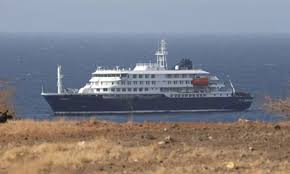
The extensive multi-province investigation was sparked by an aggressive and unusual outbreak aboard the MV Hondius, a Dutch-flagged expedition cruise ship. The vessel departed Ushuaia on April 1, 2026, carrying 147 passengers and crew members. The ship has since been halted and remains anchored off Cape Verde after three passengers succumbed to severe respiratory failure, which laboratory diagnostics confirmed was caused by the Andes hantavirus strain.
Data published by the World Health Organization (WHO) and the Institut Pasteur outlined the scope of the international infection cluster:
-
Total Globally Logged Cases: 11 cases identified as of mid-May 2026.
-
Case Breakdown: Eight laboratory-confirmed infections, two probable cases, and one inconclusive case undergoing secondary genomic testing.
-
Fatalities: 3 deaths among the confirmed cases.
-
Monitoring Scope: Several hundred contact cases isolated and tracked globally, including passengers who returned to the United States, South Africa, and the United Kingdom.
What makes the Andes virus uniquely challenging to epidemiologists is its transmission profile. Unlike standard North American hantaviruses, which only spread from rodents to humans, the Andes strain is the only hantavirus known to undergo person-to-person transmission. Health authorities note, however, that this pathway remains uncommon and typically demands prolonged, close contact, such as that seen among household members or intimate partners.
Surge in Argentina’s Baseline Cases
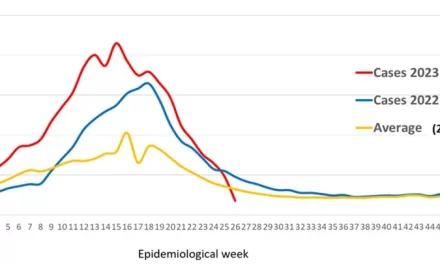
The cruise ship cluster occurs against a backdrop of a sharp, climate-driven increase in baseline hantavirus infections across Argentina. The Argentine Ministry of Health’s national epidemiological bulletin reported 101 confirmed hantavirus infections and 32 fatalities during the 2025–2026 epidemiological season. This nearly doubles the 57 cases recorded during the same period the previous year.
The current figures reflect a severe case fatality rate of 31.7%. Public health data indicates a sustained accumulation of cases remaining above the historical epidemic threshold for nearly the entire season.
“The higher numbers are not widespread outbreaks but isolated cases,” noted Professor González Ittig, an Argentine virology expert.
He attributed the broader seasonal spike to environmental factors, specifically the El Niño phenomenon. The weather pattern brought heavy rainfall across South America, fueling dense vegetation growth that expanded the food supply and boosted local rodent populations. Ittig emphasized that Argentina’s last major chain of human-to-human transmission occurred in southern Chubut Province in 2018, when a rural worker infected more than 50 people at a social gathering, resulting in 15 deaths.
Clinical Progression of Hantavirus Pulmonary Syndrome
Hantavirus pulmonary syndrome (HPS) is a severe respiratory disease that can rapidly turn fatal. The Centers for Disease Control and Prevention (CDC) notes that the illness progresses through distinct early and late stages, requiring early clinical suspicion.
[Early Symptoms: Days 1–3]
Fatigue, fever, severe muscle aches (thighs, hips, back), headaches, and gastrointestinal distress (nausea, vomiting, diarrhea).
       │
       ▼
[Late Symptoms: Days 4–10]
Abrupt onset of coughing and severe shortness of breath as the lungs fill with fluid, leading to acute respiratory failure.
Data from Public Health Ontario shows that the case fatality rate for HPS caused by the Andes virus oscillates between 35% and 50%. Because there are no definitive antiviral medications or targeted treatments available for hantavirus, intervention relies heavily on early supportive medical care. Patients frequently require intensive care unit (ICU) admission with mechanical ventilation, and in severe instances of cardiopulmonary failure, extracorporeal membrane oxygenation (ECMO)—a machine that mimics the gas exchange of the heart and lungs.
Independent Expert Assessment
The negative results from Mendoza provide a vital piece to the epidemiological puzzle, according to independent experts.
“The absence of the primary reservoir species in Mendoza is a crucial data point,” said Dr. Jonathan Tempelton, a virologist specializing in rodent-borne pathogens at Geneva University Hospitals, who was not involved in the field study. “It significantly lowers the probability that a localized, undetected wildlife reservoir in that province seeded the cruise ship cases. However, we cannot yet rule out alternative transit routes, secondary vectors, or minor exposures at earlier travel stops.”
Despite the global tracing efforts, WHO Chief Commissioner Dr. Tedros Adhanom Ghebreyesus reassured the public that the outbreak does not echo past respiratory pandemics.
“The risk to the rest of the world remains low,” Tedros stated, emphasizing that the localized nature of the transmission chains and the requirement of intense proximity mean the wider public public health threat is contained.
Public Health Implications and Investigation Obstacles
The high stakes have turned the investigation into an international collaborative effort. Biologists from the US CDC have arrived on the ground to assist Argentine scientists in Mendoza. Concurrently, Argentina has shared viral genetic sequences and specialized diagnostic reagents with laboratories in Senegal, South South Africa, and the United Kingdom to optimize international surveillance.
However, the probe faces stiff challenges. Pinpointing the exact geographic site where the cruise ship passengers encountered the pathogen remains elusive.
While Tierra del Fuego’s unblemished 30-year epidemiological record suggests it is clean, scientists cannot completely discount it as an exposure site. The province’s tourism-dependent government has strongly pushed back against theories originating the virus within its borders, citing potential economic fallout for its cruise terminals.
Dr. María González, an epidemiologist at Argentina’s prestigious Malbrán Institute in Buenos Aires, urged scientific patience. “We must continue investigating all possibilities. The absence of the reservoir in Mendoza is important, but we need to complete testing on the other captured rodent species and systematically explore every single entry and exit point along the ship’s itinerary.”
Guidance for Travelers and Public Safety
For individuals planning travel or cruises to South American destinations, international health bodies emphasize that standard, commonsense health precautions are entirely sufficient given the low-risk designation.
For the broader public and rural residents in endemic zones like southern Argentina and Chile, prevention rests strictly on minimizing rodent contact. Public health agencies advise:
-
Avoid camping or sleeping near visible rodent burrows or woodpiles.
-
Seal entry holes and structural gaps in homes and cabins.
-
Inhabit or clean previously abandoned buildings only after airing them out for 30 minutes, followed by disinfection with bleach solutions; avoiding sweeping dry dust, which can aerosolize viral particles bound to rodent urine or droppings.
The investigation remains active, with final environmental sample analyses from the port of Ushuaia expected to yield definitive results later this month.
Medical Disclaimer
Medical Disclaimer: This article is for informational purposes only and should not be considered medical advice. Always consult with qualified healthcare professionals before making any health-related decisions or changes to your treatment plan. The information presented here is based on current research and expert opinions, which may evolve as new evidence emerges.
References
- https://health.economictimes.indiatimes.com/news/industry/no-hantavirus-found-in-second-argentine-province-ministry/131696227?utm_source=latest_news&utm_medium=homepage