 0
0
 0
0
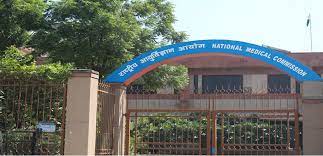
NEW DELHI — In a major bid to transform India’s biomedical research landscape, the National Medical Commission (NMC) has issued an official advisory urging medical colleges nationwide to actively engage with the Indian Council of Medical Research’s (ICMR) newly launched Medical Innovations Patent Mitra programme. Rolled out at the International Symposium on Health Technology Assessment, the joint initiative—developed alongside NITI Aayog, the Department of Pharmaceuticals, and supported by the Department for Promotion of Industry and Internal Trade (DPIIT)—creates a unified, centralized pathway to shepherd medical discoveries out of academic laboratories and into active clinical production. By offering comprehensive intellectual property (IP) and technology-transfer support, the programme aims to accelerate the delivery of safe, affordable healthcare technologies to the public while maintaining rigid regulatory compliance.
Bridging the “Valley of Death” in Medical Innovation
India’s biomedical ecosystem has experienced rapid growth, fueled by brilliant clinical insights from doctors, researchers, and academic scientists. However, a significant historical bottleneck remains: many promising academic inventions fail to ever reach patients. This phenomenon, often referred to in research circles as the “valley of death,” occurs because frontline medical researchers frequently lack the specialized IP expertise, legal resources, and industrial connections required to scale their prototypes into commercial devices, diagnostics, or therapeutics.
The Patent Mitra platform acts as a centralized bridge for this gap. It provides a structured, paperless environment offering a suite of end-to-end services, including:
-
Initial patentability assessments and comprehensive prior-art searches.
-
Expert legal drafting and official filing assistance within India.
-
Prosecution and maintenance support throughout the patent’s lifecycle.
-
Industry matchmaking initiatives, such as the MedTech “Mela” and digital Expression of Interest (EoI) channels, to link innovators directly with verified manufacturers.
To ensure these resources are utilized, the NMC advisory requests that medical institutions designate local institutional nodal points. These internal officers will act as direct liaisons, ensuring campus discoveries are not lost simply due to administrative roadblocks or a lack of legal expertise.
Expert Perspectives: Stepwise Handholding
The initiative seeks to replace an otherwise fragmented and intimidating legal process with clear, accessible mentorship.
“Our aim is to bridge a crucial gap in the patenting process for medical innovations,” emphasized Suchita Markan, Scientist-E and Mission In-Charge of the Medical Device and Diagnostics Mission Secretariat at ICMR. She noted that the initiative is specifically designed to provide stepwise handholding for innovators, guiding them carefully from the raw patentability assessment stage right through the complex legalities of prosecution and long-term maintenance.
Independent health-innovation experts have also welcomed the centralized framework. Commentators tracking the rollout note that structured IP support can significantly reduce avoidable legal errors, protect public-sector investments, and speed up commercial licensing. However, independent analysts also caution that strong IP protection must be carefully balanced with transparent technology-transfer agreements and fair benefit-sharing models to ensure public institutions and the patients they serve remain the primary beneficiaries.
Measuring Impact: Data and Public Health Implications
Because the Patent Mitra programme is a fresh initiative, longitudinal outcome data regarding long-term market survival or widespread clinical adoption is not yet available. However, the ICMR has committed to tracking rigorous performance metrics in its upcoming rollout reports. Success will be quantified by the volume of patentability assessments completed, the efficiency of filing-to-grant timelines, and the total number of successful technology transfers executed.
For public health and healthcare professionals, the practical implications of this structural shift are profound:
| Stakeholder Group | Direct Implications & Benefits |
| Patients & The Public | Faster access to locally adapted, low-cost diagnostics and devices; assurance that products are rigorously vetted and regulated before clinical introduction. |
| Clinicians & Investigators | Dedicated institutional support to protect intellectual work without sacrificing active clinical duties or stumbling over administrative barriers. |
| Medical Institutions | Elevated academic prestige, standardized pathways for industry collaboration, and clear frameworks for institutional revenue-sharing. |
By streamlining this pipeline, high-quality, locally tailored medical devices can reach clinics significantly faster. This is particularly vital for resource-limited and rural settings across India, where imported, high-cost medical technologies are often economically or logistically impractical.
Potential Limitations and Challenges
Despite the optimism surrounding the initiative, health policy experts emphasize that a patent is not a guarantee of medical efficacy or safety. A patent simply protects an idea; it does not bypass the absolute necessity for rigorous, multi-phase clinical validation, ethical oversight, and strict approvals from bodies like the Central Drugs Standard Control Organisation (CDSCO) or the Department of Health Research (DHR).
Furthermore, critics of aggressive patenting within publicly funded research warn against the creation of artificial monopolies. If licensing terms are not managed with strict public-interest safeguards, life-saving innovations could become cost-prohibitive. To protect health equity, transparent technology-transfer policies must remain a core tenet of the programme.
Finally, the ultimate success of Patent Mitra hinges entirely on grassroots institutional uptake. If medical colleges treat the NMC advisory as a mere bureaucratic checkbox—failing to appoint proactive, knowledgeable nodal officers—promising campus innovations will continue to languish on laboratory shelves.
A Blueprint for Campus Innovators
To visualize the program in action, consider a team of academic doctors who design a highly accurate, low-cost portable diagnostic prototype for rural clinics. Historically, if they presented this at a conference before filing a patent, they could inadvertently destroy its patentability, leaving it vulnerable to being copied poorly or ignored by large manufacturers.
Under the new paradigm, the team would consult their campus nodal officer early in the planning phase. Patent Mitra would conduct a rapid, secure patentability assessment, draft the legal paperwork, and safely file the patent. Simultaneously, via the MedTech Mela, the team would be matched with a validated manufacturer capable of funding clinical trials and mass-producing the device under strict regulatory compliance—slashing years off the traditional timeline.
Practical Takeaways for Institutions and Researchers:
-
Appoint Nodal Officers Immediately: Medical colleges should quickly identify or recruit an institutional technology-transfer officer to act as the primary liaison with the ICMR portal.
-
Engage Early: Researchers must utilize the Patent Mitra portal during the early phases of project planning. Crucially, patent evaluations must happen before publishing papers or presenting findings at public forums.
-
Integrate Regulatory Planning: IP protection should run in parallel with regulatory planning. Innovators must align their development milestones with CDSCO and ethical committee standards from day one to avoid severe translational delays.
Medical Disclaimer
This article is for informational purposes only and should not be considered medical advice. Always consult with qualified healthcare professionals before making any health-related decisions or changes to your treatment plan. The information presented here is based on current research and expert opinions, which may evolve as new evidence emerges.
References
Study Citations & Program Documentation
-
Indian Council of Medical Research (ICMR). PRESS RELEASE: ICMR Launches “Medical Innovations Patent Mitra” to Support Biomedical Innovations. (ICMR launch press materials).