 0
0
 0
0
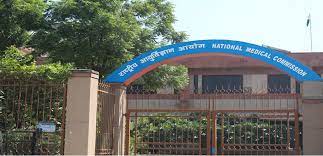
NEW DELHI – In a significant move to overhaul the quality of medical education and patient oversight in India, the National Medical Commission (NMC) has introduced stringent new regulations governing how medical college teachers allocate their time. The apex regulator’s latest directive aims to ensure that the “teaching” in teaching hospitals remains a full-time priority, effectively ending the practice of faculty members splitting their duty hours between institutional wards and private clinics.
The Post Graduate Medical Education Board (PGMEB), under the NMC, issued a public notice on March 11, 2026, amending the Post Graduate Medical Education Regulations (PGMSR) 2023. These amendments introduce a dual-layered accountability system: a mandatory 75% annual attendance threshold and a categorical ban on private practice during all college working hours, including lunch breaks.
The New Math of Medical Teaching
Under the revised norms, the NMC has standardized the academic calendar, fixing the total number of working days at 300 per year. To remain compliant and maintain the accreditation of postgraduate (PG) seats, faculty members must now be physically present for at least 225 working days (75%).
The regulation also addresses the common issue of mid-year faculty turnover. If a teacher leaves and a successor is appointed, the NMC will now consider the cumulative attendance of both individuals to meet the 225-day requirement. This ensures that departments do not lose their “recognized” status due to administrative gaps, provided the position is consistently filled.
“Full-Time” Means No Exceptions
Perhaps the most impactful change is the explicit restriction on private practice. The regulation states that faculty “shall be full-time and shall not engage in private practice during college working hours including lunch break or any other breaks.”
While an exception exists for government doctors in states where local service rules legally permit private practice, the NMC has drawn a hard line: even in those states, such practice is strictly relegated to “after-office hours.”
The goal is to restore the “bedside” in bedside teaching. By ensuring faculty are present during peak hours, the NMC hopes to revitalize ward rounds, outpatient department (OPD) supervision, and the structured academic seminars that are the backbone of specialist training.
Why Presence Matters: The Expert View
The correlation between faculty presence and resident competency is well-documented. Teaching hospitals serve as high-pressure environments where postgraduate residents—the specialists of tomorrow—manage complex cases.
“Postgraduate students learn the most in busy wards and OPDs, but the presence of their teachers is crucial,” explains Dr. Ritu Sharma, a senior internal medicine consultant at a prominent public teaching hospital in North India. Dr. Sharma, who is not affiliated with the NMC, notes the risks of absenteeism: “When faculty are in private practice during duty hours, residents end up taking high-stakes decisions alone, which is neither fair to patients nor trainees.”
Without senior oversight, the quality of care can suffer through:
-
Delayed or abbreviated ward rounds.
-
Reduced opportunities for case-based discussions.
-
Increased burnout among residents who shoulder excessive clinical responsibility.
A Broader Regulatory Push
This amendment is not an isolated event but part of a multi-year reform strategy. In 2025, the NMC notified the Medical Institutions (Qualifications of Faculty) Regulations, which expanded the pool of eligible teachers to address chronic shortages. However, the 2026 rules signal that “quantity” of faculty must be matched by “availability.”
In recent months, the NMC has issued show-cause notices to hundreds of medical colleges following inspections that revealed “ghost faculty”—teachers who appear on payroll but are rarely on campus. The new 75% attendance rule, likely enforced via biometric systems, is designed to close these loopholes.
The Human Cost: Balancing Income and Education
While the academic community has largely welcomed the focus on quality, some faculty members express concern over the financial and personal implications. In many private and state-aided institutions, after-hours private practice is a common method to supplement academic salaries.
“For those of us with young families and loans, after-hours practice is a financial lifeline,” says a senior assistant professor in surgery at a private college, speaking on condition of anonymity. “These norms will probably push colleges to rethink compensation so that faculty do not feel penalized for staying on campus.”
There are also concerns regarding workload. If faculty are required to be on-site 75% of the year while also meeting increasing research and administrative quotas, the risk of professional burnout remains a significant hurdle.
Implications for Public Health
The downstream effects of these rules could be profound for the general public. Teaching hospitals are often the primary referral centers for India’s rural and semi-urban populations. Consistent faculty presence means:
-
Enhanced Patient Safety: More senior-level involvement in complex surgeries and diagnostics.
-
Evidence-Based Care: Stronger supervision leads to better adherence to clinical protocols and rational prescribing.
-
Future-Proofing Healthcare: Specialists trained under rigorous supervision are better equipped to lead the healthcare system in the decades to come.
Looking Ahead: Challenges in Enforcement
The success of the NMC’s initiative hinges on implementation. Stakeholders have identified several potential “blind spots”:
-
Audit Transparency: How will the NMC verify biometric data against actual clinical presence?
-
Rural Access: Will strict attendance rules discourage senior specialists from visiting peripheral or charitable clinics during the day?
-
State Litigation: Potential conflicts between NMC mandates and existing state-level service conditions for government doctors may lead to legal challenges.
As the 2026-27 academic cycle begins, the medical fraternity will be watching closely. For patients, the promise is a more robust, supervised, and present healthcare team. For the NMC, the challenge is ensuring that these rules translate into a genuine culture of teaching rather than just a checked box on an attendance sheet.
Medical Disclaimer: This article is for informational purposes only and should not be considered medical advice. Always consult with qualified healthcare professionals before making any health-related decisions or changes to your treatment plan. The information presented here is based on current research and expert opinions, which may evolve as new evidence emerges.
References
-
Medical Dialogues. “NMC amends private practice, attendance norms for medical college faculty, details.” Published 18 March 2026.