 0
0
 0
0
NEW DELHI, JUNE 2026 — In a major regulatory shift aimed at curbing healthcare-associated infections, the National Medical Commission (NMC) has issued a mandatory advisory directing all medical colleges across India to integrate safe injection practices as a non-negotiable component of clinical training. The directive, finalized on May 20, 2026, requires institutions nationwide to adopt safety-engineered syringes and strictly adhere to World Health Organization (WHO) infection control protocols. By making compliance a core metric for institutional accreditation, India’s apex medical education regulator intends to transform clinical safety habits at the foundational level of medical training, protecting both the public and frontline healthcare workers.
Decoding the Mandate: What Changes in Clinical Training?
The comprehensive directive outlines specific operational protocols designed to eliminate the transmission of bloodborne pathogens during medication preparation and delivery. According to the NMC advisory, medical colleges must enforce the following standard operating procedures across all teaching hospitals:
-
-
Device Standardization: Mandatory transition to safety-engineered injection devices, such as auto-disable or retractable syringes, to systematically prevent needle-stick injuries.
-
Aseptic Protocol: Strict enforcement of hand hygiene before preparing medications, combined with a prohibition on preparing injections in areas vulnerable to blood or bodily fluid contamination.
-
Sterile Execution: Absolute requirement for single-use, sterile syringes and needles opened from sealed packaging immediately prior to administration.
-
Disposal Standards: Immediate segregation and containment of biomedical sharp waste within standardized, puncture-proof containers at the point of care.
-
Independent medical experts view the integration of these devices into the formal curriculum as a crucial update. “Safe injection protocols are the bedrock of clinical infection control, yet execution across India’s highly fragmented healthcare system has historically been uneven,” noted Dr. Rajesh Kumar, an infectious disease specialist at the All India Institute of Medical Sciences (AIIMS), New Delhi, who was not involved in drafting the advisory. “By anchoring these requirements within the accreditation framework for medical colleges, the NMC is ensuring that the next generation of physicians develops highly disciplined clinical habits before entering practice.”
The Scale of the Challenge: Unsafe Injections in Numbers
The policy update addresses a deeply rooted public health challenge. National epidemiologic estimates indicate that approximately 3 billion injections are administered annually across India. Of these, an estimated 1.89 billion (62.9%) fail to meet established safety criteria, representing a major regional burden of preventable exposure.
The World Health Organization warns that cross-contamination from substandard injection techniques drives substantial disease transmission globally. According to historical mathematical modeling by the Centers for Disease Control and Prevention (CDC), unsafe injections contribute significantly to global bloodborne pathogen burdens each year:
| Disease | Estimated Annual Global Infections Attributable to Unsafe Injections |
| Hepatitis B (HBV) | 8 million – 16 million cases |
| Hepatitis C (HCV) | 2.3 million – 4.7 million cases |
| HIV | 80,000 – 160,000 cases |
The localized impact is equally stark. Public data shared by the Indian Medical Association (IMA) indicates that unsafe injection environments contribute to approximately 2 million new Hepatitis B infections, 400,000 Hepatitis C infections, and 30,000 new HIV diagnoses inside India on an annual basis.
Bridging the Gap Between Knowledge and Practice
A central driver for the regulatory mandate is the documented discrepancy between what healthcare trainees know in theory versus what they perform in active clinical environments.
A benchmark peer-reviewed study published in the International Journal of Community Medicine and Public Health evaluated injection behaviors within a prominent Delhi tertiary care hospital. While general theoretical knowledge among medical staff was deemed satisfactory, observation of live clinical practices revealed substantial gaps:
-
35% of personnel prepared injections on unsterile or potentially contaminated surfaces.
-
33% omitted mandatory hand hygiene steps immediately prior to medication handling.
-
22.3% failed to perform point-of-care segregation of biomedical sharp waste.
Further studies examining junior interns revealed that while 64% demonstrated cognitive awareness of pre-injection handwashing, only 29% consistently executed it during clinical rounds. Similarly, 48% understood the purpose of using a needle hub-cutter, but a mere 5.5% routinely utilized the equipment.
“The core obstacle is rarely a lack of factual knowledge; it is the breakdown of that knowledge under the pressure of busy clinical workflows,” explained Dr. Priya Sharma, a veteran nursing instructor with two decades of experience in clinical education. “This advisory changes the institutional dynamics. When safety steps are tied directly to hospital accreditation, teaching institutions are forced to move away from passive lectures and implement rigorous, supervised practical evaluations.”
Public Health and Economic Realities
From a broader public health standpoint, institutionalizing safe injection practices serves as a highly cost-effective intervention. The global financial toll of managing avoidable infections from compromised needles is estimated at $535 million annually, alongside an estimated 1.3 million deaths worldwide.
“Preventing bloodborne transmission via disciplined clinical technique is infinitely more sustainable than managing chronic viral infections or lifelong hepatic disease,” argued Dr. Amit Verma, a public health specialist affiliated with the Public Health Foundation of India. “Data from multi-center quality improvement initiatives show that structured training and consistent supply chains can elevate protocol compliance to 87%. The primary challenge lies in sustaining those gains over long periods.”
Implementation Obstacles and Counterarguments
Despite widespread support for the initiative, healthcare administrators point out several operational hurdles that must be resolved for the policy to succeed:
-
-
Supply Chain and Material Cost: Safety-engineered syringes and specialized sharp containers carry higher manufacturing costs than traditional, non-protected varieties. For resource-constrained public institutions operating on tight margins, scaling up procurement to cover millions of procedures presents a real financial challenge.
-
Behavioral Resistance: Overcoming established, hurried habits in high-volume outpatient clinics requires sustained, hands-on oversight rather than simple administrative circulars.
-
Logistical Continuity: Hospital systems frequently experience temporary supply chain disruptions. If safety-engineered equipment is temporarily unavailable, clear protocols must dictate how clinical safety is maintained using conventional single-use tools.
-
“Publishing the policy is simply the introductory step,” Dr. Kumar emphasized. “True compliance requires a continuous supply chain of safety devices and regular, unannounced internal audits across every department.”
Practical Insights for Healthcare Consumers
While the NMC mandate focuses primarily on internal clinical education, it underscores important safety principles that patients and families can look out for during routine medical visits:
-
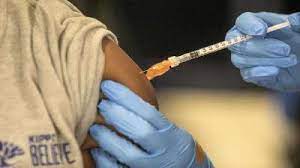
Observe Packaging: Patients have the right to confirm that any needle or syringe intended for their care is retrieved from an intact, sterile, factory-sealed packet opened in their immediate presence.
-
Evaluate Oral Options: Patients should actively ask their treating physicians whether oral medication alternatives are clinically appropriate, adhering to the WHO guideline that injections should only be utilized when alternative delivery routes are less effective or unavailable.
-
Confirm Safe Disposal: Ensure used needles are dropped directly into designated, puncture-proof disposal boxes rather than standard waste bins.
As medical colleges begin submitting their formal compliance reports to the commission over the coming months, the healthcare sector will watch closely to see if this regulatory shift successfully translates into measurable improvements in patient safety nationwide.
Medical Disclaimer: This article is for informational purposes only and should not be considered medical advice. Always consult with qualified healthcare professionals before making any health-related decisions or changes to your treatment plan. The information presented here is based on current research and expert opinions, which may evolve as new evidence emerges.
References
- https://medicaldialogues.in/health-news/nmc/nmc-issues-advisory-to-medical-colleges-on-mandatory-implementation-of-safe-injection-practices-171791