 0
0
 0
0
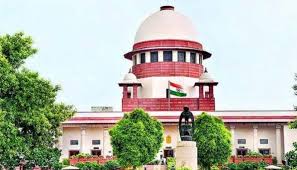
NEW DELHI — The National Medical Commission (NMC) has announced its intention to approach the Supreme Court of India to challenge a landmark Delhi High Court ruling that struck down a total ban on medical student transfers. This legal tug-of-war, centered on the Graduate Medical Education Regulations (GMER) 2023, has reignited a fierce national debate: How can the medical education system prevent “backdoor” corruption without abandoning students facing genuine, life-altering hardships?
The conflict reached a boiling point in early February 2026, when a division bench of the Delhi High Court declared the NMC’s blanket prohibition on migrations “manifestly arbitrary.” The court’s decision was prompted by a petition from a visually impaired student struggling with health complications in the harsh climate of Barmer, Rajasthan. As the NMC prepares its Special Leave Petition (SLP), thousands of students and medical educators are watching closely to see if the pendulum will swing back toward rigid regulation or toward compassionate flexibility.
The Core of the Conflict: Regulation 18
In June 2023, the NMC implemented the GMER 2023, which introduced a strict mandate: “No student designated to a Medical Institution… shall seek migration to any other Medical Institution.” This was a radical departure from the 1997 Medical Council of India (MCI) rules. Under the old system, up to 5% of students could migrate after their first year, provided they met specific criteria—such as moving between similar types of colleges (government-to-government) and obtaining “No Objection Certificates” (NOCs) from both institutions and the university.
The NMC argues that the 2023 ban was a necessary “surgical strike” against systemic rot. According to health ministry officials, the previous migration window had become a marketplace. Some private colleges allegedly charged exorbitant “donation” fees for NOCs, allowing students with lower NEET ranks to leapfrog into prestigious urban institutions through influential networks, effectively bypassing the merit-based counseling process.
The High Court’s Verdict: “Real-Life Contingencies”
The Delhi High Court bench, led by Chief Justice D.K. Upadhyaya and Justice Tejas Karia, did not mince words in its critique of the blanket ban. The court ruled that while maintaining uniform standards is vital, a total ban ignores the Rights of Persons with Disabilities Act, 2016.
“The mere possibility of abuse cannot justify denying legitimate rights,” the bench stated, emphasizing that “real-life contingencies”—such as sudden disability, medical emergencies, or extreme family hardships—require “reasonable accommodations.”
The petitioner in the case, who suffers from 40% visual impairment, argued that the environmental conditions in Barmer exacerbated his condition, making it nearly impossible to continue his studies there. The court quashed the NMC’s rejection of his transfer, directing the commission to frame a new policy that includes safeguards for exceptional circumstances rather than a “one-size-fits-all” prohibition.
Expert Perspectives: A Divided Medical Community
The medical community remains deeply split on the implications of the court’s intervention.
The Argument for Rigidity
Proponents of the ban argue that any opening of the “migration door” will lead to a flood of requests based on subjective preferences rather than actual need.
-
Dr. Manoj Andley, a professor at Lady Hardinge Medical College, notes that students frequently attempt to flee tier-2 or tier-3 rural colleges for urban centers with better infrastructure. This “brain drain” from rural areas leaves underserved populations with fewer student doctors and wastes seats in colleges that the government is trying to strengthen.
-
Dr. B. Unnikrishnan of the Manipal Academy of Higher Education points out that migrations can disrupt the continuity of the medical curriculum, which is designed to be a cohesive multi-year journey at a single institution.
The Argument for Nuance
On the other side, student advocates argue that the current system is inhumane.
-
“A rigid ban traps students in environments that may be detrimental to their mental and physical health,” says a representative for a prominent student doctors’ association.
-
Experts suggest that instead of a 0% or 5% rule, the NMC should consider a 1-2% “Hardship Quota” strictly vetted by a central medical board, rather than individual colleges, to eliminate the possibility of bribery.
Public Health Implications
The resolution of this case will have a lasting impact on India’s healthcare pipeline. India currently faces a deficit of approximately 600,000 physicians.
| Aspect | Impact of Blanket Ban | Impact of Flexible Migration |
| Student Welfare | Risk of burnout or dropout for students with disabilities/illness. | Improved mental health and retention of vulnerable students. |
| Rural Healthcare | Keeps students in rural colleges, ensuring local staffing. | Potential “seat wastage” in rural areas if students move to cities. |
| Meritocracy | Ensures students stay where their NEET rank placed them. | Risk of “backdoor entries” if safeguards are not ironclad. |
For the 91,000+ MBBS students graduating annually, the Supreme Court’s decision will define whether the system views them as interchangeable units of a workforce or as individuals with evolving human needs.
Limitations and Looking Ahead
One of the primary challenges in this debate is the lack of transparent, nationwide data on migration volumes prior to 2023. While the NMC cites “rampant abuse,” critics argue that the number of genuine hardship cases is statistically small and could be handled without collapsing the entire merit system.
Until the Supreme Court delivers a final verdict, the NMC has indicated it will not reopen the migration window. This leaves students in “exceptional circumstances” in a state of legal limbo. As the NMC prepares its appeal, the focus shifts to whether the judiciary will mandate a “middle path”—one that preserves the integrity of the NEET merit list while honoring the constitutional right to equality and the specific protections afforded to the disabled.
References
-
Medical Dialogues. (2026, Feb 18). NMC to move Supreme Court against Delhi HC order on MBBS migration ban. Link
Medical Disclaimer: This article is for informational purposes only and should not be considered medical advice. Always consult with qualified healthcare professionals before making any health-related decisions or changes to your treatment plan. The information presented here is based on current research and expert opinions, which may evolve as new evidence emerges.