 0
0
 0
0
February 13, 2026
BEIJING — A large-scale multicenter study has revealed a significant trade-off in the world of assisted reproductive technology (ART). While frozen embryo transfers (FET) and fresh embryo transfers result in nearly identical safety outcomes for newborns, women who opt for frozen transfers face a significantly higher risk of developing pregnancy-induced hypertension. The findings, published following a rigorous four-year analysis of over 2,800 pregnancies across China, provide a critical data point for clinicians and expectant parents navigating the complexities of In Vitro Fertilization (IVF).
The Balancing Act of Modern IVF
For decades, the “freeze-all” strategy—where embryos are vitrified (flash-frozen) and implanted in a later cycle—has gained popularity. Proponents argue it allows the woman’s body to recover from the hormonal stress of ovarian stimulation, potentially offering a more “natural” environment for implantation.
However, new research conducted between 2017 and 2021 suggests that this hormonal “reset” may come with a vascular cost. Researchers tracked 2,856 pregnant women recruited from 50 different fertility centers across 17 provinces. These women, who conceived via IVF or Intracytoplasmic Sperm Injection (ICSI), were monitored from their first trimester through delivery.
Key Findings at a Glance
The study utilized a “hypothetical randomized controlled trial” framework to ensure the data was as robust as possible. The results painted a dual picture of neonatal success and maternal risk:
-
Infant Outcomes: There was no statistically significant difference in perinatal complications (such as birth defects or perinatal death). The rate stood at 5.0% for frozen transfers and 4.6% for fresh transfers.
-
Neonatal Vital Signs: Rates of preterm birth, low birth weight, and macrosomia (large birth weight) were comparable across both groups.
-
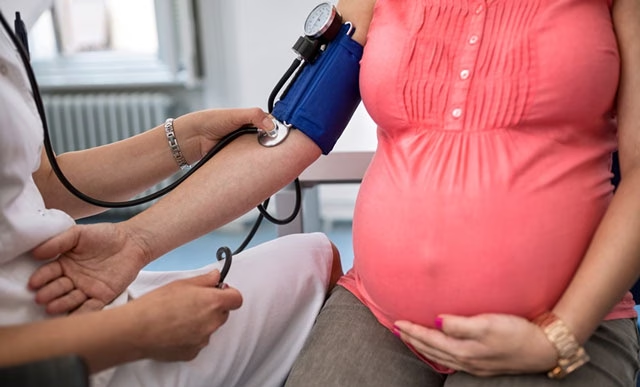
The Maternal Warning: Women in the frozen embryo group showed a significantly higher incidence of pregnancy-induced hypertension compared to those in the fresh embryo group.
Understanding the “Hypertension Gap”
Hypertension during pregnancy, often manifesting as preeclampsia, can lead to serious complications for the mother, including organ damage and increased risk of cardiovascular disease later in life.
“While we have made incredible strides in ensuring the health of the baby, this study reminds us that the mother’s physiology is equally paramount,” says Dr. Sarah Jenkins, an independent reproductive endocrinologist not involved in the study. “The increased risk of hypertension in frozen cycles may be linked to the absence of a ‘corpus luteum’—a temporary gland that forms in the ovary after ovulation. In many frozen cycles, ovulation is suppressed, and we replace hormones with medication. This absence may affect how the mother’s blood vessels adapt to pregnancy.”
Interestingly, the study found no significant differences between the two groups regarding other maternal complications, such as gestational diabetes or thyroid dysfunction, suggesting that the impact of the transfer method is specifically vascular.
Implications for Public Health and Clinical Practice
As IVF becomes more accessible globally, the choice between fresh and frozen transfers is no longer just a technical one; it is a preventive health decision.
For the general public, these findings do not mean frozen transfers are “unsafe.” Rather, they highlight the necessity of individualized counseling. A patient already at a higher risk for cardiovascular issues may be better suited for a fresh transfer, whereas a patient at risk for Ovarian Hyperstimulation Syndrome (OHSS) may still find the frozen route to be the safer overall choice.
Statistical Context: By the Numbers
| Outcome | Frozen Transfer (FET) | Fresh Transfer | Statistical Significance |
| Perinatal Complications | 5.0% | 4.6% | No |
| Birth Defects | Comparable | Comparable | No |
| Pregnancy-Induced Hypertension | Higher Risk | Lower Risk | Yes |
| Gestational Diabetes | No Difference | No Difference | No |
Limitations and Counterarguments
While the study’s size and geographic diversity are strengths, experts note some limitations. The “hypothetical” trial framework, while scientifically sound, relies on observational data that may be influenced by why a clinician chose a frozen cycle in the first place—such as a patient’s age or previous IVF failures.
Furthermore, the study focused on a Chinese population. “Genetic and lifestyle factors play a role in hypertension,” notes Dr. Marcus Thorne, a maternal-fetal medicine specialist. “We need to see if these specific maternal risks hold true across diverse ethnic and socioeconomic backgrounds before we overhaul global clinical guidelines.”
What This Means for You
If you are currently undergoing or considering assisted reproduction, this study provides a new avenue for discussion with your medical team.
-
Ask about your “Vascular Profile”: Discuss your history of blood pressure with your doctor.
-
Personalized Protocol: Inquire if a “natural cycle” frozen transfer (which allows for ovulation) might mitigate the risks identified in this study.
-
Focus on the Big Picture: Remember that the primary goal—a healthy baby—showed equal success rates in both methods.
“The goal is not to scare patients away from frozen transfers, which have revolutionized fertility care,” says Dr. Jenkins. “The goal is to empower them with the knowledge to monitor their blood pressure more closely and choose the path that best protects both the parent and the child.”
Reference Section
- https://www.daijiworld.com/news/newsDisplay?newsID=1306145
Medical Disclaimer: This article is for informational purposes only and should not be considered medical advice. Always consult with qualified healthcare professionals before making any health-related decisions or changes to your treatment plan. The information presented here is based on current research and expert opinions, which may evolve as new evidence emerges.