 0
0
 0
0
NEW DELHI — In a medical breakthrough that underscores the evolving landscape of emergency gastroenterology, doctors at Sir Ganga Ram Hospital have successfully performed a high-stakes, laser-assisted endoscopic procedure to save a man who had accidentally swallowed his denture.
The procedure, reported on April 3, 2026, marks a significant departure from traditional surgical interventions. By using a laser to fragment the dental prosthesis directly within the esophagus, the medical team averted the need for invasive open surgery—a move that likely saved the patient from life-threatening complications including esophageal perforation and systemic infection.
The Emergency: A Razor-Sharp Threat
The crisis began when an adult male arrived at the hospital’s emergency department in acute distress. He presented with severe respiratory difficulty, intense throat pain, and an inability to swallow. Imaging quickly identified the culprit: a partial denture firmly lodged just below the cricopharyngeus, a narrow muscular gateway where the throat meets the esophagus.
The location was particularly precarious. Because the upper esophagus is constricted and sits in close proximity to the trachea (windpipe) and major blood vessels, any movement of the foreign object carried extreme risk.
“The denture’s sharp metallic clasps were the primary concern,” explained the medical team. “The esophageal lining is incredibly delicate. Standard extraction tools like forceps or snares were deemed too dangerous, as they could have easily caused a tear (perforation) while trying to pull the rigid object through such a narrow space.”
The Breakthrough: Fragmenting the Danger
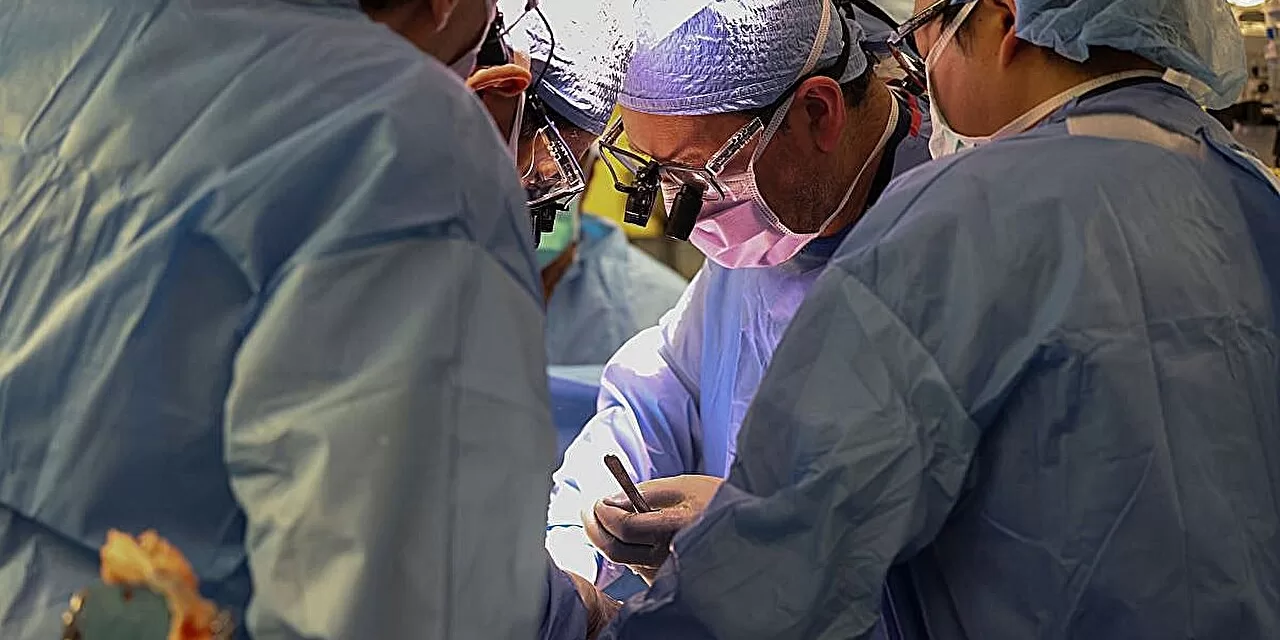
When conventional endoscopic methods failed, the team, led by Dr. Shrihari Anikhindi, Consultant in Gastroenterology at Sir Ganga Ram Hospital, turned to an innovative solution: laser fragmentation.
Using a specialized laser—typically reserved for breaking up kidney stones—the doctors meticulously targeted the denture. Under constant visual guidance via an endoscope (a flexible tube with a camera), the laser beam “dismantled” the prosthesis into smaller, manageable fragments.
Key Procedural Steps:
-
Laser Vaporization: The laser safely broke the rigid base of the denture without damaging the surrounding tissue.
-
Protective Overtube: A specialized guard was inserted into the esophagus to ensure that as the sharp fragments were withdrawn, they did not graze or lacerate the food pipe.
-
Non-Invasive Success: The entire extraction was completed through the mouth, requiring no incisions.
“The laser allowed us to safely break the denture into smaller fragments,” said Dr. Anikhindi. “The overtube protected the normal esophagus from sharp edges, enabling us to remove the foreign body without resorting to open surgery, which carries considerable morbidity.”
Dr. Anil Arora, Chairman of the Institute of Liver, Gastroenterology, and Pancreaticobiliary Sciences (ILGPS) at the hospital, noted that this was “one of the most difficult foreign bodies we have encountered,” citing the extreme risk of injury associated with standard retrieval methods.
The Hidden Danger of Dental Prosthetics
While swallowing a foreign object might sound like a rare accident, dentures account for a significant portion of esophageal emergencies, particularly among older adults.
According to data from the IOSR Journal of Dental and Medical Sciences, dentures are uniquely dangerous because they are often large, irregularly shaped, and frequently contain metal hooks. Globally, while 80% to 90% of swallowed objects pass naturally, 10% to 20% require endoscopic intervention. However, dentures often fall into the <1% of cases that are so complex they traditionally require surgery.
In India, the risk is compounded by a rising rate of tooth loss (edentulism). National oral health surveys indicate that over 20% of adults over the age of 50 lose their natural teeth. Poorly fitting or aging dentures are the primary culprits in accidental ingestion.
Expert Perspectives: Why Laser Matters
Medical professionals not involved in the case suggest this technique could set a new standard for complex “high-risk” foreign body removal.
Dr. Vikas Singla, a Medical Gastroenterologist at Sir Ganga Ram Hospital, explained the technical advantage: “Techniques like holmium laser lithotripsy expand our toolkit. By using the laser to vaporize or weaken the structure of the object in a confined space, we can minimize the ‘drag’ against the esophageal walls. It protects the esophageal integrity in ways that mechanical pulling simply cannot.”
Research indicates that laser-assisted endoscopy can reduce procedure times to as little as 15 to 30 minutes in specialized settings, drastically lowering the time a patient is under anesthesia.
Public Health Implications and Prevention
The success of the procedure at Sir Ganga Ram Hospital offers a vital lesson in preventive care. Medical experts suggest the following strategies to avoid “Denture Distress”:
-
Fit Matters: Ensure dentures are professionally fitted and adjusted annually. Loose dentures are the most likely to be swallowed.
-
Nightly Care: Never wear partial or full dentures while sleeping.
-
Immediate Action: If you suspect you have swallowed a foreign object, seek emergency care immediately. Impactions lasting longer than 24 hours significantly increase the risk of tissue death (necrosis) and infection.
Potential Limitations
While this “laser-precision” approach is life-saving, it is not yet a universal standard. The procedure requires:
-
High-End Equipment: Many rural or smaller hospitals do not have access to the specific lasers required.
-
Specialized Training: The risk of thermal (heat) injury from the laser is real if not handled by an expert.
-
Cost: Advanced endoscopic tools are more expensive than traditional mechanical snares.
Conclusion
The patient in New Delhi was discharged in good health shortly after the procedure, avoiding a weeks-long recovery associated with chest surgery. As medical technology continues to merge with traditional gastroenterology, the use of lasers may soon turn what was once a surgical nightmare into a routine, life-saving outpatient procedure.
Reference Section
-
NDTV Health. “Delhi Doctors Remove Denture From Man’s Food Pipe.” Published April 3, 2026.
Medical Disclaimer: This article is for informational purposes only and should not be considered medical advice. Always consult with qualified healthcare professionals before making any health-related decisions or changes to your treatment plan. The information presented here is based on current research and expert opinions, which may evolve as new evidence emerges.