 0
0
 0
0
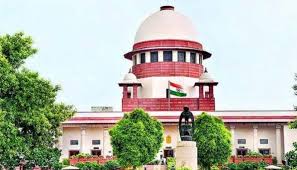
NEW DELHI — In a landmark decision that highlights the critical connection between state employment practices and public health equity, the Supreme Court of India has directed the Himachal Pradesh government to appoint all eligible medical officers whose recruitment was arbitrarily halted by the state. The judgment, delivered on May 31, 2026, establishes a powerful legal precedent: while state governments retain administrative discretion in workforce management, they cannot exercise this power in an arbitrary or discriminatory manner when filling vital public health vacancies.
The ruling directly addresses a systemic bottleneck in Himachal Pradesh’s healthcare infrastructure. For years, bureaucratic halts and delayed appointments have left hundreds of medical officer posts vacant, directly compromising medical access for rural populations across the state’s mountainous terrain. By ordering the immediate appointment of qualified candidates, the apex court has effectively intertwined the principles of service law with the public’s right to healthcare.
The Legal Framework: Right to Appointment vs. State Discretion
The Supreme Court’s ruling centers on a foundational principle of constitutional and service law. When a state entity formally notifies vacancies and conducts a lawful, competitive selection process, successful candidates acquire a legitimate expectation of employment that the state cannot easily dismiss. The court emphasized that a government cannot selectively appoint a fraction of qualified candidates while excluding equally meritorious individuals from the same selection list without a bona fide, justifiable reason.
In the judgment, the bench relied heavily on landmark legal precedents, including the foundational Supreme Court ruling in Shankarsan Dash v. Union of India (1991). That case established that while a selected candidate does not gain an absolute, unconditional right to a post simply by being on a merit list, the state is strictly prohibited from acting arbitrarily or in bad faith when deciding not to fill vacancies.
Furthermore, the court referenced Neelima Shangla v. State of Haryana (1986) to reinforce that the government must act transparently and respect comparative merit. In Himachal Pradesh’s case, the court determined that halting the recruitment process midway—despite a clear, documented shortage of doctors in public clinics—constituted an arbitrary exercise of power that violated Article 14 of the Constitution, which guarantees equality before the law.
Responding to the verdict, the Himachal Medical Officers Association (HMOA) issued a statement expressing profound gratitude, noting that the decision finally resolves years of legal limbo for dozens of qualified doctors and addresses the systemic delays that have consistently undermined the state’s healthcare delivery.
Background: A Healthcare System Under Strain
To understand the gravity of the Supreme Court’s intervention, one must look at the chronic understaffing that has plagued Himachal Pradesh’s public health network. According to data tracked by the HMOA, the state has consistently operated with a deficit of approximately 300 to 400 vacant medical officer positions.
Because medical officers serve as the primary clinical backbone for rural regions, these vacancies have left numerous Primary Health Centres (PHCs) entirely unstaffed. Consequently, rural residents in geographically isolated districts have frequently been forced to travel hours through difficult terrain to reach urban civil hospitals for basic clinical evaluations.
Himachal Pradesh Public Health Vacancies (Historical Baseline)
├── Medical Officers: 300 - 400 Vacant Posts
└── Historical PHC Support Shortages (High Court Tracker):
    ├── Laboratory Technicians: 144 Posts
    ├── Pharmacists: 184 Posts
    ├── Nurses & Female Health Workers: 168 Posts
    └── Administrative Clerks: 92 Posts
This structural crisis has drawn judicial scrutiny before. In September 2020, the Himachal Pradesh High Court issued a stern directive in the case of Robin Singh v. State of Himachal Pradesh, ordering the state to establish a dedicated monitoring committee to fill vacant positions across rural PHCs. At that time, the High Court observed with gravity that:
“Patients shall not be made to wait till the time all posts are filled up, which may lead to loss of lives, which cannot be compensated by any means.”
Despite these warnings, structural issues persisted. In August 2024, the HMOA raised alarms that despite official directives aimed at halting service extensions for retiring healthcare professionals to make way for new blood, extensions were still being granted while fresh recruitment drives remained stalled.
Expert Perspectives: The Intersection of Law and Public Health
Medical and legal experts not involved in the litigation stress that this case represents a significant shift in how courts view medical recruitment. “This ruling shows that the judiciary is increasingly viewing healthcare staffing not just through the lens of employment law, but as a core component of the constitutional right to health under Article 21,” says Aradhana Sharma, a New Delhi-based public policy analyst specializing in healthcare infrastructure. “When a state delays appointing doctors, it isn’t just a bureaucratic failure—it’s a public health failure.”
The real-world consequences of these vacancies became acutely visible in September 2025, when public frustration boiled over across the state. The state health department had issued fresh posting orders for 115 medical specialists who completed their post-graduation while serving as medical officers, along with 78 specialists appointed as “Job Trainees” on a temporary basis. However, many specialists refused to join their assigned rural posts, leaving critical secondary care departments completely unmanned and igniting public anger.
Real-World Implications for Rural Patients
For health-conscious consumers and families living in Himachal Pradesh, the Supreme Court order has immediate, practical implications. In India’s public health framework, PHCs are designed to be the first point of contact between a community and professional medical care.
When a PHC lacks a designated medical officer, patients miss out on essential preventative and curative services, including:
-
Maternal and antenatal care for pregnant women
-
Routine childhood immunizations
-
The management of chronic diseases like diabetes and hypertension
-
Early diagnosis of infectious diseases
To cope with the vacancies, the state government has frequently resorted to temporary stop-gap measures, such as transferring doctors out of larger Community Health Centres and Civil Hospitals to cover unstaffed PHCs. The HMOA has consistently opposed these rapid reassignments, warning that shuffling a limited pool of doctors simply dilutes the quality of care, increases burnout among practitioners, and dramatically spikes wait times for patients at larger regional hospitals.
Public Health Context: Why Physician Density Matters
The Supreme Court’s intervention aligns closely with established global public health data. Epidemiological research consistently demonstrates that adequate physician-to-population ratios are directly correlated with superior population health outcomes.
According to guidelines from the World Health Organization (WHO), a higher density of primary care physicians leads to earlier interventions, better management of both communicable and non-communicable diseases, and a measurable reduction in preventable mortality rates.
While Himachal Pradesh historically boasts better health indicators than several other Indian states, its rugged geography creates deep disparities. Urban centers like Shimla enjoy relatively robust medical access, whereas remote alpine districts face severe deficits. Ensuring that medical officers are permanently stationed at rural PHCs is vital to closing this health equity gap.
Remaining Challenges: Remuneration and Retention
While the Supreme Court’s mandate effectively resolves the legal gridlock surrounding appointments, public health experts caution that hiring doctors is only half the battle; retaining them in rural service presents an ongoing challenge.
A primary point of contention is the state’s controversial salary structure for newly recruited professionals. The state’s recent recruitment initiative via the Himachal Pradesh Public Service Commission (HPPSC)—which sought to fill 232 Medical Officer positions—designated selected candidates as “Job Trainees” with a fixed monthly emolument of ₹33,650 to ₹34,000.
This policy has met fierce resistance from medical bodies. The Teachers Association of Dr. Rajendra Prasad Government Medical College, Tanda, publicly characterized the “Job Trainee” designation and its corresponding salary scale for highly trained medical professionals as “unjustified, demoralising, and detrimental to public healthcare.” Critics argue that such low compensation structures deter top-tier medical talent from remaining in the public sector, ultimately driving them toward private practice or neighboring states.
Furthermore, systemic friction within the state’s medical framework was highlighted in December 2025, when resident doctors at the Indira Gandhi Medical College (IGMC) in Shimla launched a strike over professional grievances and service conditions. The strike was only resolved after direct intervention and assurances of a formal enquiry by the state’s Chief Minister, emphasizing that long-term workforce stability requires addressing doctors’ workplace welfare alongside legal recruitment compliance.
A Precedent for National Healthcare Policy
The Supreme Court’s judgment in the Himachal Pradesh case sends a clear signal to state health departments across India. As states nationwide grapple with acute healthcare workforce shortages, particularly in rural and tribal belts, this ruling emphasizes that transparent, efficient, and legally sound recruitment processes are a public health necessity.
By binding the state to its recruitment commitments, the apex court has reinforced a vital lesson: in the administration of public health, bureaucratic arbitrariness cannot be permitted to compromise patient care.
Medical Disclaimer
Medical Disclaimer: This article is for informational purposes only and should not be considered medical advice. Always consult with qualified healthcare professionals before making any health-related decisions or changes to your treatment plan. The information presented here is based on current research and expert opinions, which may evolve as new evidence emerges.
References
-
Supreme Court Judgment: State Cannot Arbitrarily Halt Recruitment: Supreme Court Orders Appointment of Eligible Himachal Medical Officers, DoctorsPost, May 31, 2026.