 0
0
 0
0
NEW DELHI — A comprehensive evidence mapping report released on March 30, 2026, has sounded a national alarm regarding India’s dietary habits. The findings reveal a stark nutritional deficit: the average Indian consumes just 42 grams of whole grains daily—a mere 10% of the 125 grams recommended by the Indian Council of Medical Research-National Institute of Nutrition (ICMR-NIN). Experts warn that this reliance on refined “white” grains is a primary driver behind the country’s skyrocketing rates of type 2 diabetes and metabolic obesity.
The white paper, titled “Opportunities with Whole Grains to Support Metabolic Health among Indians: Evidence Mapping,” was published by the Protein Foods and Nutrition Development Association of India (PFNDAI) in collaboration with ITC Limited and the Institute for Global Development (IGD). The report calls for an immediate policy shift to reintegrate India’s diverse millet varieties into the daily plate to combat a looming public health catastrophe.
The Hidden Cost of Refinement
While India is often celebrated for its agricultural abundance, the transition from traditional diverse grains to highly processed staples has come at a significant cost. The report highlights that out of a total daily grain intake of 432 grams, only a small fraction is “whole.”
Modern milling processes strip away the bran and the germ—the outermost layers of the grain. This doesn’t just change the texture; it effectively “hollows out” the nutritional value. When the bran and germ are removed to produce white rice or refined wheat flour (maida), vital nutrients like B vitamins, folate, zinc, magnesium, iron, and selenium are lost.
The result is a diet dominated by calorie-dense but nutrient-poor carbohydrates. These refined grains are rapidly digested, causing sharp spikes in blood glucose and insulin levels, which over time promote fat storage and insulin resistance—the hallmarks of type 2 diabetes.
A “Metabolic Time Bomb”
The statistical context provided by recent ICMR-INDIAB studies paints a sobering picture of India’s metabolic health. As of 2026, the data indicates:
-
101 million people living with diabetes.
-
136 million classified as pre-diabetic.
-
351 million struggling with abdominal obesity.
-
254 million affected by generalized obesity.
Perhaps most concerning is the phenomenon of “metabolically obese, normal weight” (MONW) individuals. Roughly 43% of Indian adults who appear to have a healthy Body Mass Index (BMI) are actually metabolically unhealthy, carrying dangerous levels of internal fat that put them at risk for chronic kidney disease and heart failure.
A 2025 analysis published in Nature Medicine linked diets where 62% of calories come from heavy carbohydrates—primarily white rice—to a 14% higher risk of developing diabetes.
The Protective Power of the Whole Grain
The evidence mapping synthesizes decades of global and local research to show that the simple act of choosing whole grains can be life-saving. Cohort studies affirm that consuming just 50 grams of whole grains daily can reduce the risk of type 2 diabetes by 24% to 27%.
“Our findings clearly show that typical Indian diets, heavy in carbohydrates from white rice or whole wheat flour and low in quality protein, are putting millions at risk,” says Dr. R.M. Anjana, President of the Madras Diabetes Research Foundation and lead investigator of the ICMR-INDIAB study.
Dr. Anjana cautions, however, that a simple “swap” isn’t a silver bullet. “Simply switching from white rice to whole wheat or millets is not enough unless total carbohydrate intake decreases and more calories come from plant or dairy proteins.”
Beyond blood sugar, whole grains act as a metabolic “booster.” Dr. Sean Hashmi, a prominent physician specializing in weight management, notes that whole grains can increase resting metabolism by approximately 43 calories per day. Over a year, this minor metabolic shift, combined with reduced calorie absorption due to high fiber content, can equate to a weight loss of nearly 9.5 pounds without other major interventions.
Millets: The Ancient Solution to a Modern Problem
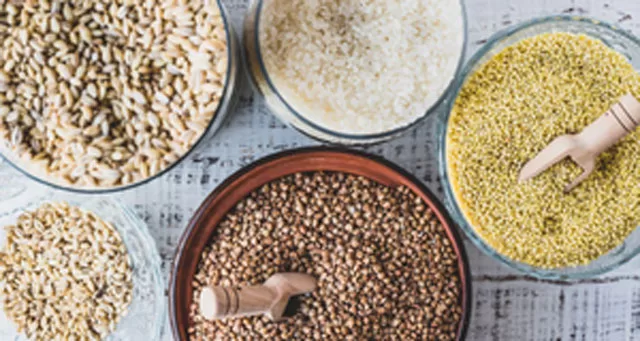
The report emphasizes that India is uniquely positioned to solve this crisis through its “millet diversity.” With over 20 varieties—including ragi (finger millet), bajra (pearl millet), and jowar (sorghum)—these grains are low-glycemic, rich in iron, and culturally rooted in Indian history.
Traditional Indian diets once balanced cereals with legumes and millets. However, urbanization has pushed these “coarse grains” to the periphery, favoring the convenience of refined maida. Urban millennials, in particular, are hitting less than 10% of their whole-grain targets.
Public health advocates are now pushing for these grains to be reclassified as “nutri-cereals” and integrated into government programs, such as the Public Distribution System (PDS) and mid-day meal schemes, to ensure accessibility.
Practical Steps for the Indian Household
For the average consumer, the path to better health involves gradual but consistent dietary shifts. Nutritionists recommend the following “Small Swaps”:
-
Roti Reimagined: Replace at least one wheat-based roti a day with a bajra or jowar flatbread.
-
Rice Alternatives: Transition from polished white rice to brown rice, red rice, or foxtail millet.
-
The 50% Rule: Aim to make at least half of your daily grain intake “whole.”
-
Beyond Grains: Ensure that grains do not exceed 45-60% of total daily calories, filling the rest of the plate with vegetables and high-quality proteins like lentils, curd, or lean meats.
Limitations and the Road Ahead
While the white paper provides a robust map of existing evidence, researchers acknowledge certain limitations. Much of the data is based on observational mapping rather than long-term randomized controlled trials (RCTs). Furthermore, “whole grain” is not a monolithic category; studies suggest that wheat and oats may show stronger protective benefits for women, while rye may be more effective for men.
Critics of a grain-only focus also point out that India suffers from a “protein hunger,” with plant-based protein intake remaining persistently low at 9%. Addressing the diabetes epidemic will likely require a holistic approach that tackles both the quality of carbohydrates and the deficiency of protein.
As India moves toward the end of the decade, the message from the PFNDAI and ICMR is clear: the return to whole grains is not just a nostalgic nod to the past, but a medical necessity for the future.
References
- https://health.economictimes.indiatimes.com/news/industry/poor-whole-grain-intake-among-indians-linked-to-rise-in-diabetes-obesity-says-study/129925141
Medical Disclaimer: This article is for informational purposes only and should not be considered medical advice. Always consult with qualified healthcare professionals before making any health-related decisions or changes to your treatment plan. The information presented here is based on current research and expert opinions, which may evolve as new evidence emerges.