 0
0
 0
0
April 6, 2026
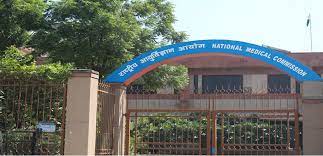
NEW DELHI — In a strategic move to modernize the backbone of India’s public healthcare system, the National Medical Commission (NMC) has issued an urgent call to medical colleges and research institutions across the country. The commission is urging the nation’s brightest scientific minds to participate in the National Health Authority’s (NHA) AB-PMJAY Auto-Adjudication Hackathon 2026, a high-stakes competition aimed at automating the approval process for millions of government-funded hospital claims.
The initiative, spearheaded by the Ministry of Health and Family Welfare, seeks to develop Artificial Intelligence (AI) and technology-driven tools to handle the sheer volume of the Ayushman Bharat-Pradhan Mantri Jan Arogya Yojana (AB-PMJAY). With registrations open until April 13 and a grand finale scheduled for May 8–9 at the Indian Institute of Science (IISc), Bengaluru, the government is betting that “auto-adjudication” will resolve the administrative bottlenecks currently slowing down the world’s largest publicly funded health insurance scheme.
The Scale of the Challenge: 11 Crore Admissions
Claims adjudication—the process by which an insurance provider reviews a hospital bill to determine if it should be paid, adjusted, or denied—is traditionally a labor-intensive task. Under the current AB-PMJAY framework, State Health Agencies must manually verify clinical documents, investigation reports, and discharge summaries against complex policy guidelines.
The scale of this task is staggering. As of February 28, 2026, the AB-PMJAY system has authorized 11.69 crore hospital admissions. Notably, 6.74 crore of these occurred in private hospitals, highlighting the critical need for a streamlined payment system that keeps the private sector engaged and financially viable.
“The manual review of millions of documents is a herculean task that inevitably leads to delays,” says Dr. Arpan Ghosh, a healthcare policy analyst not involved in the NHA initiative. “When you move from millions to hundreds of millions of claims, the human-only model becomes a primary friction point for both hospitals and patients.”
Why a Hackathon?
The NMC’s public notice encourages a cross-disciplinary approach, inviting researchers, data scientists, and clinicians to collaborate. This “hackathon” model acknowledges that healthcare innovation cannot happen in a vacuum; it requires the marriage of medical coding accuracy with cutting-edge machine learning.
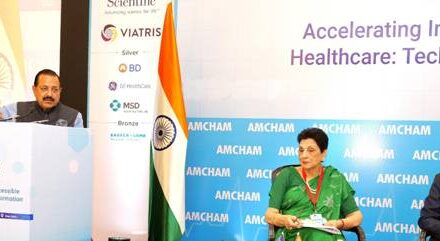
The event will feature a powerhouse of Indian healthcare and technology leadership, including:
-
Dr. Sunil Kumar Barnwal, CEO of the National Health Authority.
-
Dr. Devi Prasad Shetty, Chairman of Narayana Health and a vocal advocate for healthcare digitalization.
-
Leadership from IISc Bengaluru, providing the computational expertise required to vet these tools.
By involving medical colleges, the NMC aims to tap into academic research that might otherwise stay confined to classrooms, bringing it into the “live” environment of national policy.
What Automation Means for the Patient
For the average citizen, “auto-adjudication” may sound like bureaucratic jargon, but its real-world implications are significant.
1. Faster Hospital Clearances
Currently, patients or their families often face “administrative friction” during discharge as hospitals wait for claim approvals. Automation could potentially reduce this wait time from days or hours to mere minutes.
2. Increased Hospital Participation
Many private hospitals are hesitant to join government schemes due to concerns over “revenue cycles”—the time it takes to get paid for services rendered. If AI can guarantee faster, consistent payouts, more high-quality hospitals may be incentivized to join the AB-PMJAY network, increasing geographic access for patients.
3. Transparency and Fraud Detection
Algorithms are often better than humans at spotting “outlier” data. Automated tools can flag suspicious patterns or incomplete documentation instantly, ensuring that public funds are used for genuine medical needs rather than being lost to administrative errors or fraud.
The Risks: Can We Trust the Algorithm?
Despite the enthusiasm, health-tech leaders are proceeding with caution. The primary concern is that an algorithm is only as good as the data used to train it.
In early 2026, NHA CEO Dr. Sunil Kumar Barnwal emphasized that healthcare AI models must be tested on “large and diverse population datasets” before full-scale deployment. The fear is that a “rigid” algorithm might unfairly deny a complex but legitimate claim simply because the documentation doesn’t fit a standard template.
“AI in claims management works best when it supports, rather than replaces, human judgment,” notes a recent industry report on digital health. “For routine procedures like cataract surgeries or standard deliveries, AI is excellent. But for complex, multi-morbidity cases, human oversight remains a safety net.”
There is also the risk of “algorithmic bias.” If historical data shows that certain regions or types of hospitals have lower documentation standards, an AI might inadvertently “learn” to penalize those providers, further widening the gap in healthcare quality across the country.
The Road Ahead: Digital Public Infrastructure
This hackathon is a key piece of India’s broader “Digital Public Infrastructure” (DPI) strategy. By creating an open, automated system for health claims, India is attempting to do for healthcare what it did for finance with the Unified Payments Interface (UPI).
If the winning solutions from the May finale are successfully integrated, the AB-PMJAY could transform from a traditional insurance scheme into a high-speed digital health network. For the millions of Indians relying on the scheme, the result won’t be a new pill or a surgical robot, but something equally vital: a healthcare system that moves as fast as they do.
References
-
National Medical Commission (NMC). Public Notice: AB-PMJAY Auto-Adjudication Hackathon 2026. Issued April 5, 2026. [Ref: nmc.org.in]
Medical Disclaimer: This article is for informational purposes only and should not be considered medical advice. Always consult with qualified healthcare professionals before making any health-related decisions or changes to your treatment plan. The information presented here is based on current research and expert opinions, which may evolve as new evidence emerges.