 0
0
 0
0
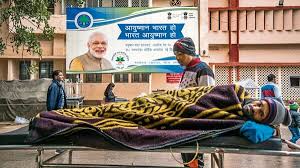
NEW DELHI — In a milestone for public health financing, India’s flagship health insurance framework, the Ayushman Bharat – Pradhan Mantri Jan Arogya Yojana (AB-PMJAY), has authorized 12.69 crore cashless hospital admissions valued at ₹1.92 lakh crore as of June 30, 2026. The official figures, presented to Parliament by Union Minister of State for Health and Family Welfare Shri Prataprao Jadhav on August 4, 2026, highlight how the expansion of publicly funded healthcare coverage is systematically dismantling financial barriers to life-saving medical treatments across the country.
The update underscores a dramatic structural shift in how Indian households finance critical illness. Historically, catastrophic health events have been among the leading causes of personal debt and poverty in rural and semi-urban India. However, recent data from the National Health Accounts (NHA) Estimates show that direct out-of-pocket medical expenditure (OOPE) as a proportion of total health expenditure dropped from 62.6% in 2014–15 to 43.4% in 2022–23—a transformation widely attributed to public investments and schemes like AB-PMJAY.
The Scale of Protection: Coverage and Network Infrastructure
Launched to safeguard vulnerable populations, AB-PMJAY provides a health cover of ₹5 lakh per family per year for secondary and tertiary care hospitalization. The scheme initially targeted approximately 12 crore economically vulnerable families, representing the bottom 40% of the nation’s population.
To deliver these benefits, the National Health Authority (NHA) has built a vast delivery network comprising 37,413 empanelled public and private hospitals across India. Under this framework, hospitalized patients receive complete cashless treatment through standardized benefit packages, which include pre-hospitalization care for three days, diagnostic workups, surgical procedures, medication, and post-hospitalization follow-up for 15 days.
“The expansion of publicly financed health insurance schemes like AB-PMJAY has ensured that low-income families no longer have to liquidate assets or take high-interest loans to access emergency surgeries or cancer treatments,” noted Shri Prataprao Jadhav in his written reply to the Rajya Sabha. “Households are incurring a considerably lower share of healthcare costs directly from their own pockets.”
Consecutive Expansions: Frontline Workers and Universal Senior Coverage
Over the past two years, the Union Government has broadened the scope of AB-PMJAY beyond its original socio-economic criteria, transforming it from a targeted poverty alleviation scheme into a broader universal health assurance model:
-
March 2024 Extension: The scheme was expanded to cover approximately 37 lakh families of Accredited Social Health Activists (ASHAs), Anganwadi Workers (AWWs), and Anganwadi Helpers (AWHs). This move brought basic security to India’s primary health workforce, who serve as the backbone of rural healthcare delivery.
-
October 2024 Extension: In a major policy evolution, coverage was extended to 6 crore senior citizens aged 70 years and above belonging to 4.5 crore families. Crucially, this expansion applies irrespective of socio-economic status, providing every elderly citizen in this age group access to dedicated health coverage under a distinct card allocation system.
| Target Group | Inclusion Date | Estimated Beneficiary Scale | Eligibility Basis |
| Vulnerable Households | Inception (2018) | ~12 Crore Families (Bottom 40%) | SECC Data / Socio-economic Status |
| Frontline Health Workers | March 2024 | ~37 Lakh Families | ASHA & Anganwadi Service |
| Senior Citizens (70+) | October 2024 | ~6 Crore Individuals (~4.5 Crore Families) | Age Criteria (Universal Coverage) |
Macroeconomic Impact: Curbing Out-of-Pocket Medical Costs
The reduction in Out-of-Pocket Expenditure (OOPE) from 62.6% to 43.4% represents a pivotal health-economics milestone. According to independent public health economists, high out-of-pocket expenses act as a regressive tax on low-income families, often forcing them to forego medical care until conditions become life-threatening.
Public health policy experts emphasize that cashless hospitalization alters patient behavior significantly. When patients know that high-cost interventions—such as cardiac angioplasty, neurosurgery, radiation oncology, or joint replacements—are covered up to ₹5 lakh annually, they present to hospitals much earlier in the disease trajectory. Early presentation drastically improves survival rates for non-communicable diseases (NCDs) like cancer and cardiovascular disorders.
Furthermore, the integration of over 1.86 lakh primary-level Ayushman Arogya Mandirs across India has created a streamlined referral mechanism. Frontline clinics conduct initial screenings for hypertension, diabetes, and common cancers, referring high-risk patients directly to empanelled secondary and tertiary care hospitals for covered care.
Challenges, Counterarguments, and the Road Ahead
While the utilization figures demonstrate remarkable scale, health policy researchers and healthcare providers point out critical operational challenges that require continuous fine-tuning:
-
Regional Inequities in Hospital Empanelment: While 37,413 hospitals are empanelled nationally, quality tertiary care facilities remain disproportionately concentrated in urban and semi-urban centers. Rural beneficiaries in remote districts frequently face travel costs and logistical barriers to reach empanelled hospitals.
-
Private Hospital Package Rates: Several private medical associations have raised concerns regarding reimbursement rates for specific complex surgical procedure packages under the National Master Health Benefit Package (HBP). Industry representatives argue that updating package prices to match rising inflation and advanced medical technologies is essential to encourage wider private hospital participation.
-
Preventing Out-of-Package Charges: Despite strict cashless mandates, independent audit reports occasionally document instances where beneficiaries are asked to pay out-of-pocket for specialized consumables or external diagnostic tests not available in-house. Stronger grievance redressal and anti-fraud monitoring mechanisms remain vital.
-
Information and Digital Access Gaps: While card generation has crossed 44.7 crore cards, digital literacy and awareness of package entitlements vary across states, necessitating continued community outreach through local health workers.
What This Means for Patients and Families
For eligible citizens, verifying coverage and utilizing benefits has become increasingly streamlined:
-
No Family Size Cap: Benefits cover all family members without restrictions on family size or age limits.
-
Pre-existing Conditions Covered: All pre-existing medical conditions are covered from day one of enrollment, eliminating waiting periods typical of commercial private health insurance.
-
Portability Across States: Beneficiaries can access cashless treatment at any empanelled hospital across India, regardless of their home state, protecting migrant workers and traveling seniors.
-
Checking Eligibility: Citizens can check their card status and empanelled hospital directories directly on the official National Health Authority public dashboard (
dashboard.nha.gov.in) or at their nearest empanelled facility via dedicated Ayushman Mitras.
As AB-PMJAY continues its expansion, the scheme serves as a global benchmark for universal health coverage in developing economies, shifting healthcare from a luxury funded by personal savings into a rights-backed public safety net.
Medical Disclaimer
Medical Disclaimer: This article is for informational purposes only and should not be considered medical advice. Always consult with qualified healthcare professionals before making any health-related decisions or changes to your treatment plan. The information presented here is based on current research and expert opinions, which may evolve as new evidence emerges.
References
-
Ministry of Health and Family Welfare, Government of India. (2026, August 4). Update on AB PM-JAY: Press Information Bureau Release ID 2294278. PIB Delhi. URL: https://www.pib.gov.in/PressReleasePage.aspx?PRID=2294278