 0
0
 0
0
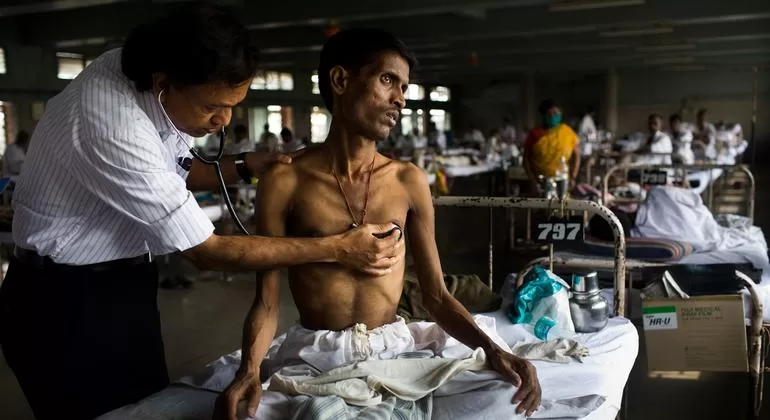
NEW DELHI — In a major milestone for global public health, India has recorded a significant drop in tuberculosis (TB) rates over the past decade, outpacing the average rate of global decline.
Addressing the Rajya Sabha on Tuesday, August 4, 2026, Union Health Minister J.P. Nadda announced that India achieved a 21% reduction in TB incidence and a 25% drop in TB-related mortality between 2015 and 2024. Citing benchmark figures from the World Health Organization’s (WHO) Global Tuberculosis Report 2025, Nadda underscored that national treatment coverage jumped dramatically from 53% to 92% over the same nine-year period.
While the data reflects a shrinking gap in “missing cases”—patients who go undiagnosed or unrecorded—health experts emphasize that India still bears one of the world’s heaviest TB burdens, making continued momentum and equitable healthcare access critical.
Unpacking the Data: Slashed Rates and Rising Detection
In public health terminology, incidence tracks the number of new cases emerging within a population over a specific period, whereas mortality measures total deaths caused by the disease.
Between 2015 and 2024, India’s TB incidence rate dropped from 237 to 187 per 100,000 people. Simultaneously, the mortality rate decreased from 28 to 21 per 100,000 people.
| Metric | 2015 Baseline | 2024 Status | Absolute Change |
| TB Incidence Rate (per 100k) | 237 | 187 | -21% |
| TB Mortality Rate (per 100k) | 28 | 21 | -25% |
| Treatment Coverage | 53% | 92% | +39% |
India’s 21% fall in incidence significantly outpaced the global average decline of 12% across the same timeframe.
Rather than indicating a surge in infections, rising annual case notifications—25.52 lakh in 2023, 26.18 lakh in 2024, and 26.37 lakh in 2025—demonstrate that surveillance systems are successfully identifying patients who previously fell through healthcare cracks.
What Drove the Turnaround?
Ministry officials attribute these public health gains to a multi-pronged operational strategy: aggressive field screening, modernized point-of-care diagnostics, compulsory private-sector reporting, and nutritional support.
Central to this effort has been the nationwide expansion of the government’s 100-Day TB Mukt Bharat Abhiyaan (TB-Free India Campaign). The initiative focuses heavily on high-risk districts before scaling interventions across state lines. Key structural drivers include:
-
Rapid Molecular Testing: Transitioning away from traditional, slower sputum microscopy toward rapid tools like TruNat and Nucleic Acid Amplification Tests (NAAT).
-
AI-Assisted Field Diagnostics: Deploying handheld, battery-operated chest X-ray units equipped with artificial intelligence software to detect suspected lung lesions in remote villages.
-
Social & Nutritional Assistance: Providing direct financial support for nutrition to counteract undernutrition, a known accelerator of active TB infection.
Expert Insights and Public Health Context
Independent epidemiologists and infectious disease specialists view the progress as a testament to aggressive political will, but caution against early celebrations.
“A sharp rise in notifications combined with expanded treatment coverage is the gold standard indicator of a maturing public health response,” notes Dr. Arishti Bannerjee, an independent public health consultant not affiliated with the ministry report. “It means we are actively shrinking the reservoir of undiagnosed individuals who unknowingly transmit the bacterium within crowded households. However, finding cases is only half the battle—keeping patients on uninterrupted therapy for six months or longer remains a monumental task.”
Experts point out that social determinants of health continue to fuel transmission across the subcontinent:
-
Undernutrition: Weakens host immunity, turning latent infection into active disease.
-
Co-morbidities: High rates of adult-onset diabetes elevate the risk of treatment failure.
-
Dense Urban Housing: Inadequate ventilation in informal settlements facilitates air-driven bacterial spread.
Nuance, Limitations, and the Road to 2030
While parliamentary declarations highlight progress, public health analysts urge careful evaluation of the data:
-
Surveillance vs. True Elimination: A rise in case notifications reflects better detection rather than a total eradication of the pathogen.
-
Estimation Adjustments: National estimates supplied to the WHO undergo periodic statistical adjustments based on local population censuses and updated modeling frameworks.
-
Drug Resistance Risks: Multidrug-resistant TB (MDR-TB) remains an ongoing challenge. Sub-optimal treatment adherence can lead to resistant bacterial strains that demand longer, more toxic, and vastly more expensive drug regimens.
Although Union Minister Nadda reaffirmed India’s ambition to eliminate tuberculosis by 2030, closing the remaining gap will require sustained financial backing, decentralized community outreach, and aggressive stigma-reduction campaigns.
Practical Takeaways for Patients and Families
Tuberculosis is a bacterial infection caused by Mycobacterium tuberculosis. It primarily attacks the lungs, but it is preventable and fully curable with standard, short-course antibiotic regimens.
Recognizing Common Symptoms
If you or someone in your household experiences the following symptoms for more than two weeks, seek medical evaluation immediately:
-
Persistent, unexplained cough (sometimes coughing up mucus or blood)
-
Low-grade evening fever and recurring night sweats
-
Unintentional weight loss and loss of appetite
-
Persistent chest pain or fatigue
Early diagnosis prevents permanent lung damage and immediately stops transmission to family members and co-workers. Free diagnostic testing and medications are provided across public health facilities nationwide.
References
-
Nadda, J.P. Statement delivered in the Rajya Sabha on tuberculosis incidence and mortality trends (citing WHO data). Reported by Economic Times Health & Press Trust of India, August 4, 2026.
Medical Disclaimer: This article is for informational purposes only and should not be considered medical advice. Always consult with qualified healthcare professionals before making any health-related decisions or changes to your treatment plan. The information presented here is based on current research and expert opinions, which may evolve as new evidence emerges.