 0
0
 0
0
Read Time:5 Minute, 24 Second
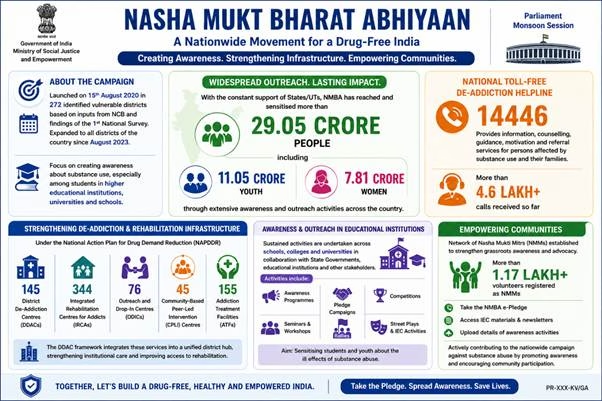
NEW DELHI — In one of the world’s largest public health interventions targeting substance use disorders, India’s flagship anti-addiction campaign, the Nasha Mukt Bharat Abhiyaan (NMBA), has reached and sensitised over 29.05 crore (290.5 million) people across the country.
The figures were officially disclosed by the Ministry of Social Justice and Empowerment in a written reply to the Rajya Sabha on August 6, 2026. Minister of State Shri B. L. Verma confirmed that the government-led movement—designed to prevent and reduce substance abuse through community engagement, youth education, and expanded medical infrastructure—has achieved unprecedented scale, driven heavily by participation among young adults and women.
Targeted Outreach: Mobilising Youth and Women
According to the official Parliamentary report, the campaign has successfully engaged over 11.05 crore youth and 7.81 crore women. Public health experts consider these demographic segments critical in shifting societal norms around addiction.
Substance use disorder (SUD) remains a major global public health challenge. The World Health Organization (WHO) and the United Nations Office on Drugs and Crime (UNODC) consistently emphasize that early prevention, public education, and destigmatisation are the most cost-effective strategies for reducing long-term demand for illicit drugs and harmful alcohol use.
“When addressing substance use disorders at a population scale, reaching youth before the onset of regular substance use is paramount,” explains Dr. Ananya Mukherjee, an independent public health specialist and epidemiologist not affiliated with the campaign. “Equally vital is the involvement of women. In many communities, women serve as primary caregivers and community anchors; equipping them with awareness enables early identification of warning signs within families.”
Originally launched on August 15, 2020, across 272 vulnerable districts identified by the National Drug Dependent Treatment Centre (NDDTC) at AIIMS, New Delhi, the program was expanded in August 2023 to cover all 700+ districts in India. The current phase places a heavy emphasis on higher educational institutions, universities, and secondary schools.
Integrating Medical Rehabilitation and Grassroots Infrastructure
Public health specialists stress that awareness campaigns must be paired with clinical treatment facilities to convert intent into recovery. To meet this need, the government supports a multi-layered infrastructure under the National Action Plan for Drug Demand Reduction (NAPDDR).
Current De-Addiction and Rehabilitation Infrastructure
-
145 District De-Addiction Centres (DDACs): Unified district-level facilities providing integrated care.
-
344 Integrated Rehabilitation Centres for Addicts (IRCAs): Inpatient treatment and psychosocial rehabilitation units.
-
155 Addiction Treatment Facilities (ATFs): Specialized medical units operating within government hospitals.
-
76 Outreach and Drop-In Centres (ODICs): Low-threshold facilities offering basic counseling and harm-reduction support.
-
45 Community-Based Peer-Led Intervention (CPLI) Centres: Focused on high-risk youth through peer mentoring.
By consolidating these services under the DDAC framework, the initiative aims to streamline the patient care pathway from primary outreach to long-term psychological rehabilitation.
To improve immediate access, the government operationalised the National Toll-Free De-Addiction Helpline (14446). Operating as a first-line tele-health service, the helpline provides confidential counselling, crisis guidance, and direct referrals to nearby treatment centers. The Ministry reported that the helpline has processed more than 4.6 lakh (460,000) calls to date.
+-----------------------------------------------------------------------+
|                 NASHAI MUKT BHARAT ABHIYAAN AT A GLANCE              |
+-----------------------------------------------------------------------+
|  Total Reach:            > 29.05 Crore (290.5 Million) Individuals   |
|  Youth Sensitised:       > 11.05 Crore                                |
|  Women Sensitised:       > 7.81 Crore                                 |
|  Helpline Calls Received: > 4.6 Lakh (14446 Toll-Free)                |
|  Registered Volunteers:  > 1.17 Lakh Nasha Mukti Mitrs                |
+-----------------------------------------------------------------------+
Community-Led Advocacy: The Role of ‘Nasha Mukti Mitrs’
A key driver of the campaign’s expansive reach is its volunteer network. More than 1.17 lakh individuals have registered as Nasha Mukti Mitrs (NMMs)—grassroots volunteers trained to advocate for drug-free communities, host local workshops, organize street plays (Nukkad Nataks), and distribute Information, Education, and Communication (IEC) materials.
Using the dedicated NMBA Mobile App, volunteers log local activities, issue e-Pledges, and download standardized medical and psychological awareness material. This digital integration allows central monitoring while enabling hyper-local community messaging.
Expert Perspectives and Public Health Limitations
While public health professionals acknowledge the massive scale of the sensitization numbers, clinical experts emphasize that population outreach is only the initial step in managing a chronic health condition.
“Massive awareness campaigns excel at reducing stigma, which historically prevents individuals with substance use disorders from seeking help,” says Dr. Rajesh Parikh, a consultant psychiatrist specializing in addiction medicine. “However, the ultimate success of any national substance strategy lies in clinical retention—how many individuals who seek help actually transition into long-term medical treatment and sustained recovery.”
Medical experts point to several ongoing challenges that demand continued evaluation:
-
Service Gap Ratios: While 155 Addiction Treatment Facilities and 344 IRCAs mark significant progress, scaling treatment capacity to keep pace with a population of 1.4 billion requires continuous capital investment and training for addiction psychiatrists and clinical psychologists.
-
Relapse Prevention: Substance use disorder is recognized by the medical community as a chronic, relapsing brain disease. Long-term public health success requires robust post-rehabilitation follow-up services and vocational support.
-
Data Verification: Independent longitudinal studies are needed to evaluate the long-term impact of sensitization programs on actual rates of substance initiation among youth.
Practical Takeaways: Seeking Help and Spotting Signs
For families and individuals navigating substance use concerns, health authorities stress that early intervention drastically improves treatment outcomes. Substance use disorder is a treatable medical condition, not a moral failure.
Warning Signs of Substance Use Disorder
-
Unexplained shifts in mood, sudden irritability, or emotional withdrawal.
-
Changes in sleep patterns, appetite, or sudden weight loss.
-
Neglect of academic, professional, or familial responsibilities.
-
Loss of interest in long-held hobbies or social activities.
If you or someone you know is struggling with substance use, support is available confidential and free of charge.
-
National Toll-Free Helpline: Call 14446 for 24/7 information, tele-counseling, and local referral services.
-
District Centers: Contact your local District Hospital to inquire about Addiction Treatment Facilities (ATFs) or Integrated Rehabilitation Centres for Addicts (IRCAs).
References
-
Press Information Bureau (PIB) Delhi. (2026, August 6). Nasha Mukt Bharat Abhiyaan Reaches Over 29.05 Crore People Across the Country. Ministry of Social Justice & Empowerment, Government of India.
Medical Disclaimer: This article is for informational purposes only and should not be considered medical advice. Always consult with qualified healthcare professionals before making any health-related decisions or changes to your treatment plan. The information presented here is based on current research and expert opinions, which may evolve as new evidence emerges.


Happy
0 %

Sad
0 %

Excited
0 %

Sleepy
0 %

Angry
0 %

Surprise
0 %