 0
0
 0
0
NEW DELHI — In a major policy shift addressing the changing health profile of India’s youth, the Union Ministry of Health and Family Welfare (MoHFW) has officially expanded its flagship child health initiative, the Rashtriya Bal Swasthya Karyakram (RBSK 2.0). The revised operational guidelines broaden the national screening framework from 30 to 38 common childhood health conditions, explicitly bringing non-communicable diseases (NCDs)—such as pediatric hypertension, diabetes, and childhood obesity—as well as mental health and behavioral concerns into primary focus.
The update was formally presented in a written reply to the Lok Sabha by Union Minister of State for Health and Family Welfare, Smt. Anupriya Patel, highlighting a modernized strategy to tackle lifestyle-related diseases among children from birth through 18 years of age.
Pivoting from Infectious Disease to Early NCD Screening
Historically focused on the traditional “4Ds”—Defects at birth, Deficiencies, Diseases, and Developmental delays including disability—the RBSK initiative was launched under the National Health Mission (NHM) to provide free early screening and intervention. However, epidemiological trends across urban and rural India have shifted rapidly over the past decade.
Sedentary lifestyles, dietary changes dominated by ultra-processed foods, and screen time have accelerated rates of childhood obesity, juvenile type 2 diabetes, and early-onset hypertension.
+-----------------------------------------------------------------------------------+
|                        RBSK 2.0: CORE EXPANSION AT A GLANCE                       |
+-----------------------------------------------------------------------------------+
| • Target Coverage: Expanded to 38 common pediatric health conditions               |
| • Priority Additions: Hypertension, Diabetes, Mental Health & Behavioral Care    |
| • Touchpoints: Anganwadi Centres (0-6 yrs) and Government Schools (6-18 yrs)      |
| • Delivery Upgrades: Digital tracking, reinforced Mobile Health Teams (MHTs)      |
+-----------------------------------------------------------------------------------+
Under RBSK 2.0, Mobile Health Teams (MHTs) operating at the block level will be reinforced with additional human resources drawn from parallel National Health Mission programs. MHTs visit local Anganwadi centres to screen preschool children (6 weeks to 6 years) and government/government-aided schools for older children (6 to 18 years). Upgraded MHT toolkits now include specialized diagnostic equipment aimed at detecting early indicators of hypertension and metabolic risk factors directly within community settings.
Digital Tracking and Longitudinal Continuum of Care
A central pillar of the upgraded framework is the move toward a fully integrated digital platform for tracking and follow-up. To prevent children from falling through the gaps between initial screening and specialized hospital care, RBSK 2.0 creates a longitudinal digital health record for every screened child.
This digital network integrates with existing national platforms—such as UDISE+ (school education data) and the Poshan Tracker—ensuring real-time monitoring, automated referral alerts to District Early Intervention Centres (DEICs), and seamless tracking of treatment outcomes at zero out-of-pocket cost to families.
“The inclusion of hypertension and diabetes in routine school screenings marks a pivotal shift toward preventative cardiovascular medicine. Catching elevated blood pressure or impaired fasting glucose in a 12-year-old allows us to intervene before organ vascular changes become irreversible.”
— Dr. Sunita Sharma, Senior Consultant in Pediatric Cardiology & Preventive Health, All India Institute of Medical Sciences (AIIMS), New Delhi (not involved in the policy drafting).
Public Health Campaign: IEC Materials for Families
Beyond clinical screening, the ministry is rolling out comprehensive Information, Education, and Communication (IEC) materials across States and Union Territories. Recognizing that childhood obesity and metabolic health are rooted in daily household habits, the IEC campaign delivers culturally tailored health booklets, instructional videos, and posters to schools and local health centres.
These materials focus on practical lifestyle modifications, encouraging:
-
Reduced Sodium & Sugar Intake: Practical guidance on replacing ultra-processed snacks with whole foods.
-
Active Play: Recommending at least 60 minutes of moderate-to-vigorous physical activity daily for school-aged children.
-
Sleep Hygiene & Screen Time Limits: Educating parents on the direct link between sleep deprivation, chronic stress, and pediatric metabolic dysfunction.
Public Health Implications and Implementation Challenges
Public health experts have broadly welcomed the programmatic expansion, citing that early detection of non-communicable diseases drastically reduces adult morbidity and healthcare costs down the line.
However, independent experts highlight operational hurdles that must be addressed during state-level execution:
-
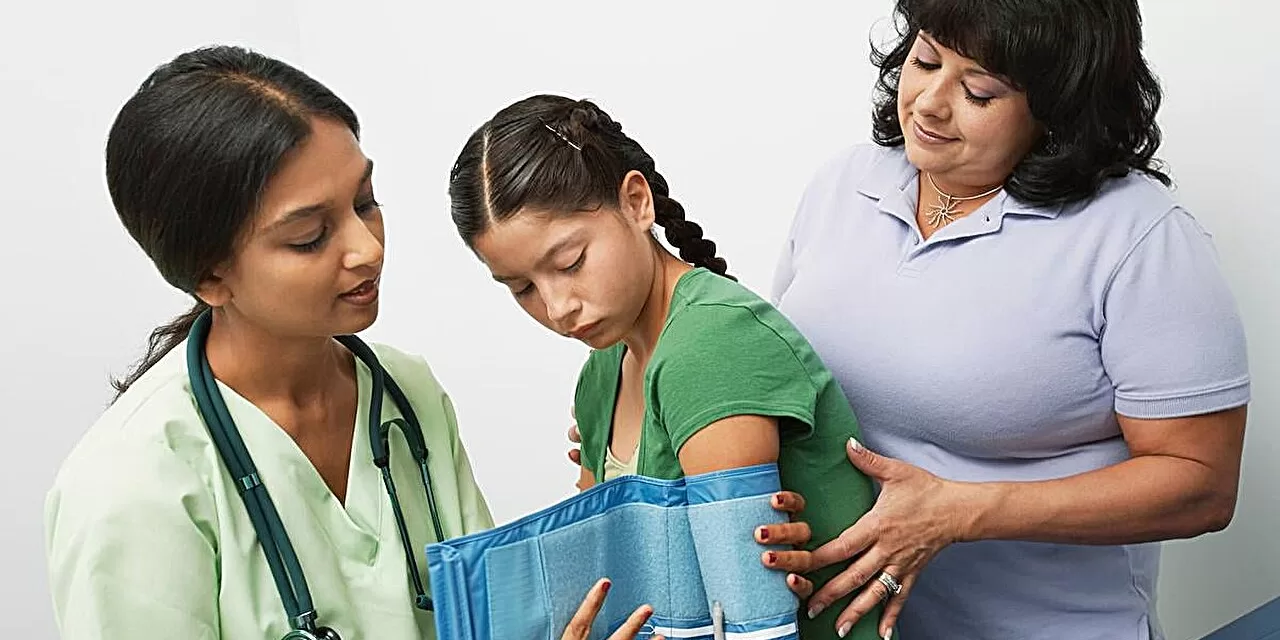
Diagnostic Accuracy in Field Settings: Accurately diagnosing pediatric hypertension requires proper cuff sizes and repeated measurements under calm conditions, which can be challenging during rapid school-screening drives.
-
Referral Pathways & Capacity: Identifying thousands of children with elevated blood pressure or mental health needs will put increased pressure on secondary and tertiary referral centres (DEICs), requiring sufficient pediatric specialists and counselors to manage the caseload.
-
Socioeconomic Factors: Screening alone cannot fix structural barriers to health, such as a lack of safe outdoor playing spaces in congested urban areas or limited access to fresh, affordable foods.
What This Means for Parents and Caregivers
For families, the expansion of RBSK 2.0 means health screenings in public schools and Anganwadi centres will now look beyond basic physical growth and infectious ailments.
                                 RBSK 2.0 SCREENING FLOW

   [ Outreach Point ]               [ Digital Network ]              [ Referral & Care ]
 +--------------------+           +---------------------+           +--------------------+
 | School / Anganwadi | --------> | Digital Health Card | --------> | DEIC / Hospital    |
 | Field Screening    |           | Tracking & Mapping  |           | Free Intervention  |
 +--------------------+           +---------------------+           +--------------------+
Parents are encouraged to:
-
Review School Health Cards: Pay attention to screenings for blood pressure, body mass index (BMI), and behavioral check-ins provided through school health teams.
-
Engage in Early Intervention: If a child is flagged for elevated blood pressure or glucose abnormalities, follow up promptly at the recommended referral centre where diagnostic evaluations and lifestyle counseling are provided at no cost.
-
Adopt Household-Wide Healthy Habits: Focus on progressive, family-wide changes—such as home-cooked meals and reduced recreational screen time—rather than placing sole pressure on the child.
References
-
Press Release: Ministry of Health and Family Welfare, Government of India. Measures taken to curb Childhood Hypertension and Obesity: RBSK 2.0 Expanded to Cover 38 Childhood Health Conditions. Published via PIB Delhi, July 24, 2026. Press Release ID: 2288846.
Medical Disclaimer: This article is for informational purposes only and should not be considered medical advice. Always consult with qualified healthcare professionals before making any health-related decisions or changes to your treatment plan. The information presented here is based on current research and expert opinions, which may evolve as new evidence emerges.