 0
0
 0
0
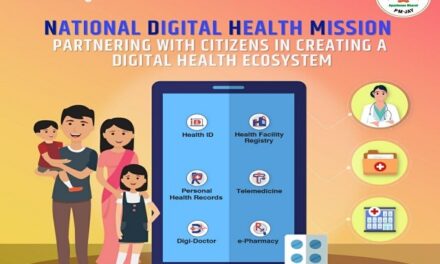
NEW DELHI — In a major step toward reshaping the country’s healthcare delivery system, the National Health Authority (NHA) successfully concluded a pivotal two-day National Review Meeting (Chintan Shivir) on July 18, 2026. The high-level conference convened senior policymakers, state health officials, and development partners at Madhya Pradesh Bhawan to review India’s twin flagship health initiatives: the Ayushman Bharat Pradhan Mantri Jan Arogya Yojana (AB PM-JAY)—the world’s largest publicly funded health insurance scheme—and the Ayushman Bharat Digital Mission (ABDM). The gathering established a strategic roadmap focused on financial sustainability, public hospital infrastructure, and the deployment of cutting-edge artificial intelligence (AI) to achieve equitable healthcare access for over 500 million beneficiaries.
Union Health Secretary Smt. Punya Salila Srivastava addressed the valedictory session, stating that AB PM-JAY and ABDM have successfully matured from pilot projects into the foundational pillars of India’s healthcare ecosystem. According to the Ministry of Health and Family Welfare, the strategic focus is now shifting from initial infrastructure deployment to driving wider public adoption and maximizing the clinical utility of these digital health platforms.
Driving Sustainability and Reinventing Public Hospitals
A primary challenge addressed during the review was ensuring the long-term financial viability of AB PM-JAY, which provides an annual cashless health cover of ₹5 lakh ($6,000 USD) per family for secondary and tertiary care hospitalization. As utilization rates grow, the NHA introduced revised grant-in-aid guidelines designed to streamline fund management, accelerate financial accountability, and ensure the timely release of grants to State Health Agencies.
State delegations presented successful models that demonstrate how public funding can be leveraged to systematically improve domestic healthcare infrastructure:
-
The Kerala Model: State health officials presented an integrated framework that successfully converged existing state health protection programs with AB PM-JAY. This convergence has minimized administrative duplication, expanded the active network of empanelled hospitals, and widened the financial safety net for vulnerable populations.
-
The Tamil Nadu Model: Leveraging the state’s Chief Minister’s Comprehensive Health Insurance Scheme (CMCHIS) alongside AB PM-JAY, Tamil Nadu demonstrated an innovative mechanism for claim revenue utilization. By systematically reinvesting insurance claim revenues back into public hospitals, the state has built self-sustaining public facilities capable of upgrading medical equipment, expanding human resources, and modernizing digital clinical systems without relying solely on standard budgetary allocations.
To further improve liquidity for participating healthcare providers, the NHA showcased the implementation of the National Health Claims Exchange (NHCX). This interoperable digital platform facilitates the rapid settlement of approved claims, providing empanelled hospitals with faster access to working capital and minimizing the prolonged payment uncertainties that historically strained hospital-government relations.
AI and Data Analytics Move to the Frontlines of Public Health
The next phase of India’s health reform will lean heavily on data-driven governance. The NHA’s dedicated Health Analytics and AI Unit showcased advanced predictive modeling tools developed to optimize program delivery. These new analytical frameworks process large-scale demographic and clinical data to evaluate beneficiary portability, track district-level hospital accessibility, and map precise healthcare utilization trends. By giving states access to real-time dashboards, local authorities can pinpoint specific geographical service gaps and execute data-driven hospital empanelment strategies.
The integration of artificial intelligence into publicly funded health systems took center stage during tech demonstrations led by homegrown AI research firm Sarvam AI. The showcased solutions highlighted how large language models and clinical decision support systems can enhance operational workflows, streamline hospital administration, and offer personalized, citizen-centric health communication.
Simultaneously, the digital transformation is being institutionalized at the foundational level of medical education. Dr. Raghav Langer, Secretary of the National Medical Commission (NMC), detailed the ongoing integration of Hospital Management Information Systems (HMIS) with ABDM standards across the nation’s medical colleges. By linking clinical workloads and digital records directly to the Ayushman Bharat Health Account (ABHA) numbers, the NMC is deploying automated dashboards to objectively assess the operational capacity and education quality of medical institutions nationwide.
Honoring Excellence in State Implementation
The NHA recognized outstanding performance across states and union territories, distributing 15 performance awards based on rigorous health metrics:
| Award Category (Scheme) | Measuring Indicator | Winning Jurisdictions |
| AB PM-JAY Card Saturation | Highest number of VVS Cards generated per lakh population | Andhra Pradesh (Large State), Sikkim (Small State), Lakshadweep (Union Territory) |
| Secure Fraud Prevention | Highest volume of pre-authorizations completed via biometric authentication | Madhya Pradesh, Meghalaya, Andaman & Nicobar Islands |
| ABDM Registry Saturation | Complete saturation of Healthcare Professionals Registry (HPR) & Health Facilities Registry (HFR) | Andaman & Nicobar Islands, Chandigarh, Dadra & Nagar Haveli and Daman & Diu, Ladakh, Lakshadweep |
| Digital Health Record Linking | Highest health record linking per lakh population | Jammu & Kashmir (Medium State/UT), Ladakh (Small State/UT) |
| Digital Adoption & Scale | Outstanding volume of ABHA creation and Scan & Pay services | Uttar Pradesh |
Addressing System Challenges and the Path Forward
While the roadmap charts an ambitious path forward, public health experts emphasize that scaling a digital health infrastructure for 1.4 billion people presents inherent structural limitations. Maintaining robust data privacy and cybersecurity across thousands of fragmented rural clinics remains a monumental task. As Health Secretary Srivastava noted, ensuring the responsible, secure use of health data is absolutely critical to maintaining public trust in the digital health ecosystem.
Furthermore, independent health policy analysts caution that while digital innovations like the NHCX and AI diagnostics improve administrative efficiency, they cannot entirely substitute for the baseline physical infrastructure shortages—such as the rural deficits in specialized medical personnel and intensive care beds—that persist in remote districts. Achieving true health equity will require balancing digital expansion with aggressive, sustained physical infrastructure spending.
“The National Review Meeting has successfully evolved into a vital, two-way exchange of operational intelligence,” said Dr. Sunil Kumar Barnwal, Chief Executive Officer of the NHA. “By combining health analytics, cooperative federalism, and digital innovation, we are establishing a resilient, inclusive roadmap that will ensure affordable, high-quality care reaches every citizen.”
Reference Section
-
Government Source: Press Information Bureau (PIB) Delhi, Ministry of Health and Family Welfare, Government of India. Press Release: NHA Concludes Two-Day National Review Meeting on AB PM-JAY and ABDM. Published July 18, 2026.
Medical Disclaimer: This article is for informational purposes only and should not be considered medical advice. Always consult with qualified healthcare professionals before making any health-related decisions or changes to your treatment plan. The information presented here is based on current research and expert opinions, which may evolve as new evidence emerges.