 0
0
 0
0
GENEVA — The World Health Organization (WHO) confirmed on Tuesday, June 2, 2026, that an ongoing Ebola virus outbreak in the Democratic Republic of Congo (DRC) has reached 321 confirmed cases, while expanding its footprint into neighboring Uganda. Despite the steady rise in confirmed laboratory findings, international health officials reported a dramatic plunge in suspected cases—dropping from 906 down to 116—after rigorous laboratory diagnostics successfully ruled out hundreds of patients who were suffering from non-Ebola illnesses. The outbreak, which has claimed 48 lives in the DRC and one in Uganda, is being driven by the rare Bundibugyo ebolavirus strain, presenting severe medical and logistical hurdles due to a complete lack of commercially available vaccines or targeted therapies.
The Outbreak Geography: From Remote Provinces to Urban Centers
The vast majority of the confirmed caseload remains heavily concentrated within the DRC. The province of Ituri stands as the primary epicenter, accounting for 299 of the confirmed infections distributed across 15 distinct health zones. However, regional containment efforts have faced setbacks as the virus migrated southward into North Kivu (19 confirmed cases across seven health zones) and South Kivu, which has logged three cases in a single health zone.
The threat escalated into a full regional crisis when the virus crossed international borders into Uganda. As of June 2, the Ugandan Ministry of Health verified 15 confirmed cases. Crucially, eight of the nine cases mapped by geographical data were identified within the densely populated capital city of Kampala, with an additional case found in the neighboring Wakiso district.
Public health tracking indicates that while four of the Ugandan cases possessed direct travel links to the DRC, at least seven resulted from local, community-based transmission among known contacts, sparking deep concerns regarding urban containment.
The Bundibugyo Challenge: A Rare and Unpredictable Strain
This outbreak is uniquely challenging because it marks only the third time in documented history that the Bundibugyo ebolavirus strain has been responsible for an epidemic. First identified in western Uganda in 2007 (resulting in 131 cases and 42 deaths), it re-emerged briefly in the DRC in 2012 with 38 confirmed cases.
Historically, data indicates that the Bundibugyo strain carries an average case fatality rate of roughly 30%. While substantially lower than the notorious Zaire ebolavirus strain—which has reached mortality rates as high as 90% in past disasters—it still represents an incredibly lethal pathogen.
Ebola Strain Fatality Rate Comparison:
==================================================
Zaire Strain       || [████████████████████] 50-90%
Bundibugyo Strain  || [███████]             25-40%
==================================================
Independent experts warn against complacency regarding these statistical variances. “While Bundibugyo might be slightly less deadly than the Zaire or Sudan virus strains, a 30%-plus mortality rate is still quite scary,” noted Dr. Vasee Moorthy, a Senior Adviser for WHO Science and Strategy. “It is hard to say with a lot of precision because the global medical community simply does not have a lot of clinical experience with this specific virus.”
Dr. Geeta Sood, an infectious disease specialist at Hopkins Bay Medical Center who is not involved in the direct response, concurred, stating that Bundibugyo’s real-world mortality typically fluctuates between 25% and 40% depending on the speed of clinical intervention. Currently, the raw case fatality rate in the DRC stands at roughly 15%, though health officials caution this figure will likely shift as long-hospitalized patients either recover or succumb to the illness.
Zero Approved Countermeasures: The Race for a Vaccine
The most acute vulnerability in the current public health response is the total absence of approved vaccines or therapeutics tailored to this strain. The global stockpiles of highly effective Ebola vaccines manufactured by Merck (Ervebo) and Johnson & Johnson were specifically engineered to target the surface proteins of the Zaire strain. Animal models have shown that these existing vaccines offer virtually zero cross-protection against Bundibugyo.
In response to the declaration of a Public Health Emergency of International Concern (PHEIC) by WHO Director-General Dr. Tedros Adhanom Ghebreyesus on May 17, an unprecedented, accelerated vaccine development effort has been launched. Three global entities are currently rushing candidates toward clinical evaluation:
| Organization | Vaccine Platform / Type | Estimated Timeline to Clinical Trials |
| University of Oxford | Viral vector technology (Utilizing the rapid COVID-era platform) | 2–3 months |
| IAVI (International AIDS Vaccine Initiative) | Modified rVSV vaccine (Single-dose; same platform as Ervebo) | 7–9 months |
| Moderna | mRNA-based vaccine platform | In active development |
The IAVI candidate has already demonstrated nearly 100% efficacy in non-human primate trials. Dr. Aaron Feinberg, a researcher with IAVI, expressed strong optimism regarding the laboratory data but emphasized that global regulatory and manufacturing pipelines must be aggressively accelerated to impact the current crisis. Dr. Jean Kaseya, Director-General of the Africa Centres for Disease Control and Prevention (Africa CDC), issued a resolute public commitment, vowing that a dedicated Bundibugyo vaccine and therapeutic regimen would be available on the continent before the end of 2026.
Ground Realities: Surveillance Successes and Logistical Hurdles
The massive reduction in suspected cases—from nearly a thousand down to 116—is being viewed by epidemiologists as a major victory for field diagnostics. According to WHO spokesperson Christian Lindmeier, the drop indicates that laboratory capacity has stabilized on the ground, allowing rapid testing teams to rule out individuals who merely presented with common seasonal fevers or malaria.
Despite these data improvements, frontline workers face severe logistical headwinds. The outbreak went unnoticed in Ituri province for several weeks before official identification, meaning the virus established deep roots within local networks before containment protocols could begin. Active conflict and general insecurity in eastern DRC continue to hamper contact tracing, while many rural zones lack basic isolation infrastructure and rapid medical referral systems.
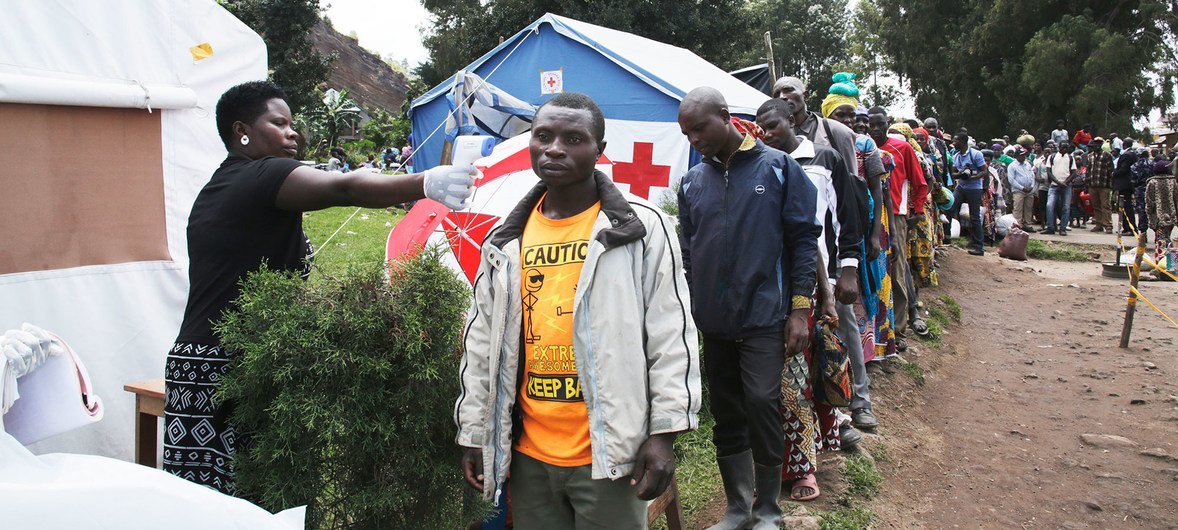
To combat these challenges, international groups like the International Medical Corps have deployed rapid response teams to set up specialized Ebola Transit Centers and Treatment Centers in Ituri, Goma, Kinshasa, and Kampala. Currently, over 270 dedicated WHO-supported health workers are operating around the clock to implement strict infection prevention and control protocols.
During a recent strategic visit to Bunia, the capital of Ituri province, Dr. Tedros emphasized that medical interventions are meaningless without community trust.
“Community ownership is what will bring this outbreak to an end,” Dr. Tedros stated during a press briefing. “We are not here to tell people what to do. We are here to listen… Our role is to support you in implementing those solutions, together.”
What This Means for the Public
For health-conscious consumers watching from afar, the risk assessment remains reassuringly low. Agencies like the European Centre for Disease Prevention and Control (ECDC) and Dr. Satish Pillai, head of the U.S. CDC’s Ebola response, have reiterated that the likelihood of infection for individuals living in the EU, UK, or United States is extremely low, with zero domestic cases reported.
Ebola is not an airborne virus like influenza or COVID-19; it does not spread through casual contact, water, or standard food systems. Transmission requires direct contact with the blood, secretions, or bodily fluids of an infected, symptomatic individual, or via heavily contaminated surfaces and materials.
For travelers visiting or operating near the affected African sub-regions, standard preventive health directives apply:
-
Maintain meticulous hand hygiene utilizing alcohol-based rubs or soap and water.
-
Avoid close contact with anyone exhibiting symptoms of severe viral illness (such as unexplained fever, severe headache, muscle aches, and vomiting).
-
Strictly avoid participating in traditional funeral or burial rituals that involve handling the bodies of deceased individuals.
For those within affected zones, health officials emphasize that early clinical evaluation is life-saving. While specialized antiviral drugs for Bundibugyo do not yet exist, aggressive, early supportive care—including intravenous hydration, electrolyte balancing, and the immediate treatment of secondary infections—radically lowers the risk of mortality and assists the body’s natural immune system in overcoming the virus.
Medical Disclaimer
This article is for informational purposes only and should not be considered medical advice. Always consult with qualified healthcare professionals before making any health-related decisions or changes to your treatment plan. The information presented here is based on current research and expert opinions, which may evolve as new evidence emerges.
References
- https://www.reuters.com/business/healthcare-pharmaceuticals/who-321-confirmed-ebola-cases-drc-116-more-suspected-cases-2026-06-02/